
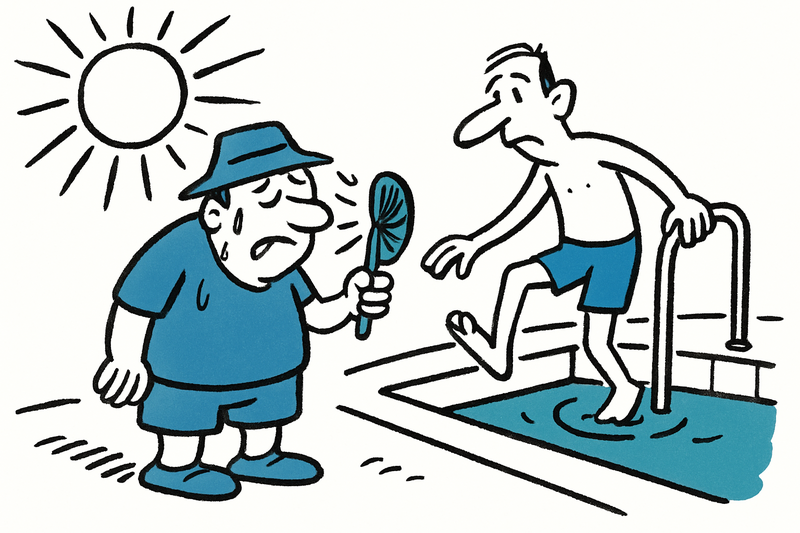
When Mallorca Cooks: How Prepared Is the Island for the Next Heatwave?
Temperatures are rising up to 37 °C — and Mallorca asks: Are people, infrastructure and tourism ready for such extreme heat? A look at underestimated risks and concrete measures.
When Mallorca cooks: a question that is becoming more urgent
The heat warning has been expanded: the southwest and the island's interior are in focus, with values around 36 to 37 degrees expected on Friday, and temperatures remaining above the seasonal average over the weekend. This expansion is detailed in Heat alert on Mallorca: How well is the island prepared for infernal heat days?, and forecasts point to significant peaks as reported in 40 Degrees This Weekend: Mallorca Faces a Heat Test – What Matters Now.
Where the heat hits hardest — and who suffers
Llucmajor, Santanyí, the plain of Campos and the central hilly area around Inca and Sineu are particularly affected. There the cooling sea breezes that still moderate Palma or Cala Major are often missing. In village squares shutters slam shut, and café chairs remain empty at midday. The groups that suffer most in such waves are clear: older people in poorly insulated houses, construction workers without regulated breaks, agricultural workers in the fields and those sensitive to heat who must work outdoors during the day.
What is mostly overlooked
The public debate quickly turns to comfort and tourism — sunscreen, beach times, air-conditioned hotels. Less attention is paid to critical questions: Will the power grid hold if many air conditioners run at full speed? Is there enough drinking water for agriculture, households and tourists when demand rises? Do towns have enough shady spots, trees and permeable surfaces to avoid heat islands? And finally: Is there a plan for workers who toil outside typical office hours?
Concrete risks for infrastructure and everyday life
Power peaks can lead to blackouts; we have already seen this in other parts of Europe — see the local stress tests described in Heatwave reaches 42 °C: How Mallorca should cope with the new temperature peak. Water shortages hit agriculture in the south hardest — olive and tomato farms are nervously watching the water meter. In Palma the so-called urban heat island effect intensifies: asphalt, flat roofs and narrow streets store heat — even in the evenings it cools down only slowly, as explained in EPA guidance on urban heat islands. This not only changes daytime life but also people's sleep, increases health risks and raises the burden on the healthcare system.
What helps now: short-term and medium-term practical measures
Immediate measures: public cooling centers in community halls, extended public transport in the evening hours, mandatory rest and drinking regulations for construction and agricultural workers, and intensified information campaigns in multiple languages at beaches and markets. Mobile drinking water stations at popular spots like Es Trenc, Sa Ràpita or Platja de Palma would be a simple, effective relief. Guidance for protecting vulnerable people during extreme heat can be found in CDC advice on extreme heat and health.
Medium-term: more trees and shade-providing pergolas in towns like Llucmajor and Inca, green spaces and permeable surfaces instead of pure concrete, promotion of home insulation and light roof coatings, strategic strengthening of the power grid and expansion of decentralized energy (solar + storage) — this reduces peak loads and strengthens supply security.
An opportunity for sustainable tourism
Heat forces a rethink: early-morning and evening beach offerings, activities in air-conditioned museums and city tours at different times of day, promotion of the shoulder season. Hotels could more strongly communicate sustainable, heat-efficient concepts — this is not only climate protection but also a quality feature for visitors who travel more consciously.
An appeal to politics, businesses and neighborhoods
The weekend will be hotter than usual — and this is no longer a one-off event. Smaller municipalities need support in implementing heat protection plans; companies should adapt working hours; and neighborhoods can help with simple actions: delivering water crates to the elderly, tree adoption programs, shade sails in the village square. Those who prepare now not only save health and money but also build resilience for future summers.
When the bells ring at midday over Palma and the heat lies over the squares, it becomes clear: we need practical answers instead of good advice. Mallorca has the chance to test local solutions now that could already save lives next summer.
Frequently asked questions
How hot does Mallorca usually get during a heatwave?
Which parts of Mallorca are usually hottest in extreme heat?
Is it safe to go to the beach in Mallorca during a heatwave?
What should I pack for Mallorca in very hot weather?
How does the heat affect Palma differently from the rest of Mallorca?
Why are farmers in Mallorca worried during heatwaves?
What can towns in Mallorca do to cope better with extreme heat?
Does extreme heat in Mallorca affect sleep and health?
Similar News

Palma Gets a Welcoming Park: Tirador Goes Greener — and a Café Is Coming
A new green project in Es Fortí/Camí de Jesús will transform the old Voltadora into a city park with an experience fores...
Why the End of "Los Últimos Mohicanos" Is More Than the Closing of a Bar
With squealing tires and one last glass, an icon on the Palma–Manacor expressway closes. Why the demise of this German b...

Protest camp on Plaza España: Who asks for solutions to the right to housing?
Around 30 activists set up a tent camp on Palma's Plaza España to push for stronger tenant rights. Our analysis asks: Ar...

In the Name of a Gang: Alleged Extortion in El Molinar and What It Reveals About the Protection of Sex Workers
A man is accused of posing as a member of the Hells Angels and extorting two women at accommodation in El Molinar. The s...
When Chile Meets the Mediterranean: A New Flavor at Can Bordoy
At Can Bordoy in Palma's old town, Chilean chef Jhonatan Maldonado combines Patagonian seafood with Mediterranean island...
More to explore
Discover more interesting content

Can Cap de Bou

Townhouse Lleo 72
