
Palma as a Year-Round Port? A Reality Check Between Ship Calls, Emissions and Everyday Life
Palma as a Year-Round Port? A Reality Check Between Ship Calls, Emissions and Everyday Life
TUI Cruises plans a stronger presence in Palma in 2026: 51 calls and, for the first time, winter departures from and to Palma. What this means for air quality, the cityscape and local neighborhoods — and which questions remain open.
Palma as a Year-Round Port? A Reality Check Between Ship Calls, Emissions and Everyday Life
With 51 calls and, for the first time, winter departures from Palma set to fill the city coffers, what remains for the people who live here?
Leading question: Can Palma benefit more from the cruise business without further degrading quality of life in the city?
The facts are concrete: For 2026 the company reports around 51 calls of the Mein Schiff fleet in Palma are planned, and the port authority additionally announces six calls with high-end vessels from the Hapag-Lloyd brand. For the 2026/27 season seven-day cruises departing from and returning to Palma are to be offered for the first time. Parts of the fleet – most recently 'Mein Schiff Relax' – have already made stops in Palma; in summer 2026 'Mein Schiff Flow' is expected to take over. The company emphasizes investments in technologies like dual-fuel engines, green methanol on certain ships and occasional bio-LNG bunkering; there is also a CO2 reduction plan through 2030, as reported in Cruise Awards 2025: Palma in Focus — More Parties Onboard, More Questions Ashore.
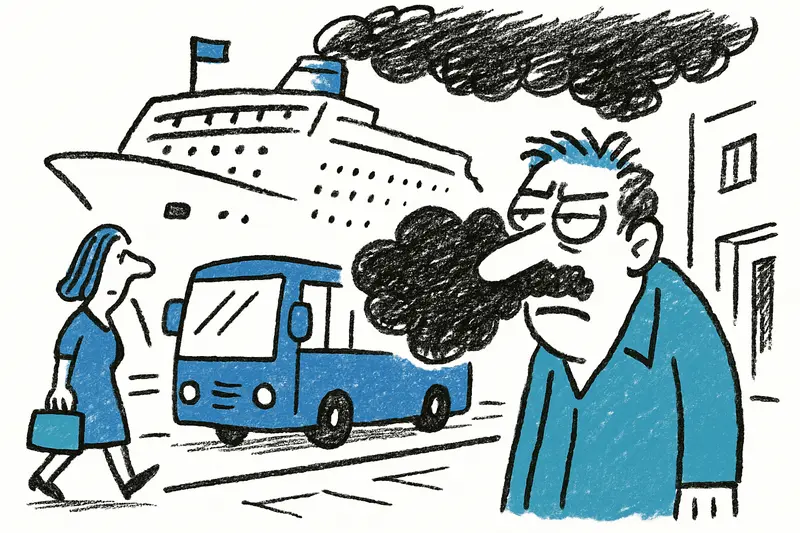
All this sounds like an economic opportunity: more guests, revenue for excursion providers, taxi drivers, restaurants and hotels. In Palma's old town, however, reactions are mixed, as noted in Cruise Boom 2025: Numbers Celebrate, Residents Take Stock. In the morning, when the first cafés on the Passeig des Born set out tables and the cries of seagulls blow over from the bay, you do not hear only praise. Buses back up, deliveries are delayed, residents in neighborhoods like La Llotja or Sant Nicolau increasingly see day visitors walking through narrow streets — that is the everyday reality numbers alone do not show.
Critical analysis: Three points stand out when intentions are compared with reality. First: The scheduling of cruise excursions helps to flatten peaks — but only if the port, the city and traffic management are truly coordinated. More calls also bring more transfers, parking pressure and micro-peak times in cafés and museums. Second: Technical modernizations are important, but words like 'dual-fuel' or 'green methanol test' are no free pass. Particle filters behave differently at sea than air sensors in urban street canyons; therefore on-site measurement counts. Third: Economic promises — excursions, €80 on average per excursion on longer trips — say little about the distribution of proceeds. Do the revenues end up with large agencies or with the small boat excursion operator from Portixol? That question is echoed in Port of Palma Under Pressure: New Harbor Fees Threaten 500 Jobs and the Harbor's Identity.
What is often missing in the public discourse: transparent, locally verifiable environmental data and a sober assessment of the spatial distribution of burdens. There is a lack of comprehensive measurements of fine dust and nitrogen oxides along the access and exit roads to the port on days with multiple calls. There are no binding agreements on how overnight stays at the port really lead to a decongestion of the city center — and who bears the costs for additional infrastructure. And there is no local inventory: Which businesses lose customers to large providers, which benefit permanently? Local debates about port measures are discussed in No More Party Boats at the Auditorium: What's Missing Now and How Palma Should Proceed.
Concrete solutions — pragmatic and locally oriented: First, a binding call corridor plan that also limits the number of simultaneous ship calls so that not three large ships flood the old town at midday. Second, a staged fee model in the port: lower fees for ships that actually use shore power, higher fees for those that run their engines during the stay. Third, transparent monitoring: independent air monitoring stations around the port and main roads, whose data are public. Fourth: mandatory contracts for local value creation — for example quotas for excursion allocation to local providers, prioritization of small boat operators, promotion of local gastronomy at port events. Fifth: real participation — a port advisory board with residents, business owners, environmental experts and representatives of the shipping companies with printed meeting minutes and clear decision-making powers.
An everyday scene from Palma that explains a lot: A Tuesday morning in January on the Passeig Marítim. On the corner a baker shovels fresh ensaimadas into the display; two dock workers push containers, a tour bus shuts off its engine and 40 guests get off. They distribute — some head toward the cathedral, others get into taxis. The city breathes in briefly, then delivery vans arrive, a school bus honks. This is not an alarm, rather a daily balancing act between normality and overload.
Punchy conclusion: Palma must not become a passive transit hub where decisions are made only on short-term profits. Whoever relies on year-round cruise tourism must simultaneously deliver binding conditions, real measurement and real participation. Otherwise there will be a lot of noise, some numbers in the ledger — and the neighborhood will pay the bill.
Frequently asked questions
Is Palma a good port for cruise ships all year round?
Do cruise ships in Palma make the city more crowded in the old town?
Are cruise ships in Palma reducing pollution if they use cleaner fuel?
What should visitors pack for Palma if they are coming by cruise ship in winter?
Are there more cruise departures from Palma in winter now?
What does a cruise day in Palma mean for taxis, buses and traffic?
Who benefits economically from cruise tourism in Mallorca?
Can residents in Palma influence cruise policy and port decisions?
Similar News

Are the Balearic Islands the Southern Border of Europe? A Reality Check on Immigration
The Balearic Islands are again calling for EU aid after a sharp rise in arrivals by sea. Conflicting priorities between ...

"Expensive chaos" and many open questions: What clients can do when a lawyer suddenly stops responding
Several clients complain that a well-known German lawyer in Mallorca has been unreachable for months. Key question: What...

TV tip: 'The Last Problem' — Mallorca as the setting of a classic crime
A classic whodunit on Mallorca: A new miniseries set in spring 1959 brings storm, an isolated hotel and a dense web of s...

Nipping Sea Creatures: Why Bathers in Cala Major and Elsewhere Should Be Cautious
In Cala Major, bathers have reported being nipped by small fish. What is behind it, how can problems be avoided — and wh...
Forced eviction in Santa Catalina: When a 65-year-old slept in her car and showered on the beach — a question of responsibility
The story of Pilar López from Santa Catalina represents a problem affecting many Mallorcans: How can an island with a bo...
More to explore
Discover more interesting content

Can Cap de Bou

Townhouse Lleo 72
