
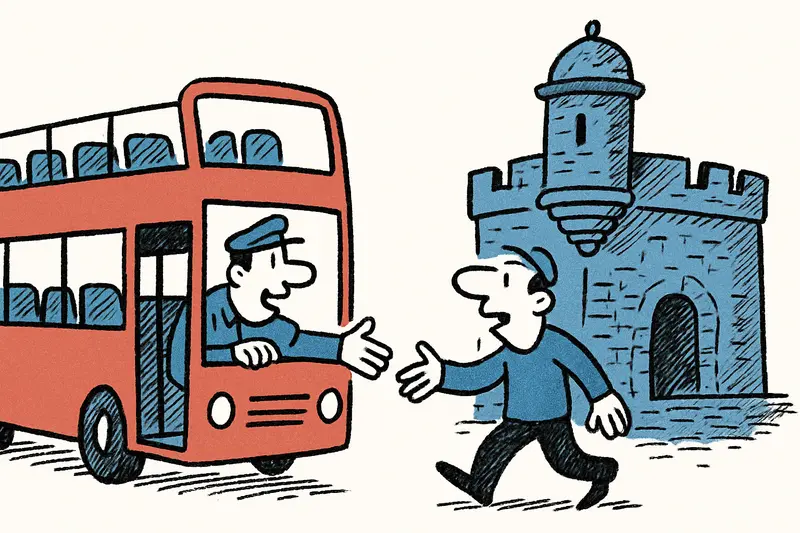
Red Buses Drive to the Bastion: Castillo de San Carlos Becomes Part of the Sightseeing Route
Red Buses Drive to the Bastion: Castillo de San Carlos Becomes Part of the Sightseeing Route
The double-deckers of City Sightseeing will from now on stop at the Castillo de San Carlos in Porto Pi. This small bastion with a long history will be brought closer to visitors, and tickets are expected to be available bundled with the bus ticket.
Red Buses Drive to the Bastion: Castillo de San Carlos Becomes Part of the Sightseeing Route
Porto Pi gains a new, easily accessible stop for island history
On the Passeig Marítim, where joggers do their rounds in the morning and seagulls circle above the bay, a familiar hiss will soon be heard: the opening of a red double-decker's gangway, like the ones used in local initiatives such as Cozy Instead of Crowded: Free Light Bus for Seniors in Palma. City Sightseeing is adding a stop in Palma at the Castillo de San Carlos, the small fortification at the southern end of the Bay of Palma, which complements guides like Getting Around Palma Made Easy: The Bus Lines Tourists Really Need.
The decision follows an agreement signed by representatives of the Consorcio del Castillo de San Carlos and the bus company; the Balearic military command announced the cooperation. This will make the bastion more accessible for day-trippers and short-stay visitors — especially for those who prefer not to walk along the promenade or the rocky paths around Porto Pi.
The Castillo itself is no newcomer to Palma’s history: a tower was already erected here between 1610 and 1612 on the remains of an earlier lighthouse, bastions were added in 1662 under the direction of military engineer Vicente Mut, and a coastal battery was built in the 19th century. In the 20th century the site’s functions changed — at times it served as a prison for military personnel; since 1981 it has housed a military museum, and since 1997 the Consorcio has been responsible for its operation and management.
For visitors the new bus connection means more practical access: tickets are expected to be offered either bundled with the bus tour or available directly at the Castillo. This makes it easier to include a visit in a half-day program — city tour, a detour to the fortress, followed by a café at Cala Major or a walk through Bellver Park.
What may become visible in everyday life: in the morning the small terrace at the Castillo could again be filled with voices, and on a mild afternoon the smell of fried fish from the restaurants at Porto Pi may drift into the site. Tourist photos with the bastions in the background will appear alongside the usual selfies of the cathedral and Bellver. For neighbors and regulars little may change — fishermen will still lay out their nets, the tram will keep its rhythm — but the Castillo will receive a steady stream of visitors.
One positive effect is that a less noticed facet of the island’s history becomes more visible: the military traces along the coast, the role of the Bay of Palma in past centuries, and the work of engineers like Vicente Mut. The cooperation with the association of official tour guides ensures that the history will not only be read on panels but also told — context instead of just pointed picture captions.
For Mallorca the initiative brings several advantages: it eases traffic flows because tourists have a direct link instead of traveling by private car or taxi, building on recent changes such as Central Bus Stop at Palma Airport: Relief — and Open Questions; it supports smaller, often inconspicuous cultural sites; and it connects elements of the port landscape with other tourist destinations. This is useful in the low season when the island looks for offers that extend stays.
My tip for a visit: schedule the stop for late afternoon when the light is flatter and the battlements gain depth and definition. A round in the museum, a short break on the stone walls and then back on the bus — that’s how excursions look that neither rush nor overcrowd. Those who prefer it quieter should come on a weekday and combine the visit with a walk to Cala Gamba.
The new stop will not change Palma’s image overnight, but it adds a quiet, useful thread to the island: history that remains accessible. And that is pleasant for a city that pulses daily between cruise ships and beachgoers.
Looking ahead: More spontaneous visitors, well-informed guided tours and a better link between the port and the city are expected. For the Castillo de San Carlos this means: quiet recognition instead of complete isolation — and a few more footsteps from those who otherwise only pass by the Passeig.
Frequently asked questions
Can you visit Castillo de San Carlos in Palma by sightseeing bus?
What is Castillo de San Carlos in Mallorca used for today?
Is Castillo de San Carlos easy to reach without a car in Palma?
When is the best time to visit Castillo de San Carlos in Palma?
What can you do around Porto Pi after visiting Castillo de San Carlos?
How old is Castillo de San Carlos in Palma?
Will the new bus stop help reduce traffic in Palma?
Is Castillo de San Carlos worth adding to a short Palma itinerary?
Similar News

More water than last year: Mallorca's reservoirs breathe easier
September rain refilled the Tramuntana's reserves: overall fill around 35 percent, Cúber at 40.42 percent, Gorg Blau at ...

Three Luxury Hotels in Banyalbufar: Lots of Money, Many Questions
A Danish investor plans three exclusive accommodations in Banyalbufar — including the historic Son Valentí. The announce...
2.1 tonnes of cocaine on sailing yacht off Spain's coast – a reality check for the coastguard
A 14-metre yacht was seized with 2.1 tonnes of cocaine. Who monitors the ports, how does the international hunt succeed ...

Heat Bonus in Mallorca: 100 Euros Extra for Outdoor Staff at MarSenses
MarSenses pays employees who worked outdoors in August an extra €100 as recognition. Lighter uniforms, reduced hours for...

Renovating in Mallorca: What You Really Can Do Without Neighbour Consent
Many think they can do whatever they want in their apartment. That's partly true — but only as long as structural elemen...
More to explore
Discover more interesting content

Can Cap de Bou

Townhouse Lleo 72
