
Rescue Attempt at Cala Mendia Ends Fatally – Why Helping Can Have Such Fatal Consequences
Rescue Attempt at Cala Mendia Ends Fatally – Why Helping Can Have Such Fatal Consequences
A 55-year-old German tourist died after a rescue attempt at Cala Mendia. Our analysis asks: Why do such operations escalate, and what is missing on Mallorca's beaches?
Rescue attempt at Cala Mendia ends fatally – Why helping can have such fatal consequences
A man dies, a young swimmer survives – and questions remain
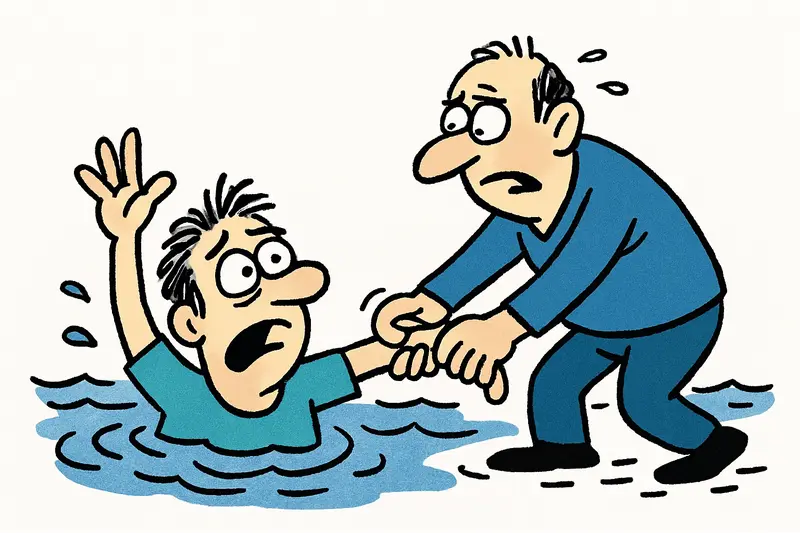
Around 3 p.m. on a late afternoon: the small cove of Cala Mendia often appears calm, the scent of pine mixes with salty air, and a few day-trippers lay towels on the sandy section. On this day, however, an attempt to help ended tragically. A 55-year-old German tourist entered the water to assist a roughly 20-year-old swimmer who apparently had difficulties. The young man managed to reach the shore alone; the helper got into trouble himself and died on the beach despite resuscitation efforts.
What was reported after the rescue work on site reads in sober figures: paddleboard users pulled the casualty from the water, National Police units immediately began resuscitation, later the Manacor local police and medical personnel arrived. Resuscitation lasted around 40 minutes without success. The young swimmer who had been in distress was taken by SAMU 061 ambulance to a hospital. Two people present, including the deceased man's wife, received on-site help for acute anxiety. The National Police have taken over the investigations, much like in Tragedy at Son Bauló: 67-year-old dies after rescue attempt.
Key question: Why do private rescue attempts sometimes end fatally on Mallorca's coasts, even though people on site want to help? This question is not purely theoretical. It is about response options, equipment, training, and how we as a society deal with risk at the sea.
Critical analysis: Even experienced water enthusiasts can be surprised by currents, wave breaks or fatigue in one and a half meters of depth. A person more experienced in rescue techniques but without aids such as rescue buoys or lines often has little chance against the physical power of the water. That paddleboarders as first responders performed important pulling shows how much chance influences rescue outcomes: who happens to be nearby with suitable equipment can save lives – and risks themselves getting into danger.
What is often missing in the public discourse: figures on the coverage and presence of lifeguards outside the main season, the location of automated external defibrillators (AEDs) at coves, and the safety briefing standards at rental stations for SUP, kayaks and boat rentals. Also rarely heard is the perspective of tourists: many do not know how to make an emergency call precisely in Spanish or English, how long it takes until professional help arrives, or how dangerous rip currents can be at certain coves, as discussed after previous incidents in Fatal Rescue Attempt in Son Bauló: What Must Change on Our Beaches.
An everyday scene I often observe: in the late afternoon couples sit on the stone walls above the cove, children play on the edge, a vendor pushes his cart with cold drinks. A few young people rent a paddleboard at the parking lot; rarely does anyone ask for life jackets or local danger warnings. The calm can be deceptive. When an emergency occurs, there are only a few minutes that decide between life and death.
Concrete solutions: First, better signage at remote beaches with clear symbols for current danger, season times for rescue services and emergency numbers in multiple languages. Second, more publicly accessible AED stations at selected parking lots and beach accesses and their visible marking. Third, mandatory safety information at rental stations for SUP, kayak and boat (short notes on life jackets, how to behave in a rip current, emergency call procedure). Fourth, funding programs for voluntary rescue teams in smaller municipalities that can provide rapid first aid outside the high season. And last but not least, low-threshold first aid and water safety courses for residents and tourism staff – short refreshers are often enough so that helpers do not become victims themselves.
The role of the authorities is clear here: it is not about preventing every tourist rescue attempt, but about increasing the chances of a safe intervention. Small measures – a sign at the parking lot, a rental life jacket with a SUP rental, a clearly visible AED – are not a luxury but can save lives. Equally important is communication: make clear that the personal risk in a rescue attempt is real and how to instead alert and support rescuers (e.g. by throwing a flotation device, instructing on self-rescue).
Concise conclusion: the tragedy at Cala Mendia is more than an isolated accident. It is a warning sign for gaps in everyday infrastructure at the sea and in the awareness of guests and locals. Those who live by the water or spend their holidays there benefit most from clear rules, visible equipment and brief practical safety information. If we do not change this, it will not be the last time a helper becomes a victim.
Our thoughts are with the relatives of the deceased and with those who witnessed the events. The investigations are ongoing; they should also deliver the lessons so that the next rescue does not turn into another tragedy.
Frequently asked questions
What is the weather like in Mallorca in early spring?
Can you swim in Mallorca in spring?
What should I pack for Mallorca in spring?
Is spring a good time to visit Mallorca?
What is S'Illot like in spring?
Is Can Pastilla a good place to stay in spring?
What is Port d'Alcúdia like in spring?
Can I still enjoy outdoor activities in Mallorca in spring?
Similar News
More water than last year: Mallorca's reservoirs breathe easier
September rain refilled the Tramuntana's reserves: overall fill around 35 percent, Cúber at 40.42 percent, Gorg Blau at ...
Three Luxury Hotels in Banyalbufar: Lots of Money, Many Questions
A Danish investor plans three exclusive accommodations in Banyalbufar — including the historic Son Valentí. The announce...
2.1 tonnes of cocaine on sailing yacht off Spain's coast – a reality check for the coastguard
A 14-metre yacht was seized with 2.1 tonnes of cocaine. Who monitors the ports, how does the international hunt succeed ...
Heat Bonus in Mallorca: 100 Euros Extra for Outdoor Staff at MarSenses
MarSenses pays employees who worked outdoors in August an extra €100 as recognition. Lighter uniforms, reduced hours for...
Renovating in Mallorca: What You Really Can Do Without Neighbour Consent
Many think they can do whatever they want in their apartment. That's partly true — but only as long as structural elemen...
More to explore
Discover more interesting content

Can Cap de Bou

Townhouse Lleo 72
