
Sightseeing without Horses: Electric Carriages in Palma — the Transition Still Has a Price
Sightseeing without Horses: Electric Carriages in Palma — the Transition Still Has a Price
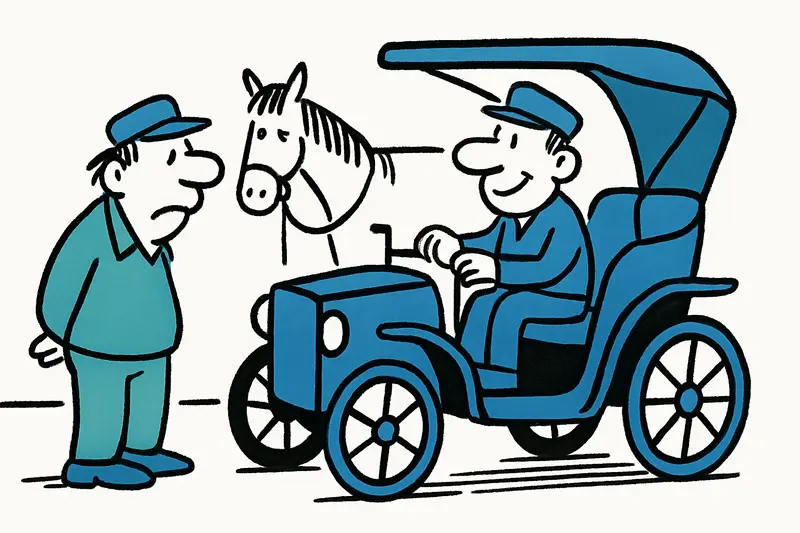
Electric carriages were publicly trialed in Palma for the first time. The scene in front of the cathedral showed enthusiasm — but also the big problem: Who will pay for the expensive transition?
Sightseeing without Horses: Electric Carriages in Palma — the Transition Still Has a Price
Trial in front of the cathedral shows promise — and gaps
Key question: Can Palma manage the conversion of the traditional horse-drawn carriage fleet without leaving drivers and animals stranded and without financially overburdening the city?
Late one morning in front of the cathedral there were no more hooves clattering on the cobblestones, but a clearly audible, gentle hum of electric drives. Tourists stopped, took out their phones and even applauded — the new electrically powered carriage in retro style rolled by slowly. Nearby stood the horses still in use, patiently tied to the wall, while the drivers looked over the details of the e-model: fine wood paneling, leather upholstery, a foldable canopy. The scene is typical Palma: tourism, tradition and the desire for change meet, as illustrated by debates captured in Palma Struggles to End Horse-Drawn Carriages: Majority but No Final Decision.
The facts are clear: a model manufactured in Germany was tested with a top speed of around 25 km/h; purchase costs are quoted at about €90,000 per vehicle. Electric alternatives have already been seen in some municipalities on the island. And a group of drivers has announced they will voluntarily take on the conversion. That sounds like progress — but appearances are deceptive when you look deeper.
Analytically, three main problems remain open: financing, social protection for drivers and the fate of the animals during the transition. Financing: an earlier subsidy program envisaged around one million euros, with the city covering half; this support is no longer available in the same form, a squeeze on municipal funds also noted in Free buses in Palma: Who pays when the coffers close?. Social issues: many coachmen calculate expenses and view the near six-figure price per carriage as a massive hurdle. Without financial models, an unequal situation threatens: wealthier operators could switch, others would remain in business with horses — precisely what generates public criticism and legal uncertainty, a dynamic explored in Palma and the Horse Carriages: Between Nostalgia, Costs and a Change of Heart. Animal welfare: as long as horses continue to be used, clear standards must apply; at the same time, concepts are needed for training, care and re-employment of people and for the well-being of the animals when operations change.
What is often missing in the public debate are concrete, practicable financing models and a clear phased timetable. The discussion remains too abstract — people talk about “subsidies” and “pilot projects”, but hardly anyone presents fully calculated variants: leasing instead of purchase, municipal acquisition with temporary rental to drivers, low-interest loans with deferred repayment, or a mixed financing from EU funds, regional funds and private incentives. Also lacking is a binding schedule for modernization: what deadline is realistic for a fair transition, and which inspections guarantee animal welfare, passenger safety and noise emissions? Municipal revenue measures under consideration elsewhere, such as fare adjustments, reflect the same funding pressures and are discussed in EMT Plans Single-Ticket Increase: Who Will Pay the Bill in Palma?.
A concrete proposal for Palma could look like this: 1) Piloting with clear success indicators (operating cost comparison per kilometer, guest acceptance, charging infrastructure needs). 2) Introduction of a municipal leasing fund: the city buys vehicles centrally and rents them to drivers at favorable conditions until the investment pays off. 3) A funding mix from island and EU programs plus grants for the most affected drivers. 4) Retraining and business advice for coachmen (charging planning, basic electrical knowledge, customer service). 5) Transitional rules for horses: veterinary care, possible rehoming and care facilities, mandatory rest periods during the transition.
An everyday scene from Palma helps to understand the urgency: on a Saturday afternoon crowds press along the cathedral, children buy ice cream, street cafés fill up. An e-carriage has room, the ride is quiet, visitors appear relaxed. Next to it stands a traditional team with two horses, the heat of the day taking its toll on them. This coexistence is emotionally charged — and politically sensitive if no clear rules are introduced.
The conversion is technically feasible and avoids the moral problem of exposing animals to dense tourist traffic. But technical feasibility does not equal socially fair and economically realistic implementation. Without coordinated financing mechanisms, a patchwork of operators with differing standards and further conflict potential threatens. The city should therefore not only argue ethically but provide the economic mechanism that makes the transition possible.
Conclusion: The trial run in front of the cathedral was a good image for the future — but it is only the beginning. Palma now needs a concrete implementation strategy: transparent financing, protection for workers, binding animal welfare requirements and a clear pace. Only then will a sympathetic test ride become a sustainable solution that does justice to both people and animals on the island.
Frequently asked questions
What is the weather like in Mallorca in early May?
Can you swim in Mallorca in May?
Is May a good time to visit Mallorca?
What should I pack for Mallorca in May?
What is Palma de Mallorca like in spring?
Is May a windy month in Mallorca?
What can you do in Mallorca in May besides going to the beach?
Are Mallorca beaches crowded in early May?
Similar News
Ancient Piece Brought to Light: Guardia Civil Recovers Roman Anchor Fragment off North Coast of Mallorca
Divers from the Guardia Civil recovered a massive iron piece from Roman times off Mallorca's north coast. The roughly 35...

Who Benefits from the Half‑Hourly Flight on the Edge? Aena, Investments and the Island's Interests
Almost one billion euros is flowing into Son Sant Joan. The figures show the scale of investment and expected beneficiar...

Are the Balearic Islands the Southern Border of Europe? A Reality Check on Immigration
The Balearic Islands are again calling for EU aid after a sharp rise in arrivals by sea. Conflicting priorities between ...

"Expensive chaos" and many open questions: What clients can do when a lawyer suddenly stops responding
Several clients complain that a well-known German lawyer in Mallorca has been unreachable for months. Key question: What...

TV tip: 'The Last Problem' — Mallorca as the setting of a classic crime
A classic whodunit on Mallorca: A new miniseries set in spring 1959 brings storm, an isolated hotel and a dense web of s...
More to explore
Discover more interesting content

Can Cap de Bou

Townhouse Lleo 72
