
Free buses in Palma: Who pays when the coffers close?
The EMT's free offer could end in 2026. Madrid will decide who foots the bill — but there are alternatives Palma could use to manage the system fairly and smartly.
Free buses in Palma: Who pays when the coffers close?
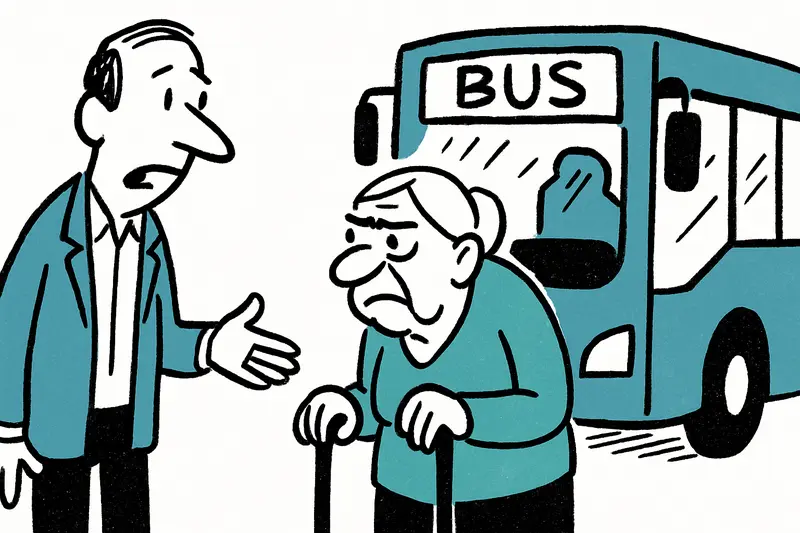
At Plaça d’Espanya three lines rattle in every minute, passengers get on, a mother pushes a pram up the ramp, elderly women discuss the best market stall — everything seems normal. Only the price tag is missing: residents of Palma have been riding EMT buses largely for free since 2023, according to The EMT's free offer could end in 2026. But the central question hangs over the scene like the smell of freshly brewed coffee: who will continue to pay for it? Without a commitment from Madrid the model risks expiring in 2026.
The quiet behind the free-ride tune
In summer 2024 the municipal transport company EMT had to put money upfront to guarantee rides without ticket revenue. That sounds noble — and at first glance it is. But it leaves marks in the accounts. "We suddenly had a gap in the cash flow," an EMT employee told me at the bus station as the loudspeakers announced the next stop. Expenses were postponed, savings were discussed internally. For passengers the ride remained free; for the balance sheet it became costly. This tension is reflected in the municipal draft, as noted in Palma's Budget 2026: More Police, E‑Buses — But Is That Enough for the City of Tomorrow?
Why the debate is more than a budget quarrel
The discussion is not just about numbers. It is about social justice, climate protection and the shape of the city. Free buses reduce car use, relieve the city center and are a visible benefit for people on tight budgets. At the same time there are question marks: who benefits disproportionately? Are funds targeted where they are most needed? And how repairable is a system that depends on an annual pledge from Madrid? The wider discussion of island-wide free travel is explored in Free Public Transport in Mallorca 2026: Relief — Will the Money Be Enough?
The complicated issue of a fare system
At the same time the Balearic government is working on an island-wide fare system: zones, unified tickets, better links between bus, train and other modes of transport. The idea makes sense — less fine print, more integration. In practice, however, a transition would require substantial investments in technology, information campaigns and staff. In the short term the new system is likely to generate costs rather than savings. The city has also considered fare changes, such as proposals described in EMT Plans Single-Ticket Increase: Who Will Pay the Bill in Palma?
Who would be hardest hit?
If Madrid does not extend the funding in 2026, the first to suffer would be pensioners, low-income households and daily commuters. At Plaça de Cort I met an older woman: "I take the bus almost every day to the market — that would be a real blow." Such voices are not a PR stunt; they stand for real hardships: an extra monthly expense that suddenly disappears.
What is often overlooked
The public debate often misses the calculation behind the calculation. Free travel is not necessarily more expensive if its introduction is accompanied by other measures: targeted subsidies, savings in fleet operation, intelligent route planning. There also remains the question of how transparent the cost-sharing between city, region and state has been so far. Without clear figures the debate becomes political.
Concrete options that are still possible
Simply complaining does not help. There are practical options that could make Palma socially acceptable and sustainably viable:
- Targeted free rides: Continue free travel for seniors, low-income people and people with disabilities; others pay a moderate fare.
- Part-financing through tourism levies: A small share of the overnight stay tax could be reserved for sustainable mobility — tourists would help support seeing the city on foot and by public transport.
- Employer contribution: Companies could subsidize public transport passes; this would reduce commuter traffic and parking pressure.
- Phased model: Gradual introduction of fares with social gradations and a clear evaluation phase.
- Efficiency and transparency: Digitalization of route planning, fleet savings programs (electric vehicles, optimized charging cycles), annual disclosure of cost flows.
Politics needs the courage to combine measures
None of these measures alone will be enough. A sensible approach would be a mix: a reliable, limited subsidy from Madrid combined with local budgets, a tourism contribution and social exemptions. But that requires more than negotiations behind closed doors — it requires transparency, deadlines and a scenario plan: what happens if subsidies stop? Who covers which gap?
Participation before cuts
Another point is citizen participation. Participatory budgeting approaches or local surveys could clarify priorities. At the weekly market at Mercat de l’Olivar I heard vendors say how declining mobility in the city center can reduce sales. Such local voices should be heard before blanket service cuts are made.
The coming weeks will be decisive. City hall, EMT and the Balearic government must put the numbers on the table; Madrid must make a decision. For the people of Palma the advice is: plan cautiously, hope for reason. And yes — we would all prefer to glide through the city for free. But the till is not an endless source. Who pays often also decides what runs.
Frequently asked questions
Are buses in Palma still free for residents?
Who would be most affected if free buses in Palma end?
Why is Palma talking about free buses if they already seem to cost money?
What could replace free buses in Palma if the funding stops?
Is free public transport in Mallorca likely to continue in 2026?
How could tourists help pay for public transport in Palma?
Is Palma planning a new fare system for buses and trains?
What should regular bus users in Palma do while the future of free travel is unclear?
Similar News
Release after bloody attack in Palma: Why the court's decision raises questions
An 18-year-old who allegedly inflicted a serious neck injury on a man at Plaza Gomila using a wristwatch wrapped around ...
Kidnappings in Inca: Three young men forced into car trunks and abused in the forest – a reality check
In Inca, three 18-year-old men were forced into car trunks by masked assailants at the Plaça des Bestiar, taken to a for...
Spreading Massification: The Brake That Still Has Much Work to Do
Marga Prohens announces limits on volume tourism. The measures sound harsh — but are they enough to save everyday life, ...

Through the Keyhole onto the Party Yacht: How Daniela Katzenberger Is Planning Her 40th on Mallorca
Daniela Katzenberger turns 40 and wants to celebrate it on the island — likely with a boat, cake and her mother. A relax...
By Boat Instead of the Road: Palma's Water Bus — a Reality Check
The 'Bus Nàutic' launches in two stages — but questions remain over interim operations, fares and environmental requirem...
More to explore
Discover more interesting content

Can Cap de Bou

Townhouse Lleo 72
