
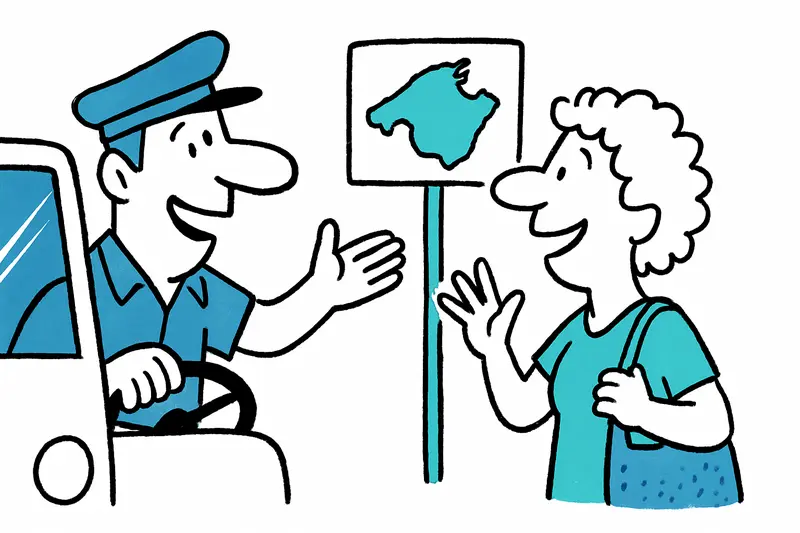
Free Public Transport in Mallorca 2026: Relief — Will the Money Be Enough?
For residents, bus, train and metro will remain free in 2026. But the big question is: Is the funding sufficient to expand capacity, service frequency and infrastructure? A critical look from Plaça d’Espanya to Sineu.
Free travel 2026: Relief for many — but not a given
Early in the morning at Plaça d’Espanya there is the smell of fresh coffee, engines hum and card readers flash. For many Mallorcans the news is a real relief: with a valid TIB card or the new single card, buses, trains and the metro will remain free to use in 2026 for residents in Mallorca. No coins at the stop, no sweaty queues at ticket machines on rainy days — small, tangible everyday reliefs.
Key question: Is the funding enough — and will infrastructure grow with it?
This is the central question that now needs answering, and it also raises the question who pays if funds run out for free buses in Palma. Free public transport looks socially fair and simple on paper. In practice, success depends on whether additional funding is also invested in capacity, staff and more frequent services. Without clear commitments, the island risks facing the same crowding in a few months — only without the need to dig for coins.
What many debates overlook
Public discussions focus almost exclusively on the price. Too rarely are land use, commuter flows and business models — which change with free transport — part of the debate. Some aspects that are often neglected:
Capacity planning instead of lip service. Money for tickets is good, but it does not solve the lack of space in crowded suburban trains. Binding schedules are needed for new vehicles, additional drivers and maintenance staff — and clear dates for denser service intervals.
Targeted infrastructure. Not every stop needs high-tech upgrades immediately. Priority should be given to lines with high commuter volumes, park-and-ride locations and intermodal hubs like Palma’s Estació Intermodal. That will determine whether transfers run smoothly or end in chaos.
Use of data and real-time communication. If passengers know when buses are full, they distribute themselves better. Open passenger data, reliable counts and transparent apps reduce overloads and build trust in the system.
How shortcomings become noticeable in practice
Anyone who commutes daily from Llucmajor or Inca to Palma quickly notices whether more money also means more buses. At small stops without card readers, people will still habitually show their ID briefly to the driver — an annoyance that can be fixed. Worse are cancelled buses due to lack of maintenance, overbooked trains and insufficient night services when the party in Palma ends and everyone wants to go home.
Pragmatic solutions with a local perspective
Politicians must not just wait for extra budgets. Several measures that could work immediately on Mallorca:
- Prioritised maintenance: Use the existing fleet more efficiently through better maintenance planning so buses fail less often and last longer.
- Flexible scheduling: Reinforcement buses during peak hours, micro-shuttles for sparsely populated routes in the mornings and late evenings — this relieves main corridors and makes waiting times more predictable.
- Expand park-and-ride: Attractive, well-signed parking lots in Llucmajor, Inca or on major access roads with comfortable shelters (think shade and fans in summer) reduce cars in Palma.
- Clear investment schedules: Transparent timelines for when new trains will be ordered, how many buses will be replaced each year and where new stops will be built — this creates confidence among passengers and staff.
- Consider mixed financing: In addition to state and regional funds, EU funds, targeted contributions from tourism infrastructure or mobility-related fees could accelerate projects — without burdening residents.
Looking ahead: Small steps, but with ambition
For many people on the island, the continuation of free public transport is an immediate relief. But for that relief to be sustainable, bold and concrete plans are needed now: more buses, reliable service frequencies, data-based information and transparent investment plans. If politicians take this seriously, a nice label can become genuine mobility for all.
We will watch developments closely here — from Plaça d’Espanya to the shady shelters in Sineu. A fresh breeze alone is not enough; it must be steered, otherwise the island will soon be stuck in traffic again — only without spare change.
Frequently asked questions
Will public transport stay free in Mallorca in 2026 for residents?
What problems could free public transport in Mallorca create if funding is too tight?
Is Mallorca public transport free for commuters from towns like Inca or Llucmajor?
Will free public transport in Mallorca mean more buses and trains?
What is the best way to avoid overcrowding on Mallorca’s public transport?
Why is Palma’s Estació Intermodal important for Mallorca’s transport plans?
How could park-and-ride help transport in Mallorca?
What should residents in Mallorca check before using free public transport in 2026?
Similar News

When coercive fines aren't enough: Could holiday rental owners soon face prosecution?
The island administration is stepping up action against unauthorized holiday rentals: high daily coercive fines up to €5...

Palma Airport on an Expansion Course — Who Decides How Much Growth the Island Needs?
Aena and Madrid are planning multi-million euro investments for Son Sant Joan and project higher capacities. Concern is ...
Who Gets Left Out? Why Overbookings Will Hit Many Mallorca Travelers This Summer
On hot check-in days at Son Sant Joan, frustrated travelers pile up. New figures from Reclamador.es show that a large sh...
When the Handyman Came: How an Engagement Ring Disappeared in Mallorca and What It Says About Trust
During a repair in Andratx a highly personal engagement ring went missing — a case that calls not only for punishment bu...
How Burglars Test Fincas in Mallorca — and What You Can Do About It
The Spanish National Police warn of a simple but effective trick: small markings on doors reveal whether a finca is occu...
More to explore
Discover more interesting content

Can Cap de Bou

Townhouse Lleo 72
