
Son Sardina: Parents Block School Start — Trust and Law in the Balance
For three days the classrooms of the Maria Antònia Salvà primary school in Son Sardina remained largely empty. Parents protested against the return of a convicted teacher — and ask: How can the administration protect children without violating the rule of law?
Parents make a statement — and the school falls quiet
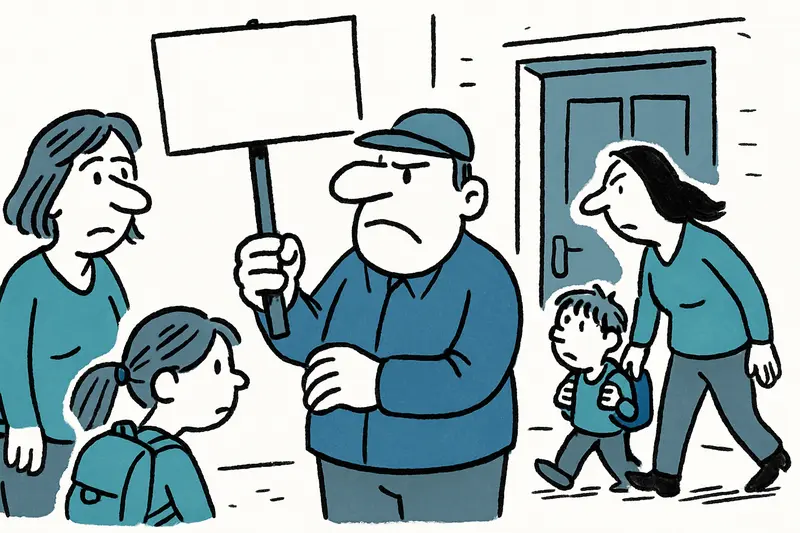
On the first school day after the holidays it was unusually quiet on Calle Major in Son Sardina. No noisy playground groups, no loud rustling of schoolbags — only the soft squeak of front wheels on the cobblestones and occasionally the sound of a bus driver tapping his vehicle. The primary school Maria Antònia Salvà remained largely empty for three days: parents had decided not to send their children to class in protest against the return of a teacher who was sentenced in November 2024 to a suspended sentence and a fine for the harassment of a minor. The verdict is not yet final; an appeal is pending, as reported in a Mallorca Magazín report on the three-day school blockade in Son Sardina.
What is the real issue? The guiding question
The central question is: How should a school administration act when legal and public expectations diverge? On one side is the rule-of-law principle of presumed innocence until a final decision is reached. On the other are parents who feel uneasy and for whom the protection of their children takes priority. In Son Sardina the two sides clashed in an atmosphere shaped less by outrage than by concern; the tension between community expectations and the principle of presumption of innocence is at the heart of the debate.
How the protest began — pragmatic solidarity
At 7:50 in the morning families gathered at the school gate. Many had coordinated beforehand in neighborhood WhatsApp groups, others joined spontaneously, similar to a protest by parents at Cas Capiscol in Son Busquets where local concerns about safety also prompted collective action. Not only active parent representatives but also those who rarely demonstrate brought their children back home. To avoid abandoning working families, the organizers set up a simple emergency childcare — ten children were looked after in a quiet room with games and one adult supervisor. The action was clear: to apply pressure without completely overwhelming families.
Authorities between law and everyday life
The regional government stresses its dilemma: it understands the parents' fears but is legally constrained. No judge has ordered an immediate exclusion; the administration fears legal consequences from a premature dismissal. Therefore, measures are being considered that would allow school operations to continue without predetermining the procedure: aides in the classroom, changed duty rosters, separated groups or a temporary reassignment of the teacher. Such solutions sound practical — but in implementation they are often more complicated than expected.
Aspects that receive too little attention
Less discussed so far is the burden the action places especially on lower-income parents. The emergency childcare was a quick help, but it does not permanently replace reliable childcare hours; broader guidance on protecting children and supporting families is highlighted by organizations such as UNICEF's child protection resources. There is also the question of the children's emotional state: familiar faces are missing, lesson plans are interrupted, and teachers not involved must take on extra work. Incidents like the case of an eight-year-old left alone on a Son Ferriol schoolyard illustrate how care gaps and interruptions to routine can affect children. And last but not least: how transparent is the information situation? Many families are demanding written commitments with deadlines — not just vague statements.
Concrete proposals instead of a stalemate
A few practical steps could ease the conflict: first, a binding emergency policy for schools to be applied in cases of criminally relevant allegations — including clear timeframes for actions. Second: independent mediators available at short notice to facilitate dialogue between parents and school authorities. Third: temporary organizational measures such as split classes, supervisory staff from other schools or external specialists for prevention and support. Fourth: a transparent information channel that keeps families informed promptly and factually without endangering ongoing procedures.
Why it is about more than one teacher
The action in Son Sardina is symbolic of a larger question: how resilient is the school system when trust is shaken? Schools are everyday places where work, care, routine and fears come together. If families feel their concerns are not taken seriously, a crisis of trust can develop that lasts longer than any judicial decision.
What remains
In the coming days it will become clear whether the school authority presents concrete steps or continues to deliberate. For the families remains the memory of three quiet days on Calle Major — and the demand for clear rules that take both the rule of law and the protection of children seriously. Son Sardina shows: faster, more transparent protocols and practical support for parents would not be a luxury, but necessary so that the school day can again begin with the sound of children’s voices.
Frequently asked questions
What happens if parents in Mallorca decide not to send their children to school in protest?
How does the presumption of innocence affect school decisions in Mallorca?
What can schools in Mallorca do while a teacher’s case is still pending?
What is emergency childcare during a school protest in Mallorca?
Is Son Sardina on Mallorca often affected by school protests?
What school is in Son Sardina, Mallorca?
How can parent concerns about school safety be handled better in Mallorca?
Why do school protests in Mallorca often become a trust issue?
Similar News

Beatings in Palmanova: Two British tourists injure taxi drivers — what needs to happen now
In Palmanova, two taxi drivers were attacked at night by apparently drunk tourists. One suffered severe facial injuries ...
Village Festivals of Art: ArtinSal, TastArt and Canal'Art Bring Culture to Mallorca's Streets
In October Ses Salines, Porreres and Santanyí turn their squares into exhibition spaces: three art nights, plenty of cra...
Christmas Market Conflict in Palma: Who Owns the Christmas Season?
The relocation of a privately organized, German-influenced Christmas market to Parc de la Mar is causing anger among loc...
Casting for an Intimate Scene in Mallorca: What Couples Should Know
A casting agency is looking for a couple living in Mallorca for a fully nude scene in an international film shoot on Oct...
Masked Images, Real Panic: When Social Media Aesthetics Alarm Neighbors
Five German content creators filmed on a recently vacated detention site using deceptively realistic props. The result: ...
More to explore
Discover more interesting content

Can Cap de Bou

Townhouse Lleo 72
