
Protest at Cas Capiscol: Parents demand safe school routes in Son Busquets
Protest at Cas Capiscol: Parents demand safe school routes in Son Busquets
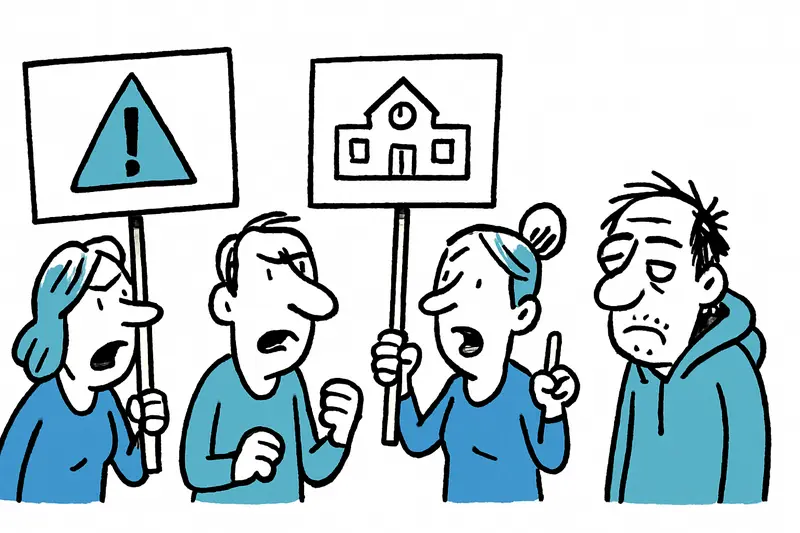
Parents and teachers of the Cas Capiscol school in Son Busquets protested loudly. They report people with visible drug problems near the former prison and demand protection for their children. Further actions are announced for January.
Protest at Cas Capiscol: Parents demand safe school routes in Son Busquets
Key question: How can we prevent children from having to go to school in the morning with fear — and who takes responsibility for this in Palma?
Yesterday parents and teachers gathered loudly in front of the entrance of the public school Cas Capiscol in Son Busquets. The mood was heated, whistles shrilled, children looked out from the schoolyard and asked puzzled what was happening. At the core is a sentence many here share: "I want to bring my child to school without fear."
Behind the protest lie repeated observations: In the immediate vicinity of the school people can regularly be seen showing signs of drug use. One reason for this is the school's location near the grounds of the former prison, where many homeless people have found a place to sleep. This spatial proximity creates a constant friction between social hardship and the everyday life of families.
Critical analysis
The situation is not a simple causality: homelessness, addiction and a public school operate side by side in a very small area. Authorities, social services and the police each bear part of the responsibility — but too rarely do these bodies work together in a way that parents on site can feel the results. Temporary deployments of law enforcement can create calm in the short term, but they do not solve the deeper problems.
There is also often a lack of transparency about incidents: parents know that something is happening, but not how frequently or with what consequences. That creates mistrust and leads to protests like yesterday's, as seen in Son Sardina: Parents Block School Start — Trust and Law in the Balance. At the same time, it must not be overlooked that people without housing and with addiction disorders need protection and help — not only control.
What is missing in the public discourse
The debate is currently running on two tracks: safety versus concern for people in need. What rarely occurs are concrete, locally coordinated plans that combine both. There is a lack of information about existing support services in Palma, clear communication channels between the school, the parents' association and social services, and reliable figures about risks around schools.
There is also too little discussion about how long-term urban planning can help: Where do people find support when they are released from prison? What offers for daytime care, addiction therapy and housing are available — and are they sufficient for a densely populated neighborhood like Son Busquets?
An everyday scene from Son Busquets
Imagine the walk to school on a gray December morning: the streetlights are still on, the smell of coffee rises from a bar, and a person in a worn jacket sits on the bench in front of the old prison gate. A school bus stops, children jump out, bags rustle, a mother straightens her little one's hat. The small whirl of voices and children's footsteps meets the silent stillness of others. This moment is banal — and precisely because of that so important: it shows what is at stake.
Concrete approaches to solutions
Parents, teachers and residents have options that can provide short-term relief and have long-term effect. Some pragmatic, locally feasible proposals:
1) Joint action plans: The school, the parents' association, the Ayuntamiento de Palma and social services should develop binding protocols: who informs whom in case of an incident, which routes are secured for children, who are the contact persons?
2) Increased social work on site: Mobile outreach teams can regularly visit the affected areas, convey support offers and thus reduce the number of acute confrontations.
3) Safe spaces and daytime care: Day centers nearby could provide care, basic medical help and access to detox programs — this would relieve public spaces around schools.
4) Securing school routes: Temporary measures such as accompanied walking groups, better lighting and clearly marked school routes help immediately and signal to parents that something is being done.
5) Waste and needle removal: Regular cleaning and safety rounds, separate from repressive measures, reduce hazards and are visible to parents.
All these approaches require coordinated funding and clear responsibilities. They do not replace the need to invest in affordable housing and addiction support — but they are a start on site.
Conclusion — short and unequivocal
The protest at Cas Capiscol is a warning signal: if parents can no longer send their children to school without worry, the city has a problem that touches several policy areas. Loud demonstrations attract attention — what is needed now is for that attention to lead to coordinated action, and that action should avoid unintended consequences such as those reported in Evening Road Closures in Palma: Between the Right to Protest and Traffic Chaos. Son Busquets needs short-term protective mechanisms for children and long-term solutions for people in need. Addressing both at the same time is uncomfortable, but that is exactly what the situation on the ground requires.
The parents have already announced further actions until January. Hopefully these days will be used not only to demonstrate, but to sit down at the table and agree on a timetable for measures. For many families the day here begins with a walk to school; it should be possible again without fear.
Frequently asked questions
Why are parents protesting at Cas Capiscol in Palma?
Is it safe for children to walk to school in Son Busquets?
What should parents in Mallorca do if they feel a school route is unsafe?
How can Palma improve safety around schools without ignoring homelessness?
What school safety measures could help families in Cas Capiscol right away?
Why do protests like the one in Son Busquets keep happening in Palma?
What role does the former prison area play in the Cas Capiscol debate?
What happens next after the Cas Capiscol protest in Palma?
Similar News

FC Germania Mallorca aims for the top after just three matches
Newcomer FC Germania Mallorca hosts Deportivo Marratxi on Sunday at the Camp de Futbol La Nova Cabana. New reinforcement...
Etihad comes earlier: More flights between Abu Dhabi and Palma from May
The Gulf carrier shortens its summer break: from 16 May 2027 direct flights with the A321LR and premium cabins are expec...

Sudden braking at a pedestrian crossing in Palma: What this incident says about our streets
Three plainclothes police officers were nearly put at risk by a reckless driving maneuver at a pedestrian crossing in Pa...

Brawl in Palmanova: Two Taxi Drivers Injured – Who Protects the Night Shift?
In Palmanova two taxi drivers were attacked by apparently drunk tourists; one driver was seriously injured. A debate beg...
Etihad brings Mallorca season forward: More flights, more discerning guests
The Gulf airline Etihad plans to bring its Palma connection forward next year and increase frequency. For hotels, restau...
More to explore
Discover more interesting content

Can Cap de Bou

Townhouse Lleo 72
