
Who is blocking Son Castelló? Parking chaos on Calle 16 de Juliol sparks tensions
Who is blocking Son Castelló? Parking chaos on Calle 16 de Juliol sparks tensions
In the Son Castelló industrial estate, several companies report that around 50 public parking spaces are permanently occupied by a single company fleet. The local police hand out parking tickets — but the problem persists. A reality check with everyday scenes and concrete solutions.
Who is blocking Son Castelló? Parking chaos on Calle 16 de Juliol sparks tensions
For many businesses, the daily search for a parking space has long become routine
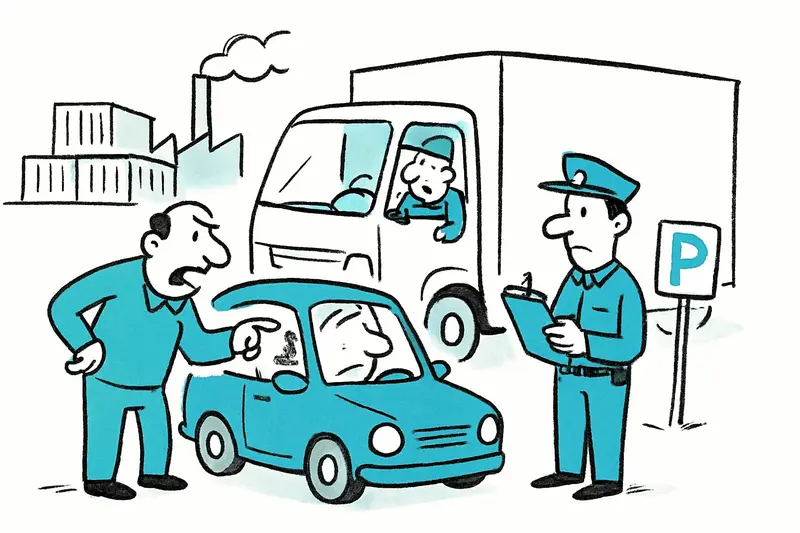
Calle 16 de Juliol in the Polígono Son Castelló (see Spotlight on Son Castelló: Why the occupants fled — and what the municipality must do now) is not a glamorous entrance. It's early, the smell of diesel hangs in the air, and the baker on the corner is pushing fresh croissants out the door. Truck taillights flash, technicians shoulder toolbox cases, and delivery vans try to reverse into short gaps. Several companies report: up to 70 percent of the public parking spaces are occupied by the vehicles of a single company fleet — more than 50 spaces, according to those affected.
Key question
Who is allowed to block public parking spaces in an industrial area long-term, and how much consideration must the neighbourhood tolerate?
Critical analysis
Parking tickets issued by the local police show that the situation is being recorded, still little changes; this is also discussed in Police clear parking chaos in Palma industrial areas — checks, towing, open questions. This points to three problem areas: First, isolated sanctions alone fall short. One-off tickets do not stop long-term occupation if the affected company factors the costs in as a business expense. Second, there appears to be a lack of coordinated parking planning for Son Castelló: there are public areas but no clear rules for company fleets, loading zones and visitor spaces. Third, there is a lack of transparent information: when residents and smaller businesses do not know how many company parking permits have been issued or whether there are exceptions, distrust and annoyance arise.
What is missing from the public debate
The loudest voices are those immediately affected — stressed employees who arrive late and managers who fear lost sales. Rarely discussed, however, is how a company's logistical decisions affect the entire infrastructure. Also underrepresented is the question of whether there are binding rules for company fleets and how the administration enforces them. The environmental perspective hardly appears: engines parked permanently mean emissions, and blocked spaces hamper deliveries that could otherwise run more smoothly; related local coverage on service strains in the area is available in Vehicle inspection in Son Castelló closed for three months – who bears the gap?.
Everyday scene from Son Castelló
A Monday morning: an employee of a small metal workshop drives an extra lap along Calle 16 de Juliol, honks once, gets out, walks three minutes to the workshop — all because of a parking space. A receptionist woman runs, shoes covered in dust, because the parking meter is occupied. The local police appear, hand out parking tickets, drivers pay — and in the afternoon the same vehicles are back in the same spots. The mood: irritated, resigned.
Concrete solutions
1) Short term: targeted controls with escalation stages. Not just tickets, but progressive sanctions for repeated long-term parkers; towing as an option for repeat offenders. Signs that clearly regulate loading times help immediately.
2) Medium term: a digital parking management system for the industrial estate. License plate registration for company parking permits and electronic enforcement reduces arbitrariness and makes it visible who uses how many spaces.
3) Infrastructure: designated loading and delivery zones as well as reserves for visitors. Especially in an industrial area, separate spaces for company vehicles make sense — this does not necessarily require sealing new areas; existing spaces can be reclassified.
4) Cooperation: establish a working group made up of affected small businesses, a large company, the industrial estate administration and the local police. Shared rules can be negotiated faster than local regulations alone.
5) Work organisation: companies should examine whether schedules, shift starts or vehicle rotations can be adjusted to stagger peak times. Carpooling or an internal shuttle to an external parking area are simple measures.
A test for the administration and businesses
The fact that the local police issue tickets is a signal. But: consistent solutions require planning instead of isolated reactions. The municipality could consider binding rules for fleet sizes in industrial areas and clear sanctions for abuse. Companies, in turn, must take responsibility: a fleet should not automatically occupy public infrastructure without compensation or agreement.
Pointed conclusion
The parking chaos on Calle 16 de Juliol is not just a nuisance — it points to structural gaps: in planning, enforcement and communication. Tickets are symbolic politics that provide short-term relief but do not solve the problem sustainably. Anyone who wants Son Castelló to function as an economic location must now create practical rules. Otherwise the street will remain a morning obstacle course of vans, horns and frustrated commuters.
Frequently asked questions
Why is parking so difficult in Son Castelló, Mallorca?
Can businesses in Mallorca use public parking spaces for their fleet all day?
Are parking tickets enough to fix the problem in Son Castelló?
What can workers in Mallorca do if they cannot find parking near their workplace?
Why does Calle 16 de Juliol in Son Castelló cause so many complaints?
Is there a parking plan for industrial areas in Palma like Son Castelló?
How could Son Castelló improve parking without building new roads or car parks?
What does the parking chaos in Son Castelló mean for businesses in Mallorca?
Similar News
Why the End of "Los Últimos Mohicanos" Is More Than the Closing of a Bar
With squealing tires and one last glass, an icon on the Palma–Manacor expressway closes. Why the demise of this German b...

Protest camp on Plaza España: Who asks for solutions to the right to housing?
Around 30 activists set up a tent camp on Palma's Plaza España to push for stronger tenant rights. Our analysis asks: Ar...

In the Name of a Gang: Alleged Extortion in El Molinar and What It Reveals About the Protection of Sex Workers
A man is accused of posing as a member of the Hells Angels and extorting two women at accommodation in El Molinar. The s...

When Chile Meets the Mediterranean: A New Flavor at Can Bordoy
At Can Bordoy in Palma's old town, Chilean chef Jhonatan Maldonado combines Patagonian seafood with Mediterranean island...

End of an Era on the Ma-15: Why the Biker Hangout at Son Gual Is More Than Just a Restaurant
"Los Últimos Mohicanos" closes unexpectedly. A meeting place for motorcyclists on the Palma–Algaida border is disappeari...
More to explore
Discover more interesting content

Can Cap de Bou

Townhouse Lleo 72
