
Pets Die in House Fire in Llucmajor — How Safe Are We Really?
Pets Die in House Fire in Llucmajor — How Safe Are We Really?
Several pets died in a fire at a three-story house in Llucmajor. A woman and her son managed to escape. A critical assessment: what is missing to ensure people and animals are rescued more quickly?
Pets Die in House Fire in Llucmajor — How Safe Are We Really?
Question: Why do fires in residential houses on Mallorca repeatedly end with dead animals — and what needs to change?
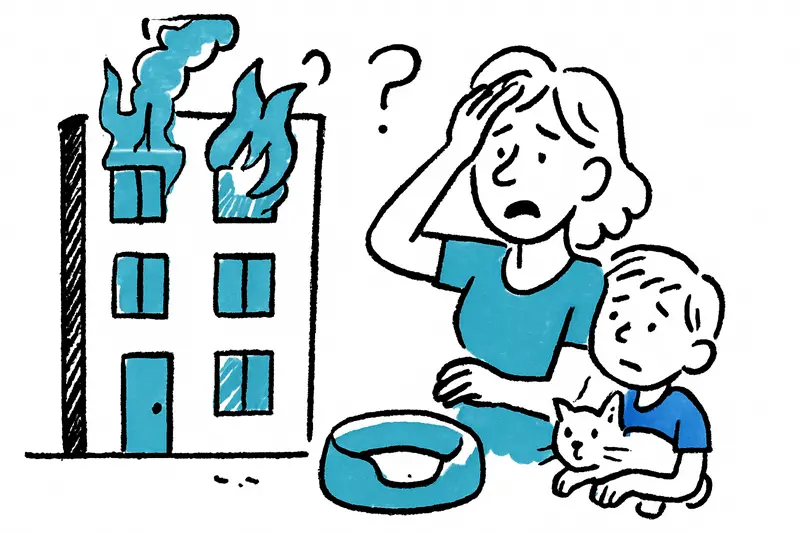
In the early hours of this morning, sirens and fire engines ripped the neighborhood in Llucmajor out of a half-sleep. A fire broke out on the ground floor of a three-story house on the outskirts; local reports titled Incendio nocturno en Llucmajor: mascotas mueren, quedan preguntas provided similar details. A woman and her son made it outside; the woman was taken to hospital as a precaution. Later, emergency crews found a dog, a cat and a parrot dead inside the building. The house was heavily damaged and initially cordoned off. The cause is still unclear, as noted in reports such as Mascotas mueren en un incendio en vivienda en Llucmajor — ¿Qué tan seguros estamos realmente?.
The scene was, as often on Mallorca, a mixture of urgency and neighbourly concern: smoke over the rooftops, the smell of burning wood and plastic, voices on the street, people stepping out with blankets and bags. In front of a café an older woman stopped without finishing her espresso; someone called out that the family’s dog had not gotten out of the house. Moments like these show that fires are not just technical incidents — they cut into everyday life on the island.
Critical analysis: two points stand out. First: the rapid protection of people is the priority, and rightly so. Second: pets are part of the family in many households — and they rarely appear in evacuation plans. When residents wake up at night, time is a luxury; a saved life often depends on seconds, on working smoke detectors (see NFPA smoke alarm guidance), on alarm systems and routine. Infrastructure on Mallorca is generally good, but simple aids are often missing in private homes.
What is missing in public debate: the discussion usually stops at the cause of the fire, the number of injured and material damage. Hardly anyone talks about smoke detectors in rental apartments, clear notices on the front door and mailbox that animals live in the home, or standardized procedures for animal rescue. Questions such as how quickly veterinarians are informed and who looks after animals after an operation rarely feature in media and politics.
Everyday problems specific to Mallorca: many old buildings in towns like Llucmajor have narrow staircases and small hallways. Electric heaters or outdated wiring in basements can become a risk. Tenants, often on fixed-term contracts and with language barriers, are reluctant or lack the knowledge to make changes to their living space. On the plaza we often hear that landlords refuse to cover simple measures such as installing smoke detectors — a conflict that can cost lives directly.
Concrete proposals — pragmatic and local:
1) Strengthen smoke alarm requirements: Municipal cost coverage for low-income households, distribution at markets and on weekends at town markets. A simple alarm can save lives at night.
2) Pet identification for emergencies: Adhesive stickers on the door (clearly visible to emergency crews) with short information: number and type of animals, contact person. No complex registration — a plain, physical signal.
3) Training for fire services and volunteers: Special exercises for animal rescue, cooperation with local animal welfare associations and private veterinary clinics, rapid information chains to veterinarians after an operation.
4) Strengthen neighborhood networks: Especially in smaller towns, neighbours act as first responders. Municipal information evenings in community centers, simple checklists to hang in stairwells indicating who can help in an evacuation (leave keys with trusted neighbours).
5) Multilingual, practical information: Many households on Mallorca are international. Flyers, short video tutorials and stickers in Spanish, Catalan, German and English increase the chance that safety information is received and used.
Another practical measure: mobile emergency kits for pets — a blanket, leash, sample of food and a copy of the vaccination record — could be distributed by municipalities (see Red Cross pet disaster safety tips). It sounds simple, but in the rush of an evacuation such small things help.
Everyday scene as a reminder: imagine it is 6 a.m., there is a strange smell in the kitchen, the neighbour knocks on the door. You grab what is within reach and call out "¡Perro! ¡Gato!" Often the door stays closed because the dog hides under the bed. A small, clearly displayed sign for rescuers or a routine to check sleeping places could help.
Conclusion: The fire in Llucmajor is a sad wake-up call. We talk a lot about buildings, but not enough about the small, everyday precautions that could protect people and animals. No big laws are needed overnight — rather pragmatic steps: smoke detectors, visible pet notices, neighbourhood coordination and better coordination between fire services and veterinarians. If the island community works together on this, deaths — human and animal — can be avoided.
The neighbour across the way said quietly today as the last emergency vehicle drove off: "It happens quickly. You only notice when it's too late." This simple truth should drive us not just to talk, but to act.
Frequently asked questions
How can families in Mallorca prepare for a house fire at night?
Are smoke detectors required in homes in Mallorca?
What should pet owners do if there is a fire in their Mallorca home?
What makes older houses in Mallorca more vulnerable to fire?
What is the best time of year to check fire safety in Mallorca homes?
What should tenants in Mallorca ask their landlord about fire safety?
How can neighbours help during a fire emergency in Mallorca?
Where in Mallorca do emergency fire situations become especially difficult?
Similar News
When the Wallet Becomes a Danger: Attack in Peguera and Lessons for Mallorca
In Peguera, two women are said to have stolen the wallet from a 75-year-old German couple. When the victim intervened, t...
Plata stays Plata: Young people take over, Llonguets remain
A small bar on Carrer de l'Argenteria will continue: Tolo Serra hands the place over to young Mallorcans at the end of t...
Unnoticed in the Luggage Compartment: How a Boy Traveled More Than 100 Kilometers in a Team Bus
A minor traveled in the undercarriage of a team bus for more than 100 kilometers until his cries for help were heard. A ...

Cap Vermell Grand: Second Michelin Key – a Gift for the East
The Cap Vermell Grand in Capdepera has been awarded its second Michelin key. For the region this elevates the luxury off...
Eurowings lets four aircraft carry names – a friendly idea that also reaches Mallorca
Eurowings is launching a campaign: four Airbus A320s are to carry the first names of people who help others in everyday ...
More to explore
Discover more interesting content

Can Cap de Bou

Townhouse Lleo 72
