
Playa de Palma: New Public Park — A Good Idea, But What's Missing?
Playa de Palma: New Public Park — A Good Idea, But What's Missing?
Palma's city council has approved converting the Dino Golf site at Playa de Palma into a 35,000 m² public park with a €7.8 million budget and a 24-month construction period. Planned features include play areas, sports zones and shaded seating. The project is both an opportunity and a risk.
Playa de Palma: New Public Park — A Good Idea, But What's Missing?
Key question: Can the former Dino Golf site at Playa de Palma become a park that actually benefits locals — without later turning into an "event park" for seasonal businesses and becoming a burden for residents?
The city council has approved the plan: on nearly 35,000 square metres, with a budget of €7.8 million and an estimated construction time of around 24 months, there should be space on the coast for play areas, sports zones and shady seating, as reported in redevelopment work starting at Playa de Palma and Castillo de Bellver. Streets in the surrounding area are to be reorganised and partially converted into pedestrian zones. On paper that sounds like a welcome green space between hotel blocks and beach bars.
But urban redevelopment on Mallorca is rarely just a "green line" in a cost estimate. Viewed cautiously, questions immediately arise: Who will pay for maintenance in the future? Are the €7.8 million enough for durable facilities — trees, clean water, toilets, lighting and accessible paths — or are these mainly construction costs for the first two years? And how will the city prevent organisers and market stalls from gradually annexing parts of the park?
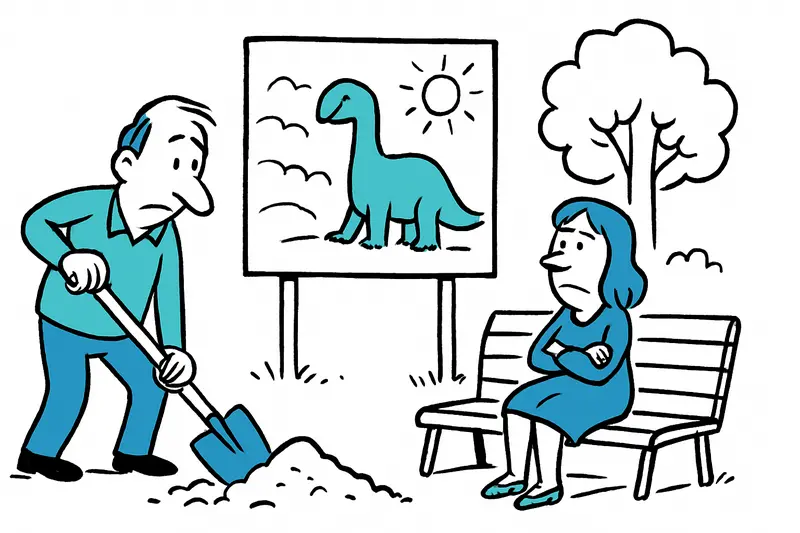
In everyday life the problem is clear: a Saturday noon at Playa de Palma, ice cream vans park, families push prams along the paseo, delivery scooters buzz by. The old Dino Golf hall still stands, faded figures at the entrance. The neighbourhood wants shade, a bit of greenery, safe routes for children — no additional traffic load. A public park therefore must be more than lawn and a few pieces of equipment.
What is rarely discussed in public debate: operating costs, water management and social use. Much is hinted at in Mallorca project descriptions, but rarely quantified. If trees are planted, who replaces them after dry periods? Who cleans the toilets? Who decides on events — and by what criteria are quiet hours guaranteed?
Concrete approaches that would make the project more reliable are quite pragmatic: first, a permanent maintenance budget that cannot be carelessly cut from the general city budget. This could be a dedicated fund financed from a small share of the tourism overnight tax or from lease shares of concessions for stalls, as suggested in Palma's new green oasis — but who will maintain it?
Second, nature-friendly design: native drought-tolerant trees, Mediterranean shrubs and water-saving irrigation technology. No exotic flowers that demand a lot of care. Third, clear rules for event areas — time-limited, with noise limits and quotas for commercial use — and a local committee of residents, clubs and city representatives to handle allocation.
Fourth: think about mobility. Many people arriving at Playa de Palma come by car. The park design should prioritise bike parking, charging points for e-scooters and public transport connections, rather than creating new car parking, similar to proposals in Rethinking Portixol: Plaza, Parking Garage and More Green for Palma's Waterfront. And fifth: monitoring. Early indicators (vegetation condition, pollution levels, number of public events) help to intervene proactively as wear occurs.
The investment can pay off — for tourists who appreciate a well-maintained coastal area, and for locals who urgently need more quality public spaces. But crucial is how far planning looks beyond the construction phase. A park that becomes overgrown after two years or a rule-free event venue is no gain for the neighbourhood.
Conclusion: The Playa de Palma project has potential. But it needs rules from the outset for maintenance and use, water-sensitive planting, a clear mobility strategy and citizen participation in allocation questions. Then the former Dino Golf could become a park where families picnic on mild evenings, sports groups train and children play carefree — without residents being left disadvantaged.
Frequently asked questions
What is planned for the former Dino Golf site in Playa de Palma?
Will the new park at Playa de Palma have enough shade, toilets and lighting?
How long will it take to build the new public park in Playa de Palma?
Who will be responsible for maintaining the new park in Playa de Palma?
Could the new park in Playa de Palma end up being used for events?
What kind of plants make sense for a new park in Mallorca?
How should people get to the Playa de Palma park without adding more traffic?
Why do residents in Playa de Palma want a new park at all?
Similar News
When the Wallet Becomes a Danger: Attack in Peguera and Lessons for Mallorca
In Peguera, two women are said to have stolen the wallet from a 75-year-old German couple. When the victim intervened, t...
Plata stays Plata: Young people take over, Llonguets remain
A small bar on Carrer de l'Argenteria will continue: Tolo Serra hands the place over to young Mallorcans at the end of t...
Unnoticed in the Luggage Compartment: How a Boy Traveled More Than 100 Kilometers in a Team Bus
A minor traveled in the undercarriage of a team bus for more than 100 kilometers until his cries for help were heard. A ...

Cap Vermell Grand: Second Michelin Key – a Gift for the East
The Cap Vermell Grand in Capdepera has been awarded its second Michelin key. For the region this elevates the luxury off...
Eurowings lets four aircraft carry names – a friendly idea that also reaches Mallorca
Eurowings is launching a campaign: four Airbus A320s are to carry the first names of people who help others in everyday ...
More to explore
Discover more interesting content

Can Cap de Bou

Townhouse Lleo 72
