
Morning avalanche of trash at Playa de Palma: Who clears away the party leftovers?
Morning avalanche of trash at Playa de Palma: Who clears away the party leftovers?
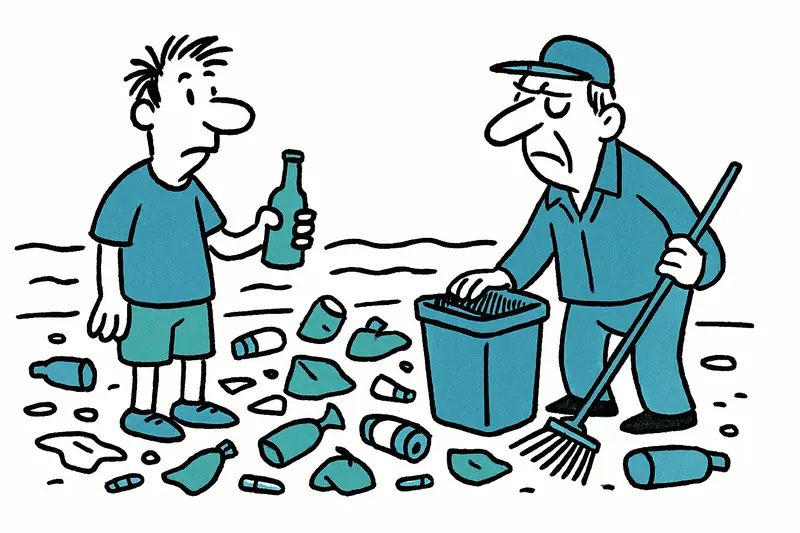
A video shows the beach area in front of Balneario 5 early in the morning after a night of partying strewn with bottles, cans and bags. Residents feel powerless and call for greater responsibility from guests, event organizers and authorities.
Morning avalanche of trash at Playa de Palma: Who clears away the party leftovers?
Key question
Who takes responsibility when Playa de Palma is covered in plastic bottles, cans and cigarette butts in the morning: the revellers, the businesses on the promenade, or the municipality?
Critical analysis
In the early morning, around 8:30, residents in front of Balneario 5 documented how the beach looked after a night of partying: scattered disposable plastic, drink cans, bags and other rubbish lay in the sand. The picture apparently repeats itself regularly and causes frustration among those who live here. The perspective is clear: a place that should offer peace and recreation during the day becomes a functional party zone at night, with consequences for which there is no visible, reliable enforcement mechanism.
The causes are complex. Single-use packaging and drinks in cups encourage rapid consumption and on-site disposal. Nighttime operations bring crowds to the water's edge, often without retreats or sufficient bins. Venue operators have commercial interests that prioritize entertaining visitors; waste disposal is treated as an afterthought. Neighbours experience the burden every morning: odours, broken glass, clogged drains – burdens that are not only aesthetic but also relevant to safety.
What is missing from the public debate
Public discussion often focuses on 'tourism' and 'nightlife', but less often on concrete measures that tackle the problem at its root. There is a lack of clear responsibilities: who is responsible for cleaning immediately after nightlife? What duties do event organizers and restaurateurs have to clean their outdoor areas? And, not least: how do we reach mostly non-local partygoers with rules and penalties?
Everyday scene from Palma
Imagine the moment: the sun has just risen, seagulls search for food among beer bottles, a jogger squeezes past discarded plastic bags while an elderly woman on a nearby balcony is already sweeping the street in front of her house. A small van with orange safety vests is parked on the promenade, but the team is overwhelmed by picking up the remains. These scenes repeat on many mornings and shape residents' everyday lives more than a one-off annoyance.
Concrete solutions
A few measures that could be implemented specifically at Playa de Palma: additional sturdy collection bins along the promenade and temporary large containers at events; fixed cleaning intervals immediately after venues close; binding agreements with club and bar operators on immediate cleaning obligations; the deployment of 'Waste Stewards' at major events to direct visitors to collection points; multilingual notices and discreet, visible fine signs at hotspots; trials of deposit systems for cups and bottles within venue areas; regular transparency reports from the municipality on cleaning times and costs.
In addition, coordinated night-shift planning would make sense: if street cleaning, public order services and operators are aligned in time and personnel, the burden can be shared. Volunteer actions by neighbours and initiatives are helpful but cannot permanently replace public services.
Why the sticker and vandalism debate belongs here
The phenomenon of marking public spaces with stickers – recently observed on the promenade near Balneario 6 – is not purely an aesthetic problem. It shows an attitude: some visitors treat spaces as usable and changeable without regard for the community interest. Vandalism and careless littering are two sides of the same disregard for public space.
Concise conclusion
The nightly littering of Playa de Palma is not fate but the result of missing agreements, inadequate infrastructure and poor enforceability of rules. Those who do not want to end up as the morning clean-up crew need clear responsibilities, visible measures and pragmatic cooperation between authorities, venue operators and residents. If the first morning cleaning round already becomes the norm, it indicates that too much has been left to leniency. Responsibility can be shared – but it must not rest solely with those who wake up and clean every morning.
Frequently asked questions
Why is Playa de Palma so dirty in the morning after a night out?
Who is responsible for cleaning up rubbish at Playa de Palma?
Is Playa de Palma still a good place to go for a morning walk after a party night?
What kind of rubbish is usually left at Playa de Palma after nightlife?
How can Playa de Palma be kept cleaner after nightlife?
Are there fines for littering at Playa de Palma in Mallorca?
Why do residents near Playa de Palma complain so much about nightlife rubbish?
What is a sensible way to enjoy nightlife in Playa de Palma without leaving a mess?
Similar News

Fewer Airlines, Fewer Destinations: What Palma's Winter Flight Schedule Means for Mallorca
Analysis shows: Winter at Son Sant Joan Airport will be quieter, with significantly fewer airlines and destinations. Who...
German tourist dies in Sa Calobra – a reality check for emergencies on Mallorca's beaches
A 40-year-old tourist died at the Torrent de Pareis. The emergency call, a doctor who happened to be present, a defibril...
Deadly Tractor Accident in Bunyola: What Needs to Be Done Now
In a work accident on an estate near Bunyola, a roughly 40-year-old man lost his life. His wife and a small child were o...
Head-first dive into the shallow part of Cala Fonoll: An accident and the unresolved question of responsibility
A young tourist dove into Cala Fonoll and was seriously injured. Key question: Why are clear warning signs missing at da...

Mistaken identity with fatal consequences: Brutal assault in S'Aranjassa — what's missing in the follow-up?
At S'Aranjassa a visitor to a finca was tied up, beaten and thrown out of a van. Three men have been arrested, including...
More to explore
Discover more interesting content

Can Cap de Bou

Townhouse Lleo 72
