
Police Clean Up: Almost 4,000 Confiscated Items in Palma and at Playa de Palma
Police Clean Up: Almost 4,000 Confiscated Items in Palma and at Playa de Palma
In two checks below the cathedral and at Playa de Palma, the local police confiscated almost 4,000 goods. One seller faces charges over industrial property rights. A reality check: why seizures alone do not solve the problem.
Police Clean Up: Almost 4,000 Confiscated Items in Palma and at Playa de Palma
Reality Check: Raid is necessary but not enough — what really needs to happen now
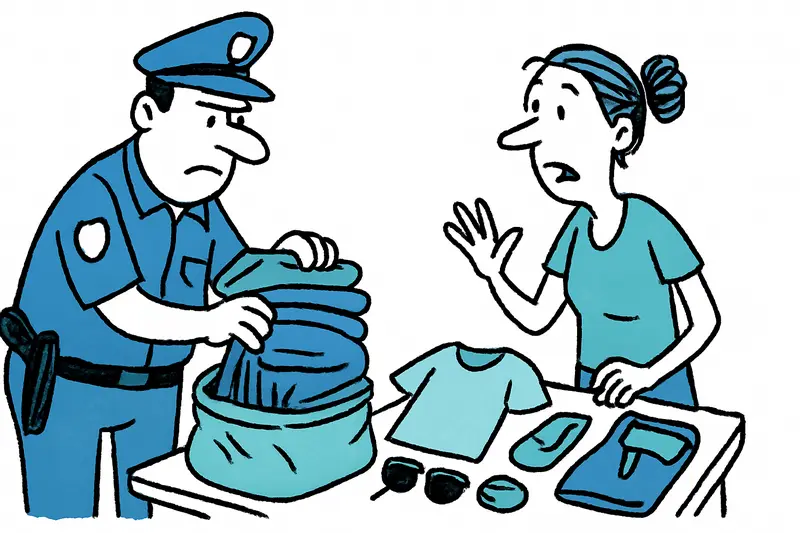
In the early afternoon, the sun already beating down on the paving and promenade, you can hear the seagulls, the rustle of bags and the constant offer: “Glasses, handbags, T-shirts!” This scene describes what happened last week below the cathedral in Palma and at Playa de Palma. In two operations, the local police confiscated a total of almost 4,000 items: 1,210 pieces in the city center and a further 2,760 at the beach, stored in 83 bags. In the first operation several carts were also secured; during the checks at the beach 19 police officers were deployed and seven reports were filed for alleged infringements of industrial property rights.
Key question: Do seizures of goods stop the shadow economy at Ballermann — or do they only push the problem to other places?
The account of facts is clear: T-shirts, bags, sunglasses, caps, trousers, sportswear, wallets, bracelets, fans and other souvenirs were confiscated. One seller is also facing proceedings for an alleged violation of industrial property rights. That may sound like success: less junk on the street, protection for legitimate traders. Anyone walking along Palma's Passeig or the beach promenade notices the gap. But the sheer number of confiscated items says little about the longer-term effect.
Why this is so becomes apparent in everyday life: that same evening, when the heat eases a little, new sellers are often not far away. They change the corner, swap the bags or find other spots at the playa. This is not just a question of will, but of supply and demand. Tourists look for cheap souvenirs, and for many vendors street sales remain as simple as they are lucrative — as long as controls are sporadic.
Critical analysis: Police operations are effective in the short term but limited in the long run if they are not part of a comprehensive plan. The week's measures reveal some weaknesses: 1) Focused checks work, but without constant presence the trade relocates; 2) Confiscated goods are only a symptom. The deeper questions are: Who supplies these mass-produced goods? How are the proceeds distributed? What role do transport and storage in other municipalities play? And how quickly are proceedings against the accused actually advanced?
What is often missing in public debate is the perspective of legitimate small retailers and tourists. Small shops in Palma that pay taxes and rent observe competition that does not follow the same rules. At the same time many holidaymakers do not understand that behind an apparently cheap bargain there can be a whole chain of copyright infringements or even organized distribution routes. Equally little discussed is what happens to the confiscated goods: Are they destroyed, recycled or stored as evidence — and for how long?
A daily scene: On a hot morning a woman stands with an improvised display of plastic bags on the Plaça in front of the cathedral. A coach stops, two tourist groups stroll by, someone calls “Camiseta, cinco euros.” A police officer arrives, counts, packs, writes a report. The woman looks shocked, but is already forming a different tactic in her head — maybe a new spot along the Rambla, maybe another sales network. The energy with which people here try to secure their livelihoods is real; regulation therefore affects not only market mechanics but also livelihoods.
Concrete approaches: Seizing alone is not enough. For lasting effect I suggest: 1) Intensify coordination between municipalities and authorities so vendors cannot simply relocate; 2) random checks with financial sanctions and rapid judicial processing — delays undermine prevention; 3) increased cooperation with customs and national security forces to interrupt counterfeiting networks; 4) transparent rules on the destruction or use of confiscated goods and public information about them; 5) awareness campaigns for tourists — clearly visible notices at the airport and major beaches explaining why fakes are harmful; 6) consider legal, short-term sales zones: temporary markets with clear conditions that offer small traders a legal perspective; 7) incentives for legal vendors, such as temporary stall fees low enough to improve competitiveness; 8) a reporting app for locals and visitors that allows anonymous tips.
Some of these measures cost money and political will. Others only require better coordination. The crucial point is: If the municipality only tidies up sporadically, the root remains untouched. If, on the other hand, seizures are linked with prevention, education and swift justice, the effect can be much greater.
Conclusion: The confiscation of almost 4,000 items is a visible sign that the city is taking action. But seized T-shirts and plastic bags are not an endpoint, they are a beginning. Without targeted follow-up — from tracing supply chains to educating buyers — Palma remains a cat-and-mouse game between inspectors and street sellers. Anyone sitting on the Plaça, hearing the noise of mopeds and smelling freshly baked ensaimadas quickly understands: order needs more than spot checks and seizures. It needs long-term strategies that regulate trade, consider livelihoods and protect the island as a whole. For a broader view of enforcement this season, see the report that notes over 450 arrests this summer.
Frequently asked questions
What does nearly 4,000 confiscated items in Palma and Playa de Palma say about Mallorca’s crackdown on counterfeit goods?
Are police raids that confiscate goods in Mallorca effective in the long term, or do sellers just move elsewhere?
What concrete steps could Mallorca take to make enforcement against street vendors more effective over time?
What happens to confiscated goods after raids in Mallorca?
How do enforcement actions along Palma's Passeig and the beach promenade affect visitors and their souvenir choices?
What is the perspective of legitimate Palma retailers amid enforcement against street vendors in Mallorca?
Are there proposals to help legal vendors in Mallorca, like temporary markets or lowering stall fees?
What role does tourist awareness play in Mallorca’s fight against fake goods, and how are notices used?
Similar News

More water than last year: Mallorca's reservoirs breathe easier
September rain refilled the Tramuntana's reserves: overall fill around 35 percent, Cúber at 40.42 percent, Gorg Blau at ...

Three Luxury Hotels in Banyalbufar: Lots of Money, Many Questions
A Danish investor plans three exclusive accommodations in Banyalbufar — including the historic Son Valentí. The announce...
2.1 tonnes of cocaine on sailing yacht off Spain's coast – a reality check for the coastguard
A 14-metre yacht was seized with 2.1 tonnes of cocaine. Who monitors the ports, how does the international hunt succeed ...

Heat Bonus in Mallorca: 100 Euros Extra for Outdoor Staff at MarSenses
MarSenses pays employees who worked outdoors in August an extra €100 as recognition. Lighter uniforms, reduced hours for...
Renovating in Mallorca: What You Really Can Do Without Neighbour Consent
Many think they can do whatever they want in their apartment. That's partly true — but only as long as structural elemen...
More to explore
Discover more interesting content

Can Cap de Bou

Townhouse Lleo 72
