
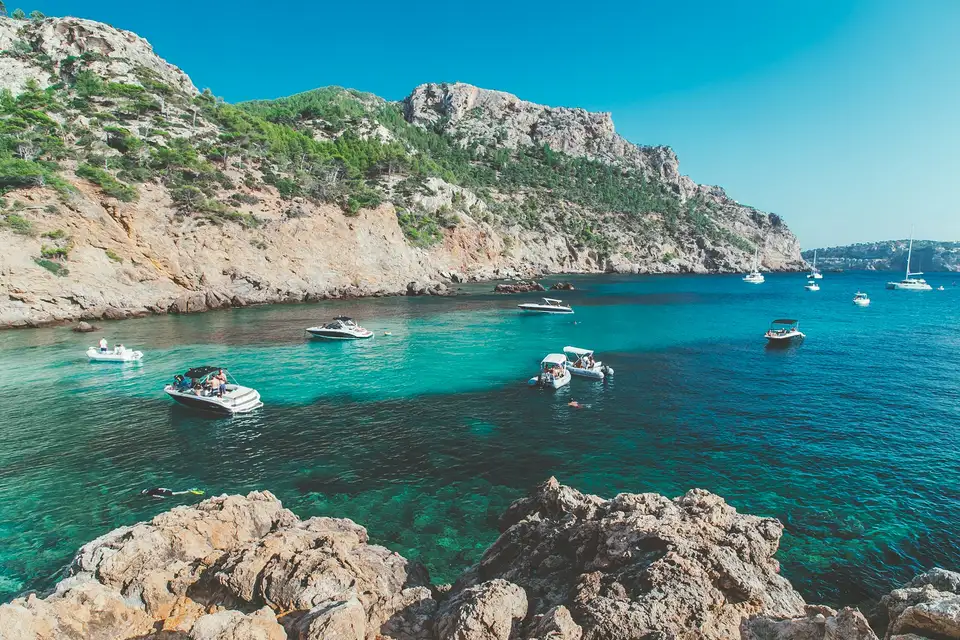
2.1 tonnes of cocaine on sailing yacht off Spain's coast – a reality check for the coastguard
A 14-metre yacht was seized with 2.1 tonnes of cocaine. Who monitors the ports, how does the international hunt succeed — and what does this mean for Mallorca?
2.1 tonnes of cocaine on sailing yacht off Spain's coast – a reality check for the coastguard
How could a 14-metre yacht remain under the radar for so long?
Clear guiding question: If a small sailing yacht in the middle of the Atlantic carries two tonnes of drugs and must be observed for months before it can finally be intercepted — what does that say about the control of our coasts?
The facts are sparse but solid: officials found around 2.1 tonnes of cocaine on board a 14-metre yacht, reportedly flying a Polish flag. The vessel was boarded about 650 kilometres off Galicia, the crew — reported by media to be from Argentina, Uruguay, Colombia and Albania — were arrested, and the yacht was towed to Vigo. The Spanish Tax and Customs Authority AEAT is named as the intelligence service; it had reportedly been shadowing the boat since it left the port of Roses in July. Several countries and agencies were involved in the operation, including French, Polish and British authorities as well as the DEA.
Small boats, large loads: the pattern is familiar. Sailing yachts are seen by some smugglers as discreet platforms; in dense shipping lanes and on the open sea they attract less attention than cargo-laden freighters. They also allow for mid-Atlantic transfers — a point investigators describe as the "Atlantic cocaine route." This method makes tracking difficult: coordinates change, AIS signals are manipulated or turned off, and handovers can take place far from regular control routes.
Critical analysis: the weeks-long shadowing shows that authorities must invest time, personnel and international networking to stop such operations. At the same time, the case raises questions. Why was a vessel with alleged smuggling links able to move unimpeded from the Mediterranean into the Atlantic? How close are the ties between bases on Spain's east coast — for example Roses or ports in Catalonia — and the relevant networks? And not least: what role do local marina structures and charter companies play when ships remain conspicuously in port for months without triggering tougher countermeasures?
What is often missing in public debate is the perspective of ordinary people here on the island. In Palma, on the Passeig and at the fishing piers of Moll Vell, people talk not only about tourists but also about boats that return late or stay in harbour unusually long. Most cases are harmless — but concern is growing that criminal routes may disguise the movement of goods, money and people through apparently normal leisure boats, as shown by 675 Kilos of Cocaine: What the Find Means for Palma, Inca and Binissalem.
Everyday scene: on a late morning in Santa Catalina you hear the clatter of espresso cups, see dockworkers inspecting a sailboat on their way to the shipyard, and anglers on the pier keeping watch. These small observations are no substitute for state controls — but they are part of an early-warning system that authorities could use better.
Concrete approaches, without claiming a patent solution:
1) Better port monitoring: Not only at major transshipment points, but also at small marinas, suspicious behaviour must be systematically recorded: unusual cleaning, hurried conversions, frequent nighttime crossings. A mandatory reporting obligation for marina managers to customs authorities could help.
2) Technical upgrades: Expand AIS monitoring combined with geofencing and anomaly detection. If ships in normally quiet areas switch signals on/off or show strange patterns, an automatic alert should be triggered — linked to the ability to carry out short-term, targeted inspections.
3) International case networking: The find shows how important cross-border cooperation is. Data exchange between customs, police and international partners must become faster and more operational — up to joint analyses of charter contracts, crew lists and logbooks.
4) Strengthen local awareness: Training for harbour operators and charter companies to recognise suspicious behaviour, coupled with clear reporting channels. Those who report unusual activities from a Mallorcan bar or on the pier should know how and to whom to report.
5) Law enforcement and follow-up: Seizure alone is not enough. Investigations into the origin of the drugs and the logistics networks in ports such as Roses, Girona or beyond must follow, as discussed in Drugs, Millions and Suspected Abuse of Office: What the Major Operation in Mallorca Reveals — and local structures that provide cover for smugglers must be analysed.
Punchy conclusion: the spectacular seizure off Galicia is a success of international cooperation. But it also indicates that smuggling organisations can use small vessels as a tactical means as long as gaps remain in port and maritime controls. For Mallorca this means: vigilance in daily life and better interfaces between local observations and central authority databases are not a luxury, but necessary if we do not want leisure boats to be misused as cover more often in the future.
Official information usually ends with the arrest; how prevention should feel in everyday harbour life is rarely discussed, even after cases like Drug discovery on a ferry from Barcelona: Three arrests in Palma and the questions that remain.
In the end there remains an image often seen here on the island: sails in the evening light, the sea calm, cafés filling up — and beneath the surface routines at work that make both authorities and residents equally alert.
Frequently asked questions
What does the Galicia cocaine seizure tell us about coastguard surveillance near Mallorca?
How can Mallorca’s marinas improve monitoring to spot suspicious smuggling?
What is the Atlantic cocaine route and how does it involve small sailing yachts?
What should harbour workers and residents in Mallorca watch for and report?
Which agencies collaborated on the seizure and what does that show about cross-border cooperation?
Why do criminals sometimes turn AIS off or spoof signals, and how can Mallorca counter this?
Why are ports like Roses important in Mallorca's fight against smuggling?
What practical steps can Mallorca take to keep boats from being misused as cover?
Similar News

Heat Bonus in Mallorca: 100 Euros Extra for Outdoor Staff at MarSenses
MarSenses pays employees who worked outdoors in August an extra €100 as recognition. Lighter uniforms, reduced hours for...

Renovating in Mallorca: What You Really Can Do Without Neighbour Consent
Many think they can do whatever they want in their apartment. That's partly true — but only as long as structural elemen...
Cafetería San Siro: A Meeting Place on Schinken Street Since 1966
In the middle of Schinken Street, Cafetería San Siro has been offering Mallorcan hospitality for more than six decades —...

From Ballermann to Prison: What the Verdict Against the Femina Operator Means for Palma
The Munich Regional Court convicted a German operator for subsidy fraud. What does the verdict mean for the Femina Club,...

Underpass Verge de Lluc: 19-year-old fights her way out of flooded car – a warning sign for Palma
A 19-year-old recently escaped swimming from her car after the Verge de Lluc underpass held up to one and a half meters ...
More to explore
Discover more interesting content

Can Cap de Bou

Townhouse Lleo 72
