
Pool at the Lluc Monastery Temporarily Closed: Between Administration, Safety and Everyday Life
The historic pool at the Santuari de Lluc is closed because the final operating permit is missing. The botanical garden also remains closed after a rockfall. What does this say about planning and protection in Mallorca?
Pool at the Lluc Monastery Temporarily Closed: Between Administration, Safety and Everyday Life
Key question: Must a small facility that has existed since 1958 be shut down for weeks because a formal operating permit is still missing — and who is responsible for that?
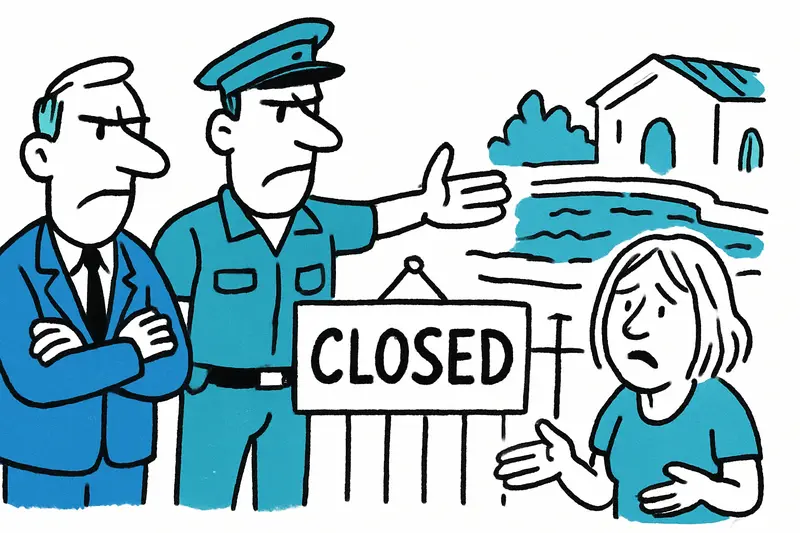
In the early morning, when the first bus labors up the pass to the Serra de Tramuntana and the cicadas have not yet started, a small sign stands at the gate of the Santuari de Lluc: the pool remains temporarily closed. No lifeguards, no children laughing at the pool edge, only the scent of pines and the faint traffic on the access road. For many locals and visitors the sight is puzzling. The pool dates from 1958 and has been modernized over time — it is neither a luxury project nor a 24/7 hotspot, but a piece of local everyday culture.
The municipality of Escorca had the pool sealed because the urban planning approval was not yet fully completed. According to the municipal administration, the necessary plan amendment has now been approved; however, the final operating permit is still missing. At the same time, the monastery's botanical garden remains closed: repairs are required after a rockfall before visitors can be admitted again. Risk of Collapse in Cala Major: Six Venues Temporarily Closed provides a recent example of venues being sealed for structural safety concerns.
This is understandable from two perspectives: on the one hand, safety and legality come first. Administrative acts and inspections do not exist for their own sake but are meant to protect people. On the other hand, the measure appears disproportionately long in a place like Lluc, where religious life, pilgrims, hikers and villagers are closely intertwined. The temporary loss of a small local facility hits those hardest who do not have a wide range of alternatives — retirees, nearby families, volunteer groups.
What is missing in the public discourse on this issue? First: transparency about the schedule. "Approved but without an operating permit" sounds like picky bureaucracy without a clear timeline. Second: a nuanced balancing between short-term safety precautions and long-term quality of life. And third: communication that takes affected users seriously — from the pilgrims asking for a break in the pool to the gardeners who can no longer work.
A look at everyday life makes the problems tangible: a couple from Inca who have gone to Lluc every summer for decades stand at the locked gate and leaf through old photos; two young people cycling on the MA-10 cast regretful glances at the site; in the car park an older man talks to the guard about the last renovation he still remembers. Such scenes show: it's not just about a building permit, but about memories and daily habits.
Concrete suggestions for solutions, without sensationalism:
1) Short deadlines and a transparent checklist: The municipality should disclose which documents are still missing and by when they will be reviewed. A clear timetable reduces uncertainty.
2) Provisional operating permit with conditions: If it is only about formal details, the facility could be opened provisionally under strict conditions (e.g. reduced number of users, mandatory documentation procedures, regular inspections).
3) Prioritization of technical inspections: If safety is the concern, engineers and expert assessors should be able to carry out short-term checks. Recent severe weather and storms have put island preparedness under scrutiny, as discussed in Restless week in Mallorca: How well is the island prepared for heavy rain?.
4) Immediate measures for the Botanical Garden: Temporary barriers and quick stabilization work after the rockfall, complemented by a visible work plan, give visitors and residents hope. Comparable temporary closures of parks have been reported elsewhere, for example Parks in Palma Closed: Was the Closure Timely and Sufficient?.
5) Better communication with the population: Notice boards in the car park, a short online page or postings with contact details and current status prevent rumors and demonstrate responsibility.
The situation is not a scandal, but an administrative dilemma with local repercussions. Authorities, the monastery management and residents can solve the problem — if they act quickly and transparently. A pool is not a human right, but it is part of local identity. Other municipalities have faced pool restrictions for different reasons, such as water-saving measures reported in Sóller Turns Off the Tap: Pools Closed, Strict Water Restrictions. Those who forgo the small pool all summer lose a piece of everyday life, not just a municipal facility.
Conclusion: The closure is factually explained, but not sufficiently justified. What matters now is speed, clear communication and pragmatic interim solutions. If the last formalities can actually be completed in a few weeks, that would be a reasonable compromise between legal certainty and the needs of local people. If not, the risk grows that a short-term closure will turn into lasting estrangement from local offerings.
Frequently asked questions
Why is the Lluc Monastery pool closed, and what does that mean for visitors?
How does a temporary pool closure affect daily life in Mallorca communities?
What steps could authorities take to resolve a closure like this more quickly?
What is the Lluc Monastery pool’s significance to locals?
What is the status of the Lluc Botanical Garden after the rockfall?
How can people stay informed about Lluc pool and garden reopenings?
Is a provisional opening possible for the Lluc pool?
What broader lessons can Mallorca draw from this Lluc situation about safety, bureaucracy and local life?
Similar News

Ryanair Flight Diverted to Barcelona: An In-Flight Emergency and the Questions That Follow
A Ryanair jet from Pisa to Málaga landed in Barcelona after a passenger became acutely ill. Why these cases need more at...
Alarm in Port de Pollença: What now for the polluted bay?
Hundreds of people protested on the beach of Port de Pollença. The environmental organization Arrels Marines demands a p...

Micaela Schäfer: Between Playa de Palma and a Berlin Law Firm — New Calm, an Old Tomcat and Solid Finances
The party artist from the Ballermann scene appears surprisingly down-to-earth: a new relationship with a Berlin lawyer, ...
At Playa de Palma: Fire in Residential Building – six people rescued on the roof, what is missing in prevention?
In the evening a fire broke out on the first floor of a five‑storey building on Calle Trasimé. Six residents fled to the...

New License Requirement for Mini-Boats in Mallorca: Protection Measure or Tourism Brake?
From October 1 renters of small recreational boats in the Balearics must present a boating license. Critical questions r...
More to explore
Discover more interesting content

Boat Tour with BBQ along Es Trenc Beach

Private transfer from Mallorca Airport (PMI) to Pollensa
