
Almost 30 kilos of laughing gas at Playa de Palma – what does it say about nightlife and safety?
Almost 30 kilos of laughing gas at Playa de Palma – what does it say about nightlife and safety?
A man was stopped with 18 cylinders of nitrous oxide near Playa de Palma. Time for a reality check: How dangerous is the situation, what is missing in the debate and which simple measures help on site?
Almost 30 kilos of laughing gas at Playa de Palma – what does it say about nightlife and safety?
Key question: How does so much nitrous oxide get into the beach nights, and what can the city do about it?
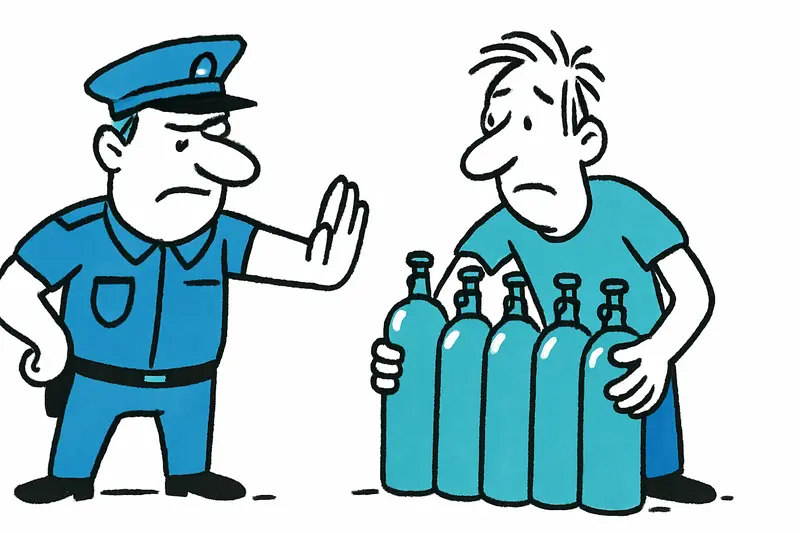
In the night leading into Saturday, the National Police stopped a man at Playa de Palma whose rental car contained 18 cylinders of nitrous oxide and accessories for direct consumption. Police believe the man intended to sell the cylinders; he is being investigated for an alleged offense against public health. Neatly documented, sober, concise – and yet many questions remain open.
The case initially reads like a routine operation, similar to Night raid at Playa de Palma: assessment, questions and what's missing: flashing lights, torches, a stopped car. But when you drive down Palma Street toward Can Pastilla late on a summer evening, you hear bass from bars, see groups of people on the roadside, lighting, loud conversations. Demand and supply for products that act quickly and take up little space arise precisely in this milieu. A car with 18 gas cylinders stands out – and shows that the problem is no longer limited to individual balloons.
Critical analysis: It is not just about a man with a trunk full of cylinders. The seizure is an indicator of a flourishing, if partly informal, market. Some dismiss laughing gas as harmless party fun; dangers to health, traffic safety and public order are often underestimated. Filling balloons on site not only leaves litter but creates risks of accidents through disorientation or sudden loss of consciousness. Added to that: street sales outside regulated points of sale make control more difficult.
What is missing in the public discourse: Coverage is often limited to individual operations and rarely addresses the background. How are supply chains organized? Who are the buyers – tourist groups, young residents, partygoers? What role do local shops, petrol stations or online platforms play in distribution? And last but not least: what technical and legal means do police and municipalities have to act preventively? Without these questions the discussion stays on the surface, as debated in Ballermann in Focus: How safe is Playa de Palma really?.
Everyday scene from Mallorca: early morning at Playa de Palma. The street sweepers are out, music is still fading from the bars, a group of young people collects the last plastic cups. A garbage bag tears, balloon remnants drift across the pavement. An older resident shakes her head: 'It used to be quiet here,' she says in a hoarse voice. These small, daily observations show: the problem is not only criminal-police in nature; it affects neighbors, tourism workers and the urban image, as seen after incidents such as Early-Morning Fall at Playa de Palma: German Tourist in Critical Condition.
Concrete approaches: First, better presence at hotspots like Playa de Palma during evening and night hours. Visible policing creates deterrence and enables quick interventions. Second, clear disposal options and cleanup campaigns together with beach bars: fewer balloon remnants lower the threshold for neighbors and cleaning staff. Third, information campaigns in multiple languages – not moralizing, but factual about health risks, the correct reaction in case of overdose and dangers in road traffic. Fourth, controls along distribution routes: who sells in bulk, in what environment, to which target groups? Finally, fifth, fines and administrative measures against commercial suppliers that clearly target recreational consumption.
None of this requires magic, but it does require coordination: police, municipal administration, bar operators, beach cleaning services and neighborhood representatives must pull together. In cities like Palma such cooperation is difficult because tourism interests, traffic issues and security concerns often end up in different drawers; recent clashes show how quickly situations can escalate, for example Brawl at Playa de Palma: Why a verbal exchange could have ended fatally.
What helps immediately: more lighting in parking areas, additional trash bins, flexible cleaning staff schedules in weeks with festivals, clear rules for street vending. In the medium term the city should consider whether bans on certain package sizes or a registration requirement for traders make sense. Such measures are not pretty, but they are effective – and they do not affect those who buy a few balloons for a birthday, but those who organize bulk sales.
Concise conclusion: The discovery of almost 30 kilos of laughing gas is more than a headline. It is a wake-up call. Not only for the police, but for everyone who lives and works in Palma. Street problems are not solved by checks alone; they need clear rules, visible presence and the willingness of local businesses to take responsibility. Otherwise, the morning after the party there will be the rubbish – and the certainty that the same scene may be repeated in a week.
Place, time and eyewitnesses may vary, but the lesson remains: if the island nights get louder, prevention and order must follow. Otherwise it is again the cleaning staff, residents and overstretched emergency services who pay the bill.
Frequently asked questions
Is laughing gas a problem in Mallorca nightlife?
Why is laughing gas considered a safety risk in Mallorca?
What should visitors know about Playa de Palma at night?
How do police in Mallorca deal with street sales of laughing gas?
What can Mallorca residents do about litter from nightlife?
When is Playa de Palma most affected by nightlife problems?
What should I pack for a summer night out in Mallorca?
Is nightlife in Palma becoming more of a public order issue?
Similar News
Ryanair Flight Diverted to Barcelona: An In-Flight Emergency and the Questions That Follow
A Ryanair jet from Pisa to Málaga landed in Barcelona after a passenger became acutely ill. Why these cases need more at...
Alarm in Port de Pollença: What now for the polluted bay?
Hundreds of people protested on the beach of Port de Pollença. The environmental organization Arrels Marines demands a p...

Micaela Schäfer: Between Playa de Palma and a Berlin Law Firm — New Calm, an Old Tomcat and Solid Finances
The party artist from the Ballermann scene appears surprisingly down-to-earth: a new relationship with a Berlin lawyer, ...
At Playa de Palma: Fire in Residential Building – six people rescued on the roof, what is missing in prevention?
In the evening a fire broke out on the first floor of a five‑storey building on Calle Trasimé. Six residents fled to the...
New License Requirement for Mini-Boats in Mallorca: Protection Measure or Tourism Brake?
From October 1 renters of small recreational boats in the Balearics must present a boating license. Critical questions r...
More to explore
Discover more interesting content

Boat Tour with BBQ along Es Trenc Beach
Private transfer from Mallorca Airport (PMI) to Pollensa
