
Palma's Old Prison: Bricked Up, Monitored — and Now?
Palma's Old Prison: Bricked Up, Monitored — and Now?
The city of Palma has cleared the old prison and begun filling in entrances and installing video surveillance. What does this mean for security, heritage protection and the people who sought refuge there?
Palma's Old Prison: Bricked Up, Monitored — and Now?
Key question: Does bricking it up create real security — or are we just shifting problems without a plan for the people and the building?
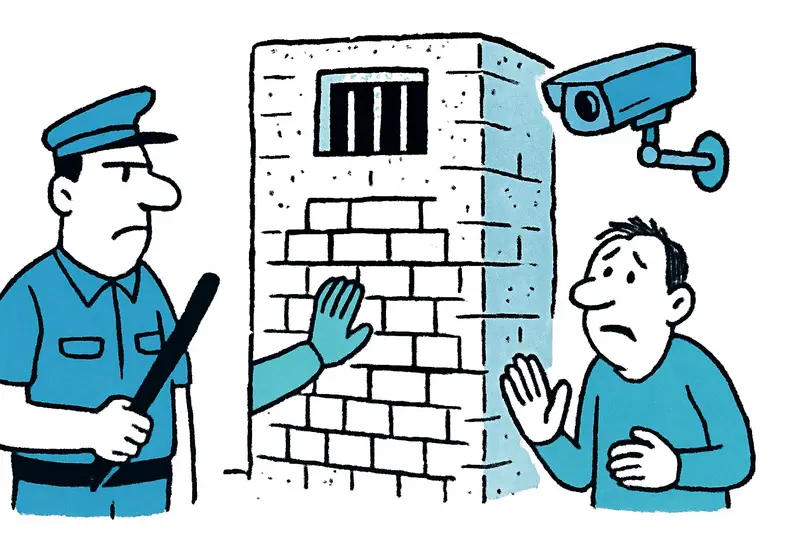
On Wednesday the vacant prison in Palma was completely cleared. The city administration justified the eviction with safety risks: fire hazards and insufficient escape routes, according to official statements. Since then rubble has been brought to the entrances, masons are mixing cement, and workers are sealing doorways so that no one can move back in. In parallel, the installation of a video surveillance system has been announced, a move that raises familiar questions discussed in When Palma's squares are watched: AI cameras, new jackets and the question of trust.
It sounds concrete, almost final: bricked-up entrances, cameras mounted on the corners. But the measure raises questions that have so far been underrepresented in the city debate. A brief assessment: the city wants to eliminate hazards. That is legitimate. But is closing the building the end of responsibility — or just a stopover before the next chapter, which no one specifies?
Critical analysis: citing fire and escape hazards is understandable. Old prison buildings are rarely designed for modern requirements. Yet simply sealing the building seems administratively convenient: it prevents people from living in dangerous conditions in the short term, but it does not solve why they sought refuge there in the first place. Where is the information on where the evicted people were taken, which social services were involved and whether alternative accommodations were available, such as schemes to convert vacant offices and shops into apartments discussed in When Offices Go to Sleep: Palma's Plan to Revive the Old Town?
Two things are especially missing from the public discourse: first, transparency about the immediate rehousing of those affected; second, a long-term plan for the building. Is it merely an unattractive relic to be shut off, or is reuse being considered — social housing, a cultural center, a parking lot? So far the city only speaks of security measures, not of perspectives.
A scene from everyday life: in the early morning the heat rolls through the alleys of the old town, delivery vans honk, seagulls screech above the harbor. On the nearby plaça regulars of the cafés watch with slightly pinched faces as workers in safety vests apply the last layer of mortar. An older couple stops, remembering when the building was still inhabited — skeptical that a layer of cement can provide concrete answers.
What is also missing is the discussion about data protection and public space. Cameras on a historic building raise questions: who may access the footage? How long will it be stored? Will the recordings be used for identification purposes or just as a deterrent? Such details concern residents and business owners who are already watchful because of delivery times and tourism, especially after high-profile incidents like Watch theft in Palma's Old Town: Escape ends in Barcelona – How safe are our streets?.
Concrete solutions that could be implemented immediately include: first, short-term guaranteed accommodation for all evicted people and clear communication channels between city hall, social services and NGOs. Second, a rapid, publicly accessible risk analysis of the building so that not only generic claims like 'fire risk' are mentioned, but specific defects are documented. Third, a medium-term participation process for the site — a simple online consultation is not enough; roundtables with residents, heritage-protection authorities, social organizations and architects are needed.
Further measures: install surveillance technology only with clear rules and a time limit; examine parallel projects for meaningful interim uses (temporary exhibitions, supervised transitional shelters, workshops); and make budgetary items transparent: how much does the bricking up cost, how much do the cameras cost, and who will bear follow-up maintenance costs?
Legally the approach presents pitfalls: protected building fabric must be documented with required repairs; sealing off must not lead to de facto decay if the state or city has obligations as owner. Recent incidents like the Collapse at Palma's City Wall: What Needs to Happen Now underline the stakes. Public authorities should therefore record in writing which maintenance or usage obligations exist — so that a short-term security measure does not become a long-term wasted legacy.
To conclude with a pointed summary: bricking up sends a clear signal — it brings quiet, but no answers. Security needs more than walls and cameras; it needs pathways for people and perspectives for buildings. Those who want to actively shape Palma's urban form should not treat construction sites as end points, but as starting points for dialogue and concrete projects.
City hall has acted. Now it must explain what comes next — for the people who lived there, and for the building itself.
Frequently asked questions
Why did Palma's old prison get sealed up?
What happens to people evicted from unsafe buildings in Mallorca?
Does bricking up an empty building solve the problem in Palma?
Will Palma's old prison be monitored with cameras now?
What could Palma do with the old prison building in the long term?
How do safety issues in old buildings affect protected sites in Mallorca?
What should the city publish after closing an empty building in Palma?
Is Palma's old prison part of a wider housing issue in Mallorca?
Similar News
Plata stays Plata: Young people take over, Llonguets remain
A small bar on Carrer de l'Argenteria will continue: Tolo Serra hands the place over to young Mallorcans at the end of t...
Unnoticed in the Luggage Compartment: How a Boy Traveled More Than 100 Kilometers in a Team Bus
A minor traveled in the undercarriage of a team bus for more than 100 kilometers until his cries for help were heard. A ...

Cap Vermell Grand: Second Michelin Key – a Gift for the East
The Cap Vermell Grand in Capdepera has been awarded its second Michelin key. For the region this elevates the luxury off...

Eurowings lets four aircraft carry names – a friendly idea that also reaches Mallorca
Eurowings is launching a campaign: four Airbus A320s are to carry the first names of people who help others in everyday ...
From the Reality Studio to the Pitch: Aleks Petrovic Makes Mallorca His Base
The former participant in numerous TV shows moves from Dubai to the island and launches a project with FC Germania Mallo...
More to explore
Discover more interesting content

Can Cap de Bou

Townhouse Lleo 72
