
Between Headlines and Street Noise: Who Paints the Picture of Palma's Mass Demonstration?
Between Headlines and Street Noise: Who Paints the Picture of Palma's Mass Demonstration?
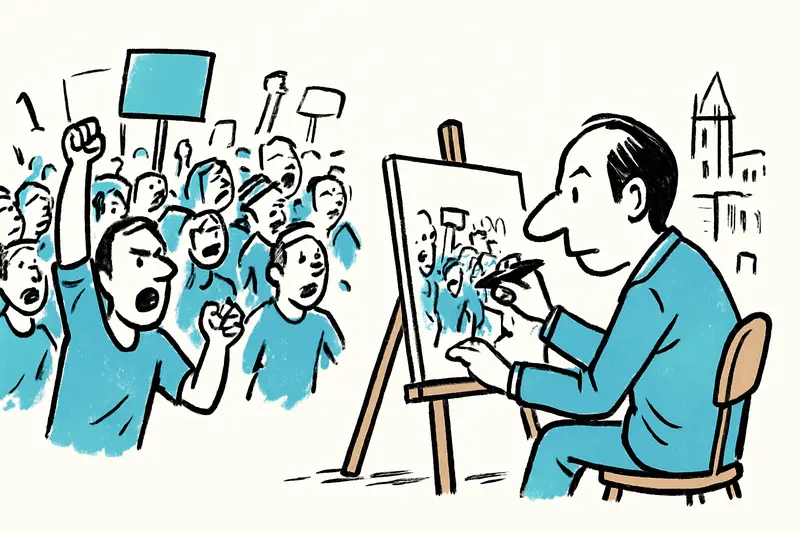
The large rally of around 25,000 people in Palma prompted very different portrayals internationally. An analysis: why some media seek images while others focus on causes.
Between Headlines and Street Noise: Who Paints the Picture of Palma's Mass Demonstration?
Guiding question: Why do such contrasting images of the same demonstration in Palma arise?
In the afternoon, the air heavy with heat and the scent of freshly baked ensaimadas, people filled the city's main arteries. On the Passeig del Born, at the Plaça de Cort and in the narrow streets leading to the port, about 25,000 people gathered, according to official estimates, to express their dissatisfaction with the current tourism model, as reported in Thousands demonstrated on Sunday in Palma — from the Plaça de les Columnes to the Plaça Joan Carles I.
The question is not academic: which image prevails when local demands against rising rents and the strain on infrastructure stand on one side and spectacular images of violence on the other?
Critical analysis: More than a camera frame
When reporting is reduced to single frame-for-frame moments—baton against trombone, thrown bottle against siren—the portrayal loses its context. Journalistic selection is not an oversight; it is a decision: what is put in the picture, which tones are emphasized, and which voices are missing? In Mallorca that day one heard not only chants but also long stretches of speeches about the housing shortage, environmental protection and working conditions. These contents risk being drowned in the flood of dramatic footage, as documented in Evening Road Closures in Palma: Between the Right to Protest and Traffic Chaos.
It is important to emphasize: reports about incidents are part of the truth. But reporting that shows almost exclusively these scenes produces a distorted judgment about the demonstration as a whole and the political demands behind it.
What is missing in the public discourse
Concrete numbers and tangible explanations for people here on the ground are missing: How many apartments have been removed from the market in the last five years? How are tourism jobs distributed spatially and seasonally? Who bears the costs for infrastructure, and who truly benefits economically? Related reporting on service reductions during protests appears in General Strike for Palestine Makes Palma Quieter — and Raises Questions. Also hardly visible are the voices from hotel kitchens, from cleaning staff or small shop owners who often oscillate between worries about making ends meet and solidarity. Without these perspectives the discussion remains abstract and polarizing, a dynamic visible in controversies such as Posters, Provocation, Polarization: How Mallorca's Streets Become a Campaign Ground.
A daily scene from Palma
The next morning an elderly woman sits on a bench at the Mercado de l'Olivar. She saw the demonstration and says in a hoarse voice that the order of things is crazy: tourists squeezing in tight rows at the harbor, empty houses in side streets, and tenants who can hardly make ends meet. A taxi driver on the Passeig Marítim nods in agreement, recalling the sirens in the night and how politics only reacts when flashpoints become public. Such voices are simply there, between the scent of coffee and police sirens—they deserve more space in reporting.
Concrete solutions
For the media: more context, fewer endless loops of spectacular images. Concretely that means: reporting teams that stay on site longer; explanatory graphs with numbers; inclusion of affected people's voices and studies on the regional economy.
For authorities and organizers: transparent communication channels during and after large gatherings. A simple measure would be a central media briefing point in Palma with seamlessly documented timelines of events and an independent observation office that records the proceedings.
For civil society: media literacy training for initiatives, clear press contacts at demonstrations, and dedicated teams for peaceful coordination so that demands are clearly conveyed even when peripheral incidents occur.
Pointed conclusion
The demonstration made a real problem visible: the island stands at a crossroads between economy and quality of life. However, if the debate is overshadowed by individual, loudest images, society loses the chance for solutions. Those who want the overall picture must look more closely: at the numbers, at the people, at everyday life between Passeig and Platja. Otherwise in the end not reason but the next headline will decide, and that would be a bad deal for Mallorca.
Frequently asked questions
What is the typical weather in Palma during summer, and how should I dress and plan?
What should I pack for a day exploring Palma during warm weather?
Why do different photos of the same Palma demonstration show contrasting images?
What housing and tourism concerns are being discussed in Palma?
What roles do everyday Palma residents and workers play in the protest conversation?
What concrete steps could improve reporting on demonstrations in Mallorca?
Who bears the costs of infrastructure linked to tourism in Palma?
What steps can authorities or organizers take to improve communication after large gatherings in Palma?
Similar News
From the Reality Studio to the Pitch: Aleks Petrovic Makes Mallorca His Base
The former participant in numerous TV shows moves from Dubai to the island and launches a project with FC Germania Mallo...

When the Phone Falls Silent: Concern for Sarah Joelle in Mallorca — and What It Reveals
After days without a response, the TV personality's unreachability in Mallorca sparked concern. Shortly afterwards an al...
Ultraluxury on the Ground: Four Seasons Jet in Palma — a Reality Check for Formentor and the Island
A high-priced flight crosses Mallorca and its guests stay for days at the Formentor resort. What does the island get bes...

Death of a Witness and the Justice Backlog: Why the Kegel Brothers Trial Matters in Mallorca
A witness in the Playa de Palma fire case has died, and the trial against eight German holidaymakers has been delayed un...

Champagne Reception, Red Carpet and Mini Originals: The Pre-Nit del Art at Gallery Mensing
Almost 400 guests, champagne, pop-art feats by Tom Boston and a raffle for the Parkinson's foundation: Gallery Mensing t...
More to explore
Discover more interesting content

Can Cap de Bou

Townhouse Lleo 72
