
General Strike for Palestine Makes Palma Quieter — and Raises Questions
A nationwide general strike also affects Mallorca: fewer buses, reduced services — and an evening protest at Plaza España. What locals need to know now.
Spain stands still today — noticeably also in Mallorca
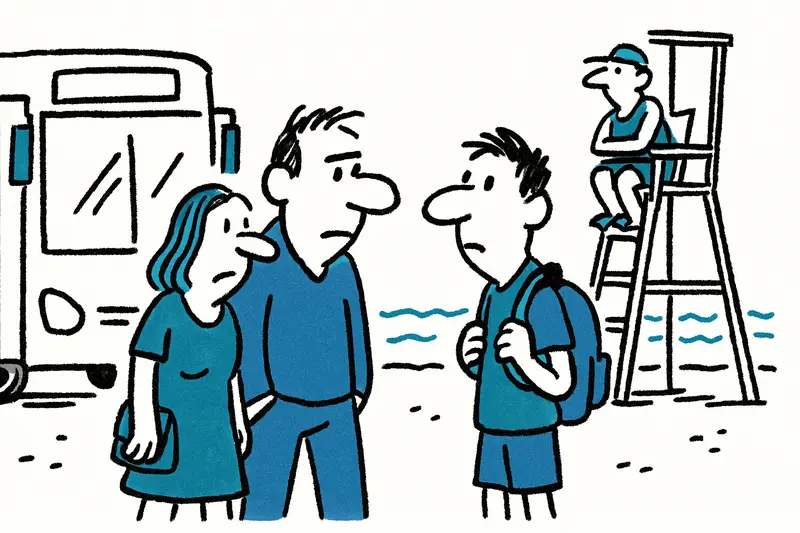
The nationwide general strike in solidarity with Palestine has made Palma noticeably quieter today. Already in the morning one heard less of the familiar clatter of the intercity buses, and instead more the rattling of bicycle baskets and the distant cries of seagulls over the bay. Not chaos, but a clear change in everyday life: fewer buses, fewer schoolchildren on their way, fewer lifeguards on the beach — and at Plaza de España the first signs for the evening are gathering.
How local transport is changing — and why it affects more than commuters
The TIB Sunday schedule is running a Sunday schedule. On the intercity lines heading north there are larger gaps between services; in Palma the metro trains run only between 10:00–12:00 and 17:00–19:00 at every second-train interval. That means: anyone who needs to get to the airport, to work or to a hotel shift should allow significantly more time. Especially seasonal staff and commuters who rely on punctual connections are under pressure — an aspect often overlooked in the debate.
Public services: routine slower, emergencies covered — but with bottlenecks
There is less staff on duty in schools, health centres and hospitals. Routine work runs slower, appointments are being postponed, but emergencies continue to be treated. It becomes problematic for afternoon and evening shifts when staff are blocked by demonstrations or take part themselves. The risk: elderly people or those with chronic conditions who depend on regular transport could find themselves in a bind. Authorities are communicating, but the information chains could be clearer.
Plaza España tonight: protests visible
A large protest march is scheduled for 18:30; lifeguards are already meeting at 18:00 for their own rally — topics include working conditions, among others. The consequence: road closures, detours and crowded streets around Plaza España. Drivers and buses must expect closures; many lines will be rerouted. Those seeking an evening of peace in the old town should arrive earlier or plan the evening differently.
What is often overlooked — and which solutions could help
Public discussion usually focuses on symbolism and political messages. Less attention is paid to practical consequences: lost wages for hourly workers, tourists who risk missing flights, or beachgoers who find fewer lifeguards on duty. These effects cannot be argued away and call for pragmatic responses.
Concrete measures that would help today:
1. Better advance information: Authorities and transport operators could communicate alternative routes, shuttle offers and minimum services early on. A clear, central online hub for current changes would remove much uncertainty.
2. Coordinate minimum services: For critical areas like emergency medicine and beach patrols, binding minimum staffing levels should be agreed — with clear exceptions for union actions, but without safety risks for the population.
3. Employer flexibility: Hotels, airport services and small businesses could support remote work, shift swaps or organized carpooling this time to cushion absences.
4. Local neighborhood help: Volunteer initiatives — local taxi drivers, neighborhood networks, hoteliers — could step in at short notice with shuttles or information boards. Such cooperations have proven effective in the past.
For locals and visitors: pragmatism helps
Practical tips: leave earlier, check schedules in apps, use a bike or taxi, and call the health centre before appointments. Many cafés and shops are open; the mood is mixed: some are loud and determined, others prefer to watch. On the streets today there are more political conversations than usual — and the rattle of the buses is less frequent than normal.
Update: Strikes and protests can change by the hour — it is best to check again shortly beforehand.
Frequently asked questions
How is the general strike affecting public transport in Mallorca today?
Is the Palma metro running during the strike in Mallorca?
Will buses to the airport in Mallorca still run during the strike?
Are schools and health centres in Mallorca open during the strike?
What is happening at Plaza España in Palma during the strike?
Can tourists in Mallorca still get around during the strike?
Should beachgoers in Mallorca expect fewer lifeguards during the strike?
What should residents in Mallorca do if they have an appointment today?
Similar News
Nine-year-old rescued after cliff fall at Cala Murada — How safe are Mallorca's coastal paths?
A boy fell roughly five meters down the rocks near Cala Murada. The dusk rescue was elaborate; a helper also had to be r...
How safe are tourists in the luxury marinas? After arrests: a reality check
The Guardia Civil arrested two men in Calvià who are suspected of stealing luxury watches in Port d'Andratx and Puerto P...
Palma Chases Wealthy US Tourists — The Key Question: Who Should the City Actually Serve?
The city is investing more than €200,000 to attract high-paying visitors in several US cities. A good idea — but what is...
Enough swimming: Why Port de Pollenca is louder than the sea
More than 200 people formed a human chain in Port de Pollenca — not only as a protest but as a wake-up call. Guiding que...
Mysterious disappearance in Alcúdia: Where is 24-year-old Lisa B.?
Since August 3 there has been no trace of 24-year-old German Lisa B. The family has traveled to Mallorca and urgently re...
More to explore
Discover more interesting content

Boat Tour with BBQ along Es Trenc Beach

Private transfer from Mallorca Airport (PMI) to Pollensa
