
Porsche Stopped on Trailer: Customs Demands €21,630 — Case Traces Back to Spain
Porsche Stopped on Trailer: Customs Demands €21,630 — Case Traces Back to Spain
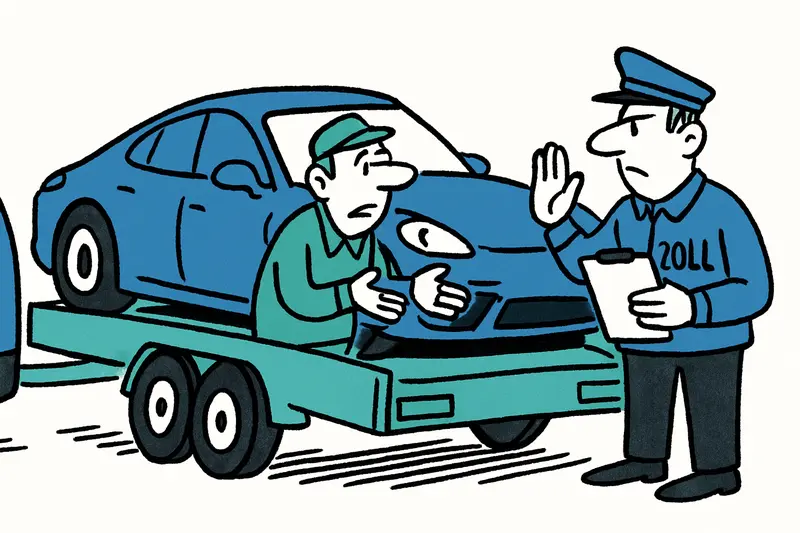
Near Heilbronn, German customs stopped a Porsche Panamera e-hybrid being transported from Romania to Spain. Without paperwork: import duties of €21,630 were levied and the car was seized. What does this say about cross-border vehicle transport?
Porsche Stopped on Trailer: Customs Demands €21,630 — Case Traces Back to Spain
Key question: How well are transports between Eastern and Western Europe controlled — and why does the problem sometimes end up here in Mallorca?
During the night, customs near Heilbronn seized a Porsche Panamera e-hybrid on a vehicle trailer. The car was apparently registered in Romania and was to be taken to Spain. The driver, whom authorities say is of Ukrainian origin, could not present the required import and customs documents; as a result, import duties amounting to €21,630 were due, and the car remained in the custody of the customs officers.
In short, this is not a small paperwork mistake. Vehicles registered outside the EU must be properly cleared according to German Customs guidance on importing vehicles, otherwise high duties arise — or the car is left behind. In this case, the driver could not pay the amount on site; that led to the seizure of the vehicle. It is not known exactly where in Spain the Porsche was intended to be delivered.
Critical analysis: The incident on the motorway near Bad Rappenau is more than an anecdote. It shows how tricky the intersections between registration law, goods movement and individual favors can become. A favor from a friend — that could be how the driver explains it — quickly turns into a legal problem when basics like transit documents, customs declarations or the ability to pay are missing.
What is often missing from the public debate is the perspective of practitioners. In Mallorca one hears at the petrol station, in the port of Palma or at the Santa Catalina market again and again stories about transports, returns and stopovers; residents often recall local incidents such as When a Tow Bill Escalated: Porsche Escape from Palma to Llucmajor. Taxi drivers and hauliers know the tricks and the pitfalls: people move a vehicle across borders because the paperwork is annoying or because someone urgently needs a car. When the checkpoint catches up, the bill remains — often with the drivers or with the final recipient.
An everyday scene on Mallorca: on Sunday afternoons, when the Passeig Marítim becomes quieter, dockworkers and rental operators at the quay discuss such cases. A colleague reports a van that waited for days until the paperwork was sorted; similar consumer disputes are described in Used Car Trap in Llucmajor: When Trusting a Garage Becomes Expensive. These conversations show that the problem is not abstract but affects people who take on transports for little money and end up facing large claims.
Concrete solutions are on the table and do not require a miracle strategy: first, better information and low-threshold guidance for drivers and hauliers about the mandatory documents when crossing borders. A second point is the simplification of transit procedures through digital pre-notifications — so the border officer already knows on site whether the papers are complete. Third, cross-border controls should be aligned with the interests of both sides: more cooperation between German and Spanish authorities so that, for legitimate transports, quick ways to submit missing documents are possible.
There is also a practical proposal for everyday use: a supervisory safety net in the form of temporary bonds or electronic guarantees that would allow immediate onward travel until the formalities are resolved. Such instruments would reduce financial pressure on site while making abuse more difficult.
The role of the recipient side is also important: whoever has a vehicle picked up or delivered abroad must know the legal responsibility. In Mallorca, for example, the purchase of used vehicles from third countries should come with stronger demands for written agreements and proof — at the port, in dealerships and in classified ad chats alike.
What is missing from the debate is transparent tracking of what happens to seized luxury vehicles. Are they auctioned, returned, or left in custody for months? Clearer communication from the authorities would help so that residents, buyers and local service providers are not left in uncertainty.
Conclusion: The case near Heilbronn is an example of how cross-border transport habits collide with legal pitfalls. For Mallorca this is not just a domestic news item — many buyers, transporters and workshops on the island are part of this chain. Better information, digital pre-checks and practical guarantees could prevent future seizures. As long as such mechanisms are missing, the road between Romania and Palma remains a terrain where good intentions can end up being expensive.
Frequently asked questions
What happens if a car is brought through Mallorca without the right customs paperwork?
Do imported cars need customs clearance before being delivered to Spain or Mallorca?
Can customs seize a car in Mallorca if the duties are not paid on the spot?
What documents should a haulier carry when transporting a car to Mallorca?
Why do vehicle transports through Mallorca sometimes lead to legal trouble?
What should buyers in Mallorca check before accepting a car delivered from abroad?
Are digital pre-notifications useful for car transport to Mallorca?
What can Mallorca residents do to avoid problems when arranging a used car from another country?
Similar News

Who Bears the Burden? Mallorca Between Tenant Protection and Landlord Fears
Madrid's new housing decrees strengthen tenant rights — but on Mallorca concern is growing: will the law drive small lan...
On the Edge: What Mallorca's Airport Loses If a Major Low-Cost Carrier Falters
The company that operates numerous connections from Palma to France and domestically is negotiating with creditors to re...
Ballermann star Frenzy wins 'Villa of Temptation' and donates prize money to Mallorca animal rescue
Ballermann singer Frenzy won the German reality show and donated the remaining prize money — around €14,080 — to an anim...
70 Trees Removed on Avenida Jaume I: What's Happening in Santa Ponça?
On October 1 the final redevelopment phase on Avenida Jaume I in Santa Ponça begins: 70 trees and old streetlights are t...

When a Boundary Is Crossed: The Case of Isi Glück and the Responsibility of Venue Operators
The singer from Mallorca reports an assault backstage in Halle. A clear guiding question, analysis of missing protective...
More to explore
Discover more interesting content

Can Cap de Bou

Townhouse Lleo 72
