
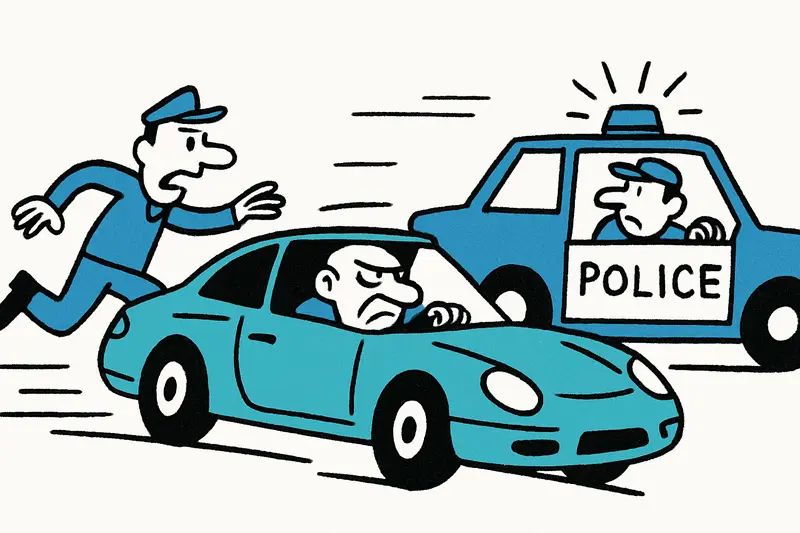
When a Tow Bill Escalated: Porsche Escape from Palma to Llucmajor
A 70-year-old broke out of a tow yard in Palma in his Porsche and sped along the Ma-19 to the Guardia Civil station in Llucmajor. Why do such situations escalate — and how could they be prevented?
Small spark, long consequences: How a towing bill turned into a police chase
It was one of those evenings when the heat still clings to the asphalt and the last buses are heading for the airport: around 6:15 pm, residents report, as detailed in a Mallorca Magic report on the Porsche escape from Palma to Llucmajor, the owner of a Porsche appeared at the yard of a municipal towing service in Palma. Instead of negotiating with the staff, the 70-year-old is said to have broken through the barrier and climbed into his sports car. A loud bang, the clanging of metal and then the roar of the engine – neighbors stood in their gardens with phones and sent videos into messenger groups.
The route: Ma-19, Can Pastilla, industrial areas to Llucmajor
What followed was a pursuit along the Ma-19 toward the southeast, past Can Pastilla, through narrow sections with industrial halls, and ended in front of the Guardia Civil station in Llucmajor. Patrol cars from the local police, a motorcycle unit and later the Guardia Civil used signs and vehicles to cordon off the area. Fortunately there were no serious injuries – but the images of a retiree who trusted the accelerator more than a parking fine spread through the neighborhood like wildfire.
The central question: Why does anger escalate so quickly?
Behind the incident lies a simple but uncomfortable guiding question: why do people – in this case a 70-year-old – resort to such risky means instead of taking legal steps? The answer is never mono-causal. Shame, anger at perceived injustice, fear of high costs and the desire to regain control often combine. Particularly striking: when public or municipal services (such as towing) can in minutes threaten a person’s autonomy, this can trigger a strong, impulsive reaction.
What is missing from the public debate
When analysing the incident, three aspects are discussed too rarely: first, the design and security of tow yards. A barrier that can be broken through so easily is not only a property damage problem – it poses dangers to employees and passers-by. Second, communication: on-site there are often no simple mediation offers, a clear fee breakdown or a way to pay immediately digitally with subsequent remote release of the vehicle. Third, the psychological component for older drivers: stress, orientation problems or a feeling of loss of control can speed up decisions one later regrets.
Concrete opportunities and solutions
The lesson from the evening in Palma is not only prosecution, but prevention. Some practical proposals:
1. Safer tow yards: stronger barriers, panic buttons for staff, clearly marked access routes and video surveillance that can have a de-escalating effect.
2. Immediate payment and mediation options: a terminal or a QR code at the gate allowing people to pay by phone or digitally, paired with remote unlocking. A short on-site mediation point – a conversation can often achieve more than a fine.
3. Training for towing staff: de-escalation training, checklists for risky situations and clear rules of conduct when dealing with agitated people.
4. Review of police pursuit practices: a more critical assessment of when a pursuit on heavily trafficked roads is justified. Motorcycle units and coordination between local police and the Guardia Civil are important, but the safety of uninvolved people must remain the priority.
5. Road safety and senior driver checks: regular refresher offers and voluntary checks for older drivers, combined with information on how to react correctly in an emergency, can help prevent impulsive decisions.
Aftermath: police, fines and neighbour reactions
The man was arrested on the spot and now faces charges including property damage, dangerous driving and resisting law enforcement. The car was impounded again and taken back to the municipal depot – with new towing fees and now possible criminal consequences. Neighbours are relieved that no one was seriously injured, mixed with incomprehension at the action of a retiree who apparently hit the gas instead of seeking a conversation. Some residents are annoyed that the Spanish evening calm and street safety were disturbed once more.
A small, realistic outlook
Such cases are individual incidents yet symptomatic of a field of tension: short tempers, high emotional stress, unclear processes and technical weaknesses. Driving along the Ma-19 on a warm summer evening, one not only hears the rumble of lorries but also the low grumble of a community wondering how to resolve conflicts without engine noise. The city should use this episode: better security, better communication and a few small bureaucratic measures to prevent a bill from becoming a danger to the public.
In the end the simple admonition remains: being angry about towing fees is human. Fleeing behind the wheel is not.
Frequently asked questions
What should I do if my car has been towed in Mallorca?
How hot does Mallorca get in the evening during summer?
Is it dangerous to drive fast on the Ma-19 near Palma?
What happens if police stop you after a dangerous driving incident in Mallorca?
Why do people react so strongly to towing fees in Mallorca?
Can I pay a towing fee in Mallorca digitally at the depot?
What is Llucmajor known for on the south-east side of Mallorca?
How can towing yards in Mallorca be made safer for staff and drivers?
Similar News
Cafetería San Siro: A Meeting Place on Schinken Street Since 1966
In the middle of Schinken Street, Cafetería San Siro has been offering Mallorcan hospitality for more than six decades —...
From Ballermann to Prison: What the Verdict Against the Femina Operator Means for Palma
The Munich Regional Court convicted a German operator for subsidy fraud. What does the verdict mean for the Femina Club,...
Underpass Verge de Lluc: 19-year-old fights her way out of flooded car – a warning sign for Palma
A 19-year-old recently escaped swimming from her car after the Verge de Lluc underpass held up to one and a half meters ...
When the Floodgates Open Again: Why Palma's Floods Aren't a Coincidence
A sudden heavy downpour around 5 p.m. brought Palma to a standstill: flooded streets, full basements, panicked commuters...
Playa de Palma: Life-saving at Balneario 11 – Lifeguards Act Quickly
A German holidaymaker suffered cardiac arrest at Playa de Palma. Lifeguards resuscitated her on the beach; emergency ser...
More to explore
Discover more interesting content

Can Cap de Bou

Townhouse Lleo 72
