
The Price of Idyllic Life: When Finca Charm Consumes Resources
The Price of Idyllic Life: When Finca Charm Consumes Resources
A study on Pollença shows: scattered holiday homes drain groundwater and generate car traffic. Key question: How much idyll can the island endure? Concrete measures are urgently needed.
The Price of Idyllic Life: When Finca Charm Consumes Resources
Guiding question: How much rural tourism can Pollença tolerate before water shortages and clogged country roads become a real problem?
On an April morning in Pollença the Plaça sounds a little different: market stalls are being set up, a delivery van honks, somewhere a chicken coop door slams, and the smell of freshly brewed coffee mixes with the resinous scent of pine. At the same time, locals from the outskirts watch cars with foreign license plates winding along narrow paths – holidaymakers heading to their rented finca. This scene is harmless; it is everyday life and echoes debates such as 29.5 million in Puigpunyent: Luxury finca or symptom of a bigger question?
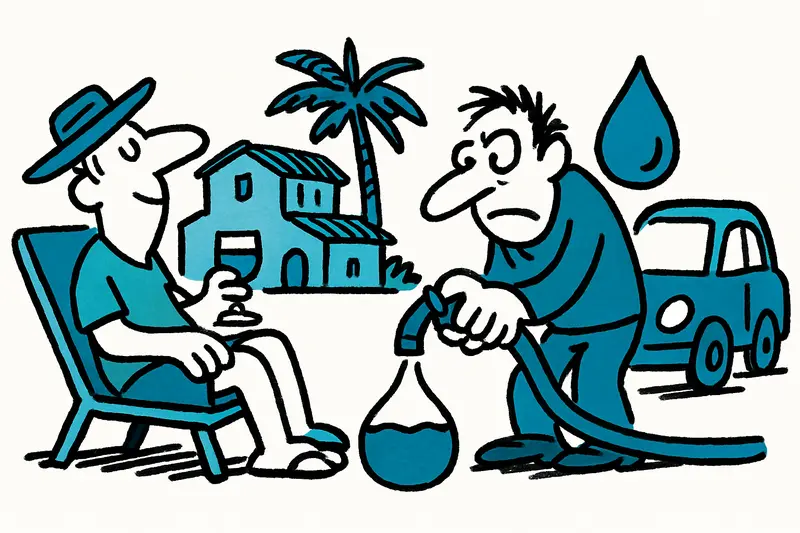
A scientific study within the project Cases que no existeixen produced figures that cannot be easily ignored: around 751,000 cubic meters of additional annual water demand are attributed to rural holiday homes – about 41.4 percent of the municipality's average total consumption. At the same time, many of these houses are not connected to the public water network and draw water from private wells or cisterns. That makes monitoring difficult and obscures who extracts how much.
Mobility belongs to the same problem area. The study shows that only 3.4 percent of households in the town center need a car to reach the supermarket; in rural areas it is 63.6 percent. Almost all houses outside the town (98.1 percent) rely on a motor vehicle to get to the beach. For more than half of the outlying properties (53.5 percent), reaching the nearest bus stop is hardly possible without a car. Adding incoming and outgoing cars, delivery trips, and the additional commuter movement of cleaning and service staff creates a consistently increased pressure on small country roads and parking spaces.
Critical analysis: these figures make two things clear. First: the current model with scattered holiday accommodations is particularly land- and resource-intensive. It shifts burdens into spaces that were not planned for high traffic or intensive water use. Second: lacking transparency and control over private wells, combined with mediation through digital platforms, prevents proper household planning. Municipal water management cannot be steered sustainably in this way.
What is often missing from the public discourse is the connection between water and transport planning. Measures are often considered separately: some allocation here, a few parking signs there. Rarely is an integrated strategy on the table that links limits on additional water extraction with a mobility concept for outlying areas. Also little discussed is the role of the platform economy. The fact that around 63.3 percent of the 2,634 rural dwellings are marketed via short-term rentals means a more volatile use pattern than with traditional long-term tenants – peak times cause peak consumption, a dynamic also mirrored in other sectors as explored in When Dinner Becomes a Luxury: How Mallorca's Pricing Estranges Its Restaurant Scene.
Concrete solutions that could work: first, a mandatory register for holiday accommodations on suelo rústico (rural land) with binding information on water supply, maximum occupancy and responsibilities for drinking water replenishment. Second, wells and cisterns must in future be subject to reporting requirements and periodic inspections; smart meters on cisterns could make consumption transparent. Third: promotion of small, timetable-based shuttle services from town to groups of fincas, combined with limited parking zones at village centers to reduce unnecessary individual trips. Fourth: a revised fee schedule that staggers water prices and charges by season and usage — creating incentives to use resources more sparingly.
At the local level this will not suffice without enforcement: violations such as illegal connections or overcrowding must be investigated and sanctioned; at the same time municipal services are needed, for example central washing and laundry services that reduce trips. As a complement, the municipality can target funding for switching agriculture to rainwater use and for shared resource use (community cisterns, neighborhood shuttles).
What you notice in everyday life: when in summer the roads to Port de Pollença become slow in the mornings and a resident on the Camí de Ternelles puts up a no-parking sign, this is not a luxury problem. It is a signal: the infrastructure is reaching capacity. Finca tourism brings income, yes. But it shifts costs — onto roads, groundwater and the patience of neighbors; high-end developments such as Villa Solitaire in Son Vida: Cinema Under the Starry Sky show another side of the debate.
Conclusion succinctly: idyll has its price. Those who want a culture of scattered holiday homes must either regulate it sustainably or be prepared for the idyll to look less idyllic sooner or later. Transparency, binding rules and local mobility alternatives are not optional extras but necessary if Pollença wants to preserve its landscape and quality of life.
Frequently asked questions
Why are rural holiday homes in Pollença causing concern about water use?
Is it easy to get around rural Mallorca without a car?
What problems does finca tourism create for roads around Pollença?
What should you know before renting a finca in Mallorca?
Does Pollença need stricter rules for holiday rentals on rural land?
Why are private wells and cisterns a problem in Mallorca’s countryside?
What transport solutions could help fincas around Pollença?
Is rural tourism in Mallorca still sustainable in the long run?
Similar News

Rental Car Theft in El Arenal: What This Incident Reveals About Our Gaps
A teenager steals a running rental car in El Arenal, flees on foot, climbs over walls and is caught by the Guardia Civil...

Red Rope in Palma's Library: What Helps Against Selfie Tourism — and What's Missing
Palma's city library cordoned off an area with a red rope to keep selfie tourism away from reading and working activitie...

Fort San Carlos: Museum, Harbor Dispute — and a Conflict That Demands Answers
The military museum at Fort San Carlos sits right on Palma's harbor, with unexpectedly quiet rooms filled with cannons a...

Old Town Under Pressure: When a Doorway Becomes a Sleeping and Shower Place
For months a woman has been living with a parasol, a clothes rack and personal belongings next to the social welfare off...

When Shopping Weighs Heavier: Mallorca Demands a Tax Pause on Food and Fuel
Rising prices are putting pressure on households and agriculture. The Balearic Islands are calling for temporary tax rel...
More to explore
Discover more interesting content

Can Cap de Bou

Townhouse Lleo 72
