
Floating Palace off Palma: Luxury, Questions and What Is Missing
Floating Palace off Palma: Luxury, Questions and What Is Missing
The 90-metre yacht "Zen" caused a stir in Palma. Who really benefits, what rules apply — and why watching from the quay is not enough?
Floating Palace off Palma: Luxury, Questions and What Is Missing
A 90-metre yacht, a prominent owner – and hardly any transparency. What does this mean for the port, residents and the environment?
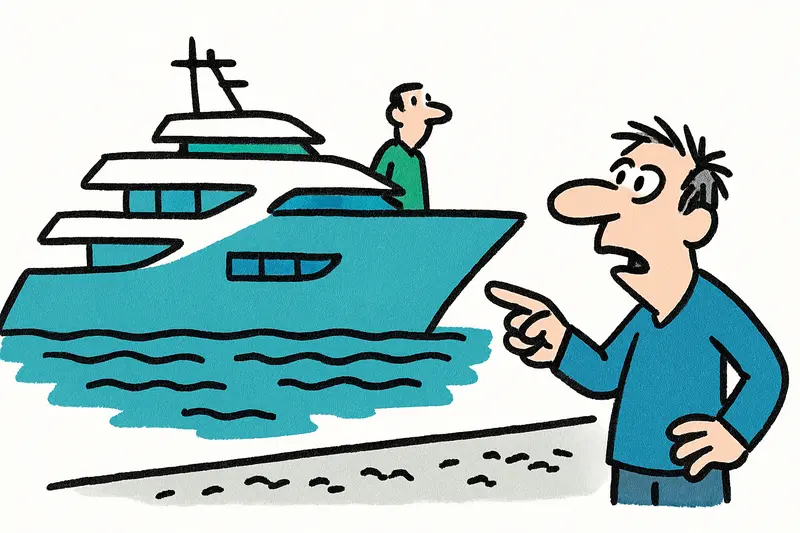
The "Zen", just under 90 metres long and estimated to be worth around $200 million, was docked in the port of Palma on Monday before departing for Gibraltar. On board: room for up to 16 guests, around 25 crew members, an owner’s deck with a private jacuzzi and art studio, a beach club with fold-out balconies, a spa, a cinema and an eight-metre-long pool at the stern. Owner: the Chinese entrepreneur Wu Guangming, founder of Jiangsu Yuyue Medical Equipment & Supply (Yuwell). His story – from the son of a fishing family to a self-made billionaire with an estimated fortune of about $3.3 billion – reads like a rags-to-riches saga. At the same time, there are indications of earlier investigations related to insider trading. That raises questions.
Key question: What consequences does it have for Palma if such floating villas regularly arrive and depart – economically, ecologically and in terms of transparency?
In the short term, the picture looks tempting: harbour restaurants fill up, suppliers and yacht service companies earn money, a touch of glamour is in the air. But the benefits are unevenly distributed. Many service providers are external, the crew often lives on board for months and only returns sporadically to local neighbourhoods. Berth fees, ice and fuel deliveries and mooring charges bring income, but the amounts are hard to see because contracts are often private and awarded opaquely.
Ecology is a second, pressing issue. Large yachts produce wastewater, emissions and occasionally oil or fuel residues. In the port of Palma the quays are close together; fishing boats share the water with superyachts. I stood yesterday afternoon on the Muelle near La Lonja: seagulls screeching, a craftsman tightening a screw on a boat’s stern, the terrace of the café filled with the smell of squid and diesel. Such everyday scenes show: the island lives from the sea – but the sea is not a private parking lot.
What is missing from the public debate is transparency about origin and use: who really owns these ships, which structures does the owner use, how clearly are tax questions regulated? For Wu Guangming the economic core is in medical device manufacturing; that is comprehensible. Investigations into possible irregularities in his corporate history have been reported publicly. For residents and the port authority the question remains whether berth allocations, environmental requirements and safety checks are systematically monitored.
Concrete solutions, not a wishlist:
- Public berth register: An easily accessible registry for temporarily occupied berths in the harbour that lists the names of the responsible yacht agencies, planned length of stay and the responsible harbour authority.
- Tighten environmental controls: Regular inspections for wastewater disposal, emissions and bilge oils, combined with a graduated fines system that produces results.
- Social surcharge for the harbour: A small levy on mooring fees for particularly large yachts, earmarked for harbour maintenance, the fishermen’s quay and municipal coastal projects.
- Transparency on ownership structures: Not full revelations about private fortunes, but clearer rules for disclosing the economically responsible parties to harbour and security authorities.
These measures are concrete and feasible – they would not stop every yacht from dropping anchor, but they would improve the balance. Luxury and the common good need not be opposites, as long as rules are visible and enforceable.
Finally, a look back at the scene: children play on the edge of the Passeig Marítimo, employees of a small gallery carry colour charts ashore, a dock worker points to the high superstructure of the "Zen" and dryly says: "Looks like a house with a sea view." Such observations remind us that the island is not defined only by the presence of large yachts – but by the questions they raise.
Conclusion: The "Zen" is more than a headline. It is an occasion to rethink port policy and transparency. We can welcome the ships – but not without clearer rules that protect the harbour for everyone: residents, fishermen and the small businesses that live their everyday lives here.
Frequently asked questions
What does a superyacht like the Zen mean for Palma’s port and local businesses?
Are large yachts in Mallorca bad for the environment?
Why is transparency about superyachts in Palma such a common concern?
What is the usual effect of superyachts on the Passeig Marítim in Palma?
How much do berth fees and harbour charges matter in Palma?
What kind of rules could make Palma’s port more transparent?
Is it normal to see very large yachts docked in Palma?
What does the Zen yacht tell us about luxury travel in Mallorca?
Similar News

More Electric Cars in the Balearic Islands: Sales Rise Sharply
Between January and August, 14,185 vehicles without petrol or diesel propulsion were sold — an increase of more than 40 ...

Autumn in Mallorca: What Truly Remains of Summer
The days grow shorter, the evenings cool — and yet more of summer lingers than you might think: sounds, recipes, people,...

Rescue operation at Tolleric: Why nighttime cliff parties become dangerous
A British holidaymaker fell about ten meters at the cliffs of Tolleric during the night, later climbed back up and was r...

Car accident on the MA-1: Mother and daughter on a bicycle struck by a fellow countryman – Who protects cyclists here?
On the MA-1 between Portopí and the Cala Major exit, a mother and her daughter on a bicycle were struck by a car. A para...

Smoke over the UIB: Who is responsible for the fire on the roof?
On Saturday afternoon a fire broke out on the roof of the Arxiduc Lluís Salvador building at the University of the Balea...
More to explore
Discover more interesting content

Can Cap de Bou

Townhouse Lleo 72
