
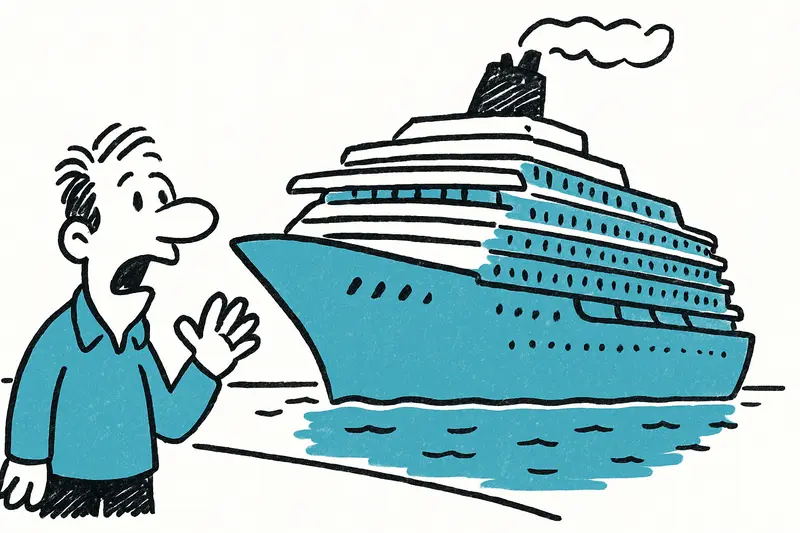
When the Luxury Liner Arrives: Explora II in Palma – Between Glamour and Questions
The Explora II docked in Palma — a floating five-star neighbourhood with 461 suites and its own art collection. Beautiful to behold, but the arrival raises questions: who really benefits in Palma, what footprint does such a mega-liner leave, and how could the city better manage these visits?
When a luxury liner docks in Palma, the Passeig briefly comes to a halt
On a late Monday afternoon, as the bells of La Seu rang softly through the warm air, the Explora II came alongside. Scooters paused on the Passeig Marítim; cafés pushed chairs back, and the usual cries of seagulls mixed with the distant horn of a harbour tug. The ship looked like a small, floating neighbourhood — shiny, restrained and very, very expensive. Lovely to look at, no question. But what does this visibility really mean for Palma? Similar attention has followed other calls, notably the new "Star Princess" stop in Palma.
More than a photo opportunity: economy meets the public realm
The numbers are impressive: almost 250 meters long, 461 suites and residences, each with a sea view and terrace — on paper room for hundreds of well-heeled guests. Restaurants, bars, a spa, art in public spaces — the Explora II sells experiences, not just beds. Such guests spend money: in boutiques, on excursions, in high-end restaurants. The city receives docking fees, berth charges and presumably some euros for local services.
But the accounting is not automatically positive. Many onboard services are inclusive; many passengers prefer to stay on the ship rather than explore the city. Supply runs, crew logistics and privately booked excursions often go through international companies. The immediate revenue for small, traditional Palma businesses therefore falls short of expectations, as large calls such as the Marella Discovery port call in Palma have also shown.
The big, quiet problem: environment and infrastructure
Less visible are waste streams, wastewater treatment and emissions. Ship funnels, shore power or diesel? Large cruise ships still too often run on their own generators, which brings nitrogen oxides and fine particulates into the harbour air — still noticeable on warm evenings when the promenade smells of the sea but the air under the bridge feels heavier. The Explora II promotes artworks about marine conservation; that is important, but not enough on its own.
There is also harbour infrastructure to consider: space for supplies, berths and tender boats is limited. When a luxury liner with a private infinity pool docks, it claims space that could also be needed by freighters, ferries or the local fishing fleet. Traffic and noise peaks on days with large arrivals are noticeable to residents — not just on the Passeig, but far into the Lonja neighbourhood. Even vessels promoted for a low profile, such as the Silver Whisper in Palma, create similar infrastructure demands.
What is rarely discussed publicly
Four aspects seldom appear in press photos: first, the origin of supply chains — how much of the onboard provisioning really comes from the region? Second, the social distribution of income — how much of the port charges remain with local craftsmen and service providers? Third, transparency on environmental requirements and fourth, the question of planning certainty: how many such mega-ships can Palma endure per season without harming quality of life and ecosystems?
Concrete steps for Palma
Palma has options to better manage the arrival of such luxury liners. In the short term, the port authority and the city should introduce binding transparency rules: origin labelling for bulk supplies, mandatory local tenders for certain service segments and disclosure of incurred emissions.
In the medium term, connection to shore power should be mandatory for large ships in the city area, combined with preferred berths for low-emission vessels. Part of the berth fees could be earmarked for coastal protection, water treatment and local cultural projects. One more proposal: quotas for local suppliers and crew training in Palma gastronomy — that would keep more jobs in the city on a lasting basis.
A look ahead: how Palma can benefit
The Explora II remains a PR win: photos in front of the cathedral, artfully arranged canapés and a strong narrative about sustainable travel attract international attention. Palma can build on that — if the city insists on sustainability and local value creation instead of just admiration. Then the brief astonishment on the Passeig could become a lasting benefit for the people who live here.
In the evening the Explora II moved out of the bay, setting course for Valencia. The promenade filled again with the sound of ordinary life: children laughing, the rattle of scooters, the scent of espetos. The luxury liner left behind shine — and questions we should answer before the next guest arrives.
Frequently asked questions
What happens in Palma when a large cruise ship docks near the Passeig Marítim?
Do luxury cruise passengers in Mallorca usually spend much time and money in Palma?
What are the main environmental concerns about cruise ships in Mallorca?
Why do cruise ships affect traffic and noise in Palma?
Is shore power available for cruise ships in Palma?
What does a luxury cruise ship like Explora II bring to Palma?
Which parts of Palma feel cruise ship arrivals the most?
What should Palma do to make cruise tourism more sustainable?
Similar News

Ultraluxury on the Ground: Four Seasons Jet in Palma — a Reality Check for Formentor and the Island
A high-priced flight crosses Mallorca and its guests stay for days at the Formentor resort. What does the island get bes...

Death of a Witness and the Justice Backlog: Why the Kegel Brothers Trial Matters in Mallorca
A witness in the Playa de Palma fire case has died, and the trial against eight German holidaymakers has been delayed un...

Champagne Reception, Red Carpet and Mini Originals: The Pre-Nit del Art at Gallery Mensing
Almost 400 guests, champagne, pop-art feats by Tom Boston and a raffle for the Parkinson's foundation: Gallery Mensing t...

Break-in in Cala Rajada: How Three Tourists Were Robbed in Their Sleep
In the early morning hours a holiday home near Son Moll in Cala Rajada was visited by a burglar. Three German holidaymak...

Between Palma and Hamm: Harry Mensing, his galleries and the energy of the Nit de l'Art
Gallerist Harry Mensing connects Mallorca and Germany with a clear idea: art must touch personally. For the 30th Nit de ...
More to explore
Discover more interesting content

Can Cap de Bou

Townhouse Lleo 72
