
Pursuit in Palma: Wild Escape, Stolen Car, No Driver's License — and the Questions That Remain
Pursuit in Palma: Wild Escape, Stolen Car, No Driver's License — and the Questions That Remain
A nighttime chase in the Llevant industrial area ended with two arrests: a stolen car, a female passenger detained, and a driver without a license. Why scenes like this occur more often in Mallorca and what is missing to prevent them.
Pursuit in Palma: Wild Escape, Stolen Car, No Driver's License — and the Questions That Remain
Why can stolen cars so easily become a danger on our roads?
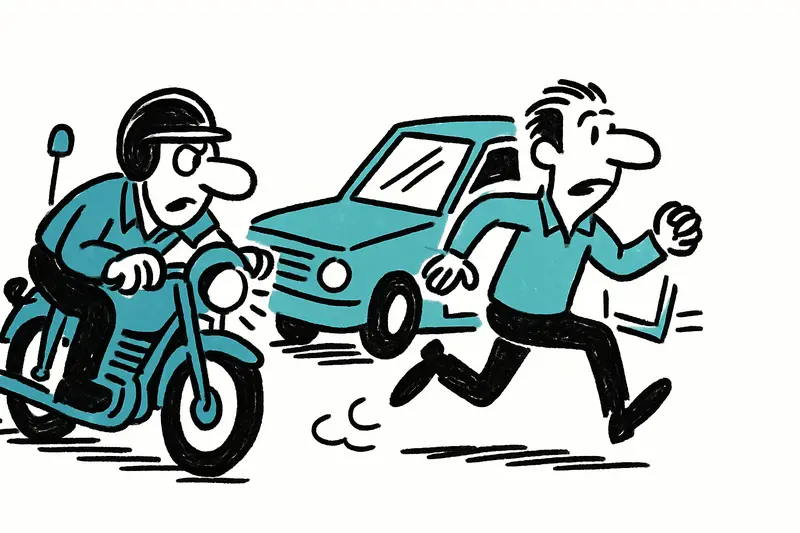
Late on Thursday evening, around 9:10 p.m., a scene unfolded near the Llevant industrial area that you don't see every day: a motorcycle unit of the National Police targeted a vehicle that was racing through the streets at clearly excessive speed. On Calle Manacor, between warehouses and intermittently open bars, there were risky maneuvers, abrupt braking and driving on sidewalks. When the car finally stopped, the driver fled on foot but was quickly caught by an officer. The female passenger remained in the car and was also arrested. Investigations showed: the car was stolen and the driver had no license. Both are being investigated for endangering road safety.
The facts are briefly summarized, but the scene lingers. Sirens, the screech of tires, the beam of a motorcycle unit's headlight — such images remain in the neighbors' minds. A truck driver who was still making a delivery stopped and stared; a woman coming from a nearby tapas bar froze and put her hands to her mouth. Small place, big commotion.
Key question: How is it possible that stolen vehicles reappear on the island so quickly and in such a dangerous way, and which gaps allow this — technically, organizationally, legally?
An obvious part of the answer is: a stolen car is a perfect tool for quick getaways because the theft often happens anonymously and easily. In Mallorca, with heavy traffic in the season and numerous access routes, every industrial road or side street offers hiding places. Added to this is that drivers without licenses show fewer inhibitions — they don't know the rules, they disregard them, or they simply have nothing to lose.
But that does not settle the matter. Public debate often lacks a view of the structural causes. People talk about spectacular chases, the adrenaline rush of the action, but rarely about: Who profits from the trade in stolen vehicles? How effective are technical systems for vehicle recognition (ANPR cameras, license plate databases) on the island? Are police staffing levels sufficient to carry out both prevention and rapid investigations, as seen in Police pursuit in Llucmajor: Repeat-offender car thief stopped — but what remains unresolved??
Another blind spot is the responsibility of actors such as rental companies, car park operators and private garages: Are suspicion reports passed on quickly enough? How well protected are vehicles against immobilizer bypass, keyless theft and other modern methods? And not least: what do the penalties look like when someone is caught driving a stolen car without a license — severe enough to have a deterrent effect? Recent incidents, such as the robbery escape in Playa de Palma involving a stolen rental BMW, feed that debate.
Everyday observation from Palma: on Playa de Palma or in S’Arenal you often see young people meeting in the evening on mopeds or cheap small cars to go out. If one of those vehicles suddenly goes missing or later appears dramatically in a chase, the neighbors are left with questions: Could controls have been possible? Would an earlier report have prevented it? The answers are rarely satisfying.
Concrete solutions can nevertheless be named and are practical:
- Expansion and better networking of automatic number plate recognition systems (ANPR) on access roads and in industrial areas, combined with fast alarm chains to the police.
- More mobile checks and targeted presence in nightly problem zones such as industrial areas; visible police presence acts as a deterrent.
- Mandatory, standardized information sharing between rental companies, dealers and law enforcement, also digitally and in real time.
- Promotion of technical security in vehicles: stronger immobilizers, blocking systems for stolen cars, retrofit programs for older models.
- Harsher interventions for repeat traffic offenses — especially when vehicles were stolen and people were endangered.
- Prevention work in schools and youth centers: inform about risks, consequences and alternatives so that taking a stolen car is not seen as an "adventure."
Of course these proposals are no cure-all. They require resources, political will and the readiness of various actors to cooperate. But they add something to the public debate that has often been missing: concrete instruments instead of pure outrage. Similar episodes have also raised questions about police transport and custody procedures, for example a breakout from a police vehicle in Llucmajor and Algaida.
In the end there remains an image: in a side street of Llevant a car rests against a wall on the passenger side, blue lights reflecting on the wet road, a patrol car guiding pedestrians past. Two people in handcuffs, two families who will soon wake up with questions. And the city, which must consider whether it will only watch the next chase or change things so such scenes become rarer.
Conclusion: The chase through Palma was spectacular but symptomatic. More technology, better networking and a more consistent prevention policy could make similar cases rarer in the future. Without these steps the danger remains that stolen cars will continue to turn our streets into tides of insecurity.
Frequently asked questions
How dangerous are stolen cars on Mallorca roads?
What happens when police stop a stolen car in Palma?
Why are industrial areas in Palma sometimes used in police chases?
Can you be arrested in Mallorca for driving without a license?
What can Mallorca do to prevent stolen car chases?
Are number plate cameras used in Mallorca to find stolen cars?
Is Palma’s Playa de Palma area affected by vehicle theft?
What is the best way to protect your car from theft in Mallorca?
Similar News
Magaluf: Watchtower Alarm – Lifeguards Pull Unconscious Beachgoer from the Water
After a drama in the late afternoon, two lifeguards at Magaluf beach rescued an unconscious 44-year-old man. He was stab...
Turquoise in the City: How dangerous is the color play of the Sa Riera?
The Sa Riera in Palma suddenly turned turquoise — a pretty motif, but behind the effect lies a discharge of saline waste...

Jeckliner at Sunnesching: Cologne spirit sets sail from Palma
In September 2027 the Mein Schiff 2 briefly becomes a floating carnival stage: four days with Cologne bands, comedy and ...
Finally Home: Mike and Leyla Heiter Buy Villa with Sea View in Mallorca
The reality TV couple Mike and Leyla Heiter have bought a house in Mallorca with a roof terrace and sea view. An Instagr...
Arrest after series in Palma: Who protects apartments from repeat offenders?
The National Police arrested a man in Palma who investigators say may have broken into several apartments. In one incide...
More to explore
Discover more interesting content

Can Cap de Bou

Townhouse Lleo 72
