
Too little money, too many people, too little water: A reality check for s'Albufera
Too little money, too many people, too little water: A reality check for s'Albufera
Mallorca's largest wetland is at a crossroads, according to conservationists: staff and budget shortages, rising visitor numbers and water scarcity are noticeably changing s'Albufera. A critical assessment with concrete levers for its preservation.
Too little money, too many people, too little water: A reality check for s'Albufera
Guiding question: How can Mallorca's largest wetland be saved while it is still alive?
In the early morning, when the bus from Palma spits passengers out onto the main road towards Can Picafort, the voices of joggers mix with the hum of a lawnmower at the edge and the call of a few herons. Families push strollers across the wooden boardwalks, cycling groups rush past the ruins of the old observation hides – the scene is familiar, but not harmless. The environmental organization GOB currently warns: s'Albufera is in a condition veteran observers have hardly ever seen. The cause is missing funds, chronic staff shortages, rising visitor numbers and above all water scarcity, a problem analysed in Why Mallorca's reservoirs remain empty despite rain.
The facts from the critical inventory are clear: in 2025 there were 31 people employed in the park, but only eight year-round full-time positions in practice. Basic funding from the responsible ministry has been declining since 2022; research and monitoring were even budgeted at zero last year. At the same time, pressure from visitors has increased significantly since the pandemic, and water extraction from the aquifers – for towns, hotels and intensive agriculture – is reducing the freshwater inflows needed for the reed belts, a situation reflected in Palma's reservoirs almost empty.
The result is visible: previously consistently wet reed belts are partially turning into saltier areas, more typical of salt marshes, and habitats that specialized species depend on are disappearing. Anyone standing near the observation platforms now also hears fewer frogs and notices gaps in the duck population – small details that together point to a bigger problem.
Critical analysis: Where are the real problems? First: structure and staff. A handful of year-round full-time positions is not enough to carry out regular inspections, path maintenance, visitor management and species-conservation support. Second: financing. Project-based special funds are helpful but do not replace a stable basic budget for research, monitoring and maintenance. Third: water. Without a minimum flow, ecosystems change permanently; this is not a short-term nuisance but long-term degradation. Fourth: land use conflict. The visitor profile has changed – more sport, more groups, fewer quiet nature observers. This leads to spatial and temporal conflicts within the park.
What is often missing in the public debate so far is a clear allocation of responsibility and tangible action plans. There is much talk about individual measures, but little about how water rights, municipal planning and agricultural usage interests can be reconciled, as recent crises show in Water alarm in Mallorca: Seven municipalities turn off the tap — is saving alone enough?. There is also a lack of an honest assessment of the park's capacity limits at peak times: not every promenade can handle daily streams of visitors when sensitive breeding and resting sites are nearby.
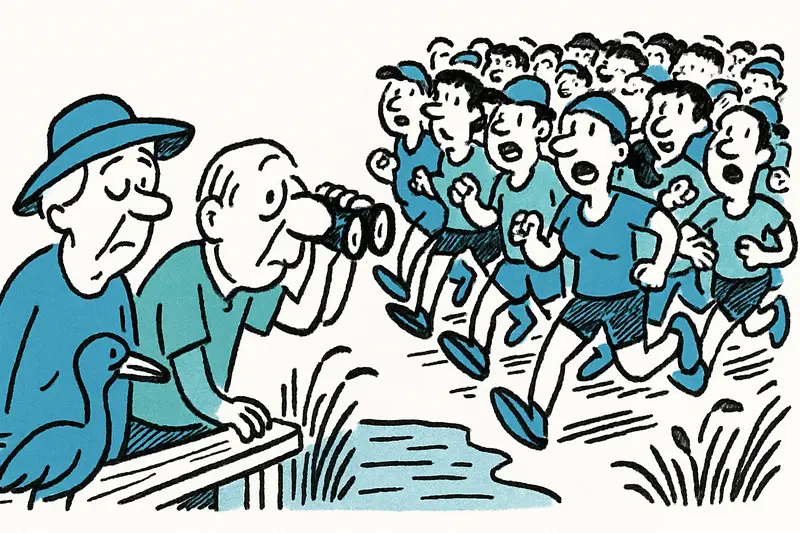
An everyday scene that plays out here daily makes the dilemma clear: an older couple wants to watch birds in peace, while across the way an interval training group meets. The paths are narrow; observation points are close together. One experience disturbs the other – and nature suffers.
Concrete solutions, practical and implementable on Mallorca:
1. Ensure a stable basic budget: The Ministry of Agriculture must restore and firmly anchor recurring funding. Project funds must not replace the operational core.
2. Increase and make permanent staff positions: At least twice as many year-round full-time positions for monitoring, maintenance and environmental education; create career prospects instead of relying on temporary workers.
3. Permanently finance research and monitoring: Annual programmes for bird counts, groundwater levels, salinity measurements and visitor counts are not luxury expenses – they are the basis for decision-making.
4. Rethink water management: Strict limits on extractions from the aquifers, technical modernization in agriculture (drip irrigation, sensor-controlled systems), promotion of treated wastewater for irrigation instead of using freshwater.
5. Manage visitors rather than ban them: Time-slot reservations for sensitive areas, clearer zoning (quiet observation vs recreational use) and increased presence of park rangers during peak times. Revenue from the tourist tax could be earmarked for this fund.
6. Cooperate with municipalities and agriculture: Concrete agreements with the Ajuntament de Muro, neighbouring municipalities and agricultural associations on extraction limits, compensatory areas and seasonal operating times, similar to municipal demands described in Sóller in Water Shortage: Hoteliers Demand Stricter Controls.
Conclusion: The problem is manageable, but it requires the courage to make lasting decisions: reliable funding, long-term personnel policies and a water regime that takes the ecosystem's minimum needs seriously. Otherwise s'Albufera risks slowly becoming something we only recognize in old photos.
Anyone who stands on the wooden boardwalk in the morning can still smell the scent of wet reeds and see the fleeting silhouettes of herons. These moments are not a given. They need protection – organizationally, financially and politically. If not now, when?
Frequently asked questions
Why is s'Albufera in Mallorca under pressure right now?
Is it still worth visiting s'Albufera in Mallorca for birdwatching?
What happens to a wetland when there is not enough freshwater?
When is the best time to visit s'Albufera in Mallorca if you want fewer crowds?
Are the boardwalks and paths at s'Albufera in Mallorca affected by too many visitors?
Why do people say s'Albufera needs more staff and stable funding?
Which birds can you still hope to see at s'Albufera in Mallorca?
How can Mallorca protect s'Albufera without closing it to visitors?
Similar News

Mueller continues expanding in Mallorca: Artà in 2026, Can Picafort in early summer 2027
The drugstore chain Mueller is opening two new stores in Mallorca: a 1,400 m² shop in Artà on 5 November 2026 and a bran...

The Painter Who Lived Mallorca: Franz Taussig and His Century-Old Secret
A hundred years ago a young Viennese arrived in El Terreno, sketched the island and called himself Francis Caron. Today ...

Airport dispute: Bridge, forecasts and the question of responsibility
A video by the Spanish transport minister has ignited the dispute over DORA figures, capacities and local governance pow...

The Painter Who Invented Himself: How a Young Viennese Drew Mallorca
A hundred years ago a 19-year-old draftsman arrived in El Terreno. His diary and sheets, long known under the pseudonym ...

Released with Conditions: The Plus Ultra Suspicion and a Mallorcan Finca as Residence
A Dutch entrepreneur, sought in connection with the Plus Ultra case, was extradited to Spain after his arrest in Germany...
More to explore
Discover more interesting content

Can Cap de Bou

Townhouse Lleo 72
