
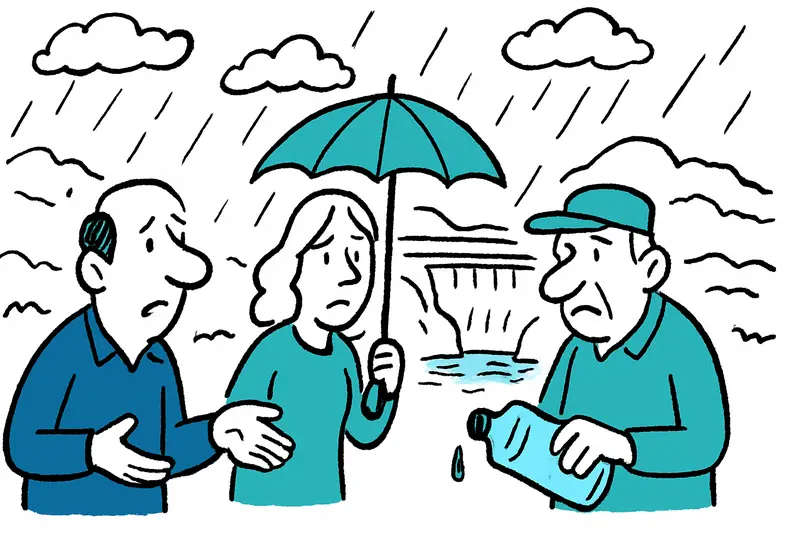
Why Mallorca's reservoirs remain empty despite rain — a reality check
Rain this week barely improved reservoir levels: Gorg Blau and Cúber were around 30 percent on 24 November. What does this mean for drinking water, agriculture and tourism — and what is missing from the public debate?
Why Mallorca's reservoirs remain empty despite rain — a reality check
Key question: Is a little rain enough to pull Mallorca out of pre‑alarm drought — or do we need to think differently?
On 24 November the municipal utilities Emaya reported that the island's two most important reservoirs, Gorg Blau and Cúber, were each just under 30 percent, as noted in Mallorca: Reservoirs remain conspicuously empty despite rain and snow.
The sober figure, 'around 30 percent', says more than a reassuring TV image of puddles at the roadside. Reservoirs do not fill linearly: a lot of rain evaporates in the Serra de Tramuntana, a significant share runs off on the surface before it can be captured by the networks. This dynamic is explained further in Rain wasn't enough: Why Mallorca's reservoirs remain low. Added to this is that some rain events fall in the north while the main consumers and supply pipelines are located elsewhere.
Critical analysis: We face three problem areas that are not visible in the numbers. First: loss and inefficiency in the distribution system. Old pipes in settlements around Marratxí or in parts of Calvià let water disappear along the way. Second: allocation priorities. Agricultural irrigation, hotels and households compete. Third: capacity and the concept of the infrastructure — reservoirs alone do not solve a structural water problem.
What is often missing in public discourse: an honest debate about demand management and ownership responsibility. People talk about rain and look at filling levels, but hardly anyone openly discusses who gets how much water, at what price and with what efficiency. The issue of groundwater and illegal wells is also rarely widely discussed — even though it noticeably lowers aquifer levels in some rural areas, a point explored in Small Rain, Big Impact? Why Mallorca's Water Balance Raises Doubts.
A daily-life scene: In Valldemossa early in the morning a female farmer stands next to her delivery van, her hands still dusty, and fills two canisters at the public tap. She says her olive grove has to be watered later and more sparingly this year. Next to her a tour bus is parked, tourists get off, photograph the narrow streets and of course have no eye for the contents of the canister. This small encounter illustrates the tension: tourism and everyday life use the same scarcity — but not at the same pace.
Concrete solutions needed now:
1) Reduce losses: Prioritise leak detection and replacement of old pipelines in urban networks. A drop lost in Palmanova or Son Gotleu is missing later in the reservoir.
2) Smart demand management: Time‑staggered tariffs and smart water meters that involve households and businesses more — not as punishment, but as a clear price mechanism for peak loads.
3) Greywater and rainwater use: Promote systems in hotels, commercial properties and households. Make rainwater retention basins mandatory in new buildings, use roofs and terraces as small storage.
4) Rethink agriculture: Change irrigation methods (drip instead of sprinkler), provide incentives for less water‑intensive crops on hard‑to‑access plots, concentrate watering times outside tourist peak hours.
5) Reuse and desalination: Expand treatment plants for reclaimed water to irrigate urban green spaces and industry. Couple desalination to clear ecological rules and renewable energy only.
6) Ecological measures: Reforestation in erosion areas, soil improvement on agricultural land to increase water uptake — this keeps rain in the ground longer instead of running off quickly into rivers and the sea.
What is missing politically and socially: clear priority lists for supply shortages, transparent data on water use and well extractions, and a participation format for municipalities. Trust is not built by headlines but by open figures and comprehensible measures.
Sharp conclusion: A few rainy days are welcome, but more is not automatically good enough. The 30 percent mark is a warning signal, not a comfort patch. Mallorca does not need romanticised hope for the next storm but a pragmatic bundle of technology, regulation and behaviour change — otherwise the reservoirs remain a picturesque backdrop with an empty balance sheet behind it.
Those who act now protect farmers as well as the taps in Palma. Those who only watch the weather risk seeing similar scenes next summer: buckets at public taps, talks of rationing and an island that becomes accustomed to water scarcity — and that is not what we want.
Frequently asked questions
Why are Mallorca’s reservoirs still low even after rain?
Is a little rain enough to end drought concerns in Mallorca?
How full are the Gorg Blau and Cúber reservoirs in Mallorca?
Why doesn’t rainfall in the Serra de Tramuntana fill Mallorca’s reservoirs properly?
What can households in Mallorca do to save water during dry periods?
How can hotels and tourism businesses reduce water use in Mallorca?
Why are old pipes a problem for Mallorca’s water supply?
What does Mallorca need besides rain to solve its water shortage?
Similar News

Maribel: Five Decades of Service – Housekeeper from Peguera Celebrated with a Special Honor
Over 50 years in the hotel business: María Isabel “Maribel” Molinos was honored in Palma at the Nit del Turisme by Unive...

Orange Alert over Parts of Mallorca: Are We Prepared?
Dark clouds and an announced wet spell have triggered an Orange alert in parts of Mallorca. A reality check: what's miss...

Sundair & Co.: Sale speculation and what it could mean for Mallorca
Rumors about a possible sale of the airlines Sundair and Fly Air 41, which belong to Schauinsland-Reisen — and whether b...
Anne Wünsche in Mallorca: A job offer with a catch — who fits the role of personal assistant?
Influencer Anne Wünsche has left Berlin and is urgently looking for a full-time personal assistant in Mallorca. Why the ...

Daily from New York: Palma Between Boom and Strain
United will increase the Newark–Palma route to daily flights in 2027 using Boeing aircraft (231 seats). What does the in...
More to explore
Discover more interesting content

Can Cap de Bou

Townhouse Lleo 72
