
How could this happen? Two young women plunge several meters with a quad near Andratx
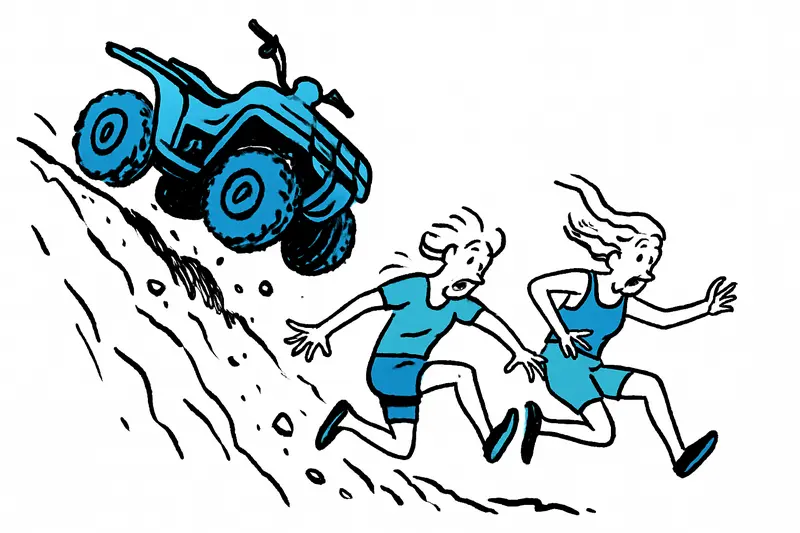
While trying to reverse-park a quad at the roadside between Camp de Mar and Andratx, the vehicle drove over a boundary and tumbled several meters down an embankment with two 21-year-old Dutch women on board. Rescue teams took the injured to Palma.
How could this happen? Two young women plunge several meters with a quad near Andratx
The central question is simple and obvious: how can a short roadside maneuver become so dangerous that two people fall several meters down an embankment? The incident in the early afternoon in the area of Camí de Cala Blanca, on the connecting route from Camp de Mar to Andratx, shows more than an unfortunate chain of circumstances.
According to available information, two young women, both about 21 years old and from the Netherlands, were on the road at around 1 p.m. While reversing to park at the roadside, the quad crossed the road boundary. Behind it was a slope several meters steep; the vehicle and the occupants slid down. Emergency services who were alerted immediately arrived on scene; local police and paramedics stabilized the injured and took them to a hospital in Palma.
At first it sounds like a typical accident on the map: a beach road, a hot August afternoon, cicadas chirping in the pines and narrow passing points. But on closer inspection questions remain. Why is a simple physical barrier missing at this spot? Why are parking spaces so poorly secured that the protective edge ends up under the wheels when reversing? Above all: what role do carelessness and inadequate instruction play for vehicles rented by tourists?
A critical analysis reveals four problem areas. First: infrastructure. Many side roads on the west coast are narrow, with sharp edges and steep embankments. In some places a few loose stones serve as the 'boundary'. Anyone reversing here cannot afford to lose half a meter. Second: vehicle type and driving practice. Quads feel different from cars; judging distance and tilt is unfamiliar, especially when reversing. Third: information. Rental companies often give only rudimentary explanations—sometimes limited by language. Fourth: seasonal pressure. In August every gap at the roadside is used; lack of space increases pressure and the likelihood of mistakes.
What is often missing in public discourse are concrete figures and responsibilities. There is a lot of talk about 'safe mobility', but rarely about who specifically pays for or implements which measures—the municipality, the island administration or the rental companies. Nor is there much discussion of simple, low-cost solutions: reflective bollards, lowered pull-outs with a solid curb, clear pictograms at dangerous spots or mandatory, multilingual briefings when quads and ATVs are handed over.
An everyday scenario helps to understand why the issue is so acute: on a hot August afternoon a rental car parks on the narrow access road to the beach, then a moped squeezes by, a tourist tries to reverse, and two other vehicles tail him. A slight misjudgement is enough—and a slope mercilessly absorbs the mistake. The sounds are familiar: engines, the sound of the sea, voices in Dutch and German, and somewhere sirens when something goes wrong.
Concrete measures that could take effect quickly: 1) Priority for structural protection at known danger points: stable guardrails or stone barriers at embankment edges. 2) Marked parking bays with sufficient manoeuvring space, where possible with raised curbs. 3) Mandatory information for quad and ATV renters in several languages, short and concise, with advice on reversing and tip-over directions. 4) Visible pictograms at critical spots; reflective markings on the roadside edge during the day. 5) More frequent checks during the high season and closer cooperation between the municipality of Andratx, the local police and rental companies.
Many measures require little time and money; they only need organisation and political will locally. A bollard here, a marking there, a short handover protocol when renting—these are not major construction projects but routine maintenance on a heavily used coastal road.
Conclusion: The accident is tragic and must not be dismissed as a mere mishap. It is an indication of systemic gaps: unsafe parking areas, unfamiliar vehicles in holiday hands and an information culture that too often relies on voluntary action. If Andratx and Camp de Mar want to act, an appeal to drivers' caution is not enough. Visible, concrete measures are needed that make a reversing manoeuvre harmless at any time—just as should be taken for granted in everyday tourism.
Frequently asked questions
What is the best time of year to visit Mallorca for good weather and lighter crowds?
Can I swim in Mallorca year-round, or is it a seasonal option?
What should I pack for a Mallorca trip?
Which beaches are best for families in Mallorca?
What are the best ways to get around Mallorca?
Are there safe swimming spots for children in Mallorca?
Does Mallorca have microclimates that affect daily plans?
What are some non-beach experiences you should consider in Mallorca?
Similar News
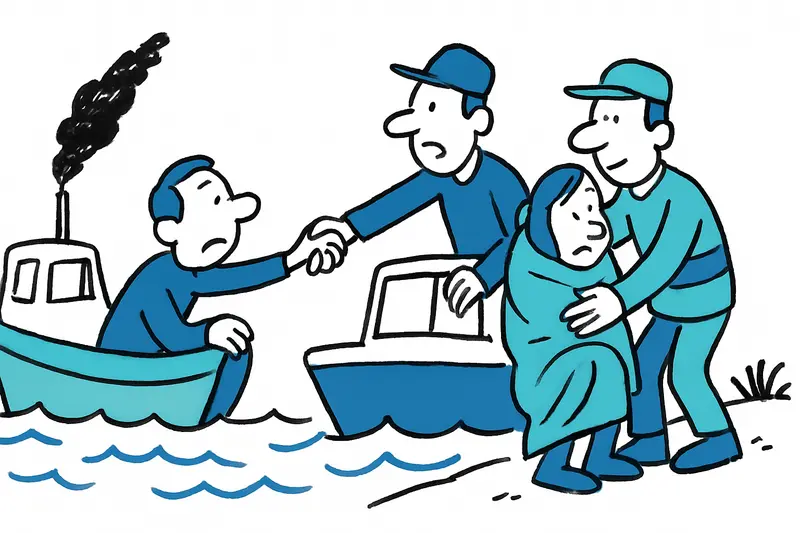
Boat fire off Cala Pi: Three people rescued by neighboring boat and safely brought ashore in Portocolom
A recreational sailing boat caught fire off Cala Pi. Thanks to the decisive action of a nearby boat and the subsequent t...
Precision Landing into Darkness: How a Barcelona Resident Experienced the Solar Eclipse at Palma Airport
Hours of waiting in Barcelona, then a rush and an arrival exactly at the start of the eclipse: a moment of kindness at t...
Boat in Flames off Cala Pi – Three People Rescued by Neighboring Boat
While observing the solar eclipse, a leisure boat caught fire off Cala Pi. A nearby boat intervened bravely, and the sea...
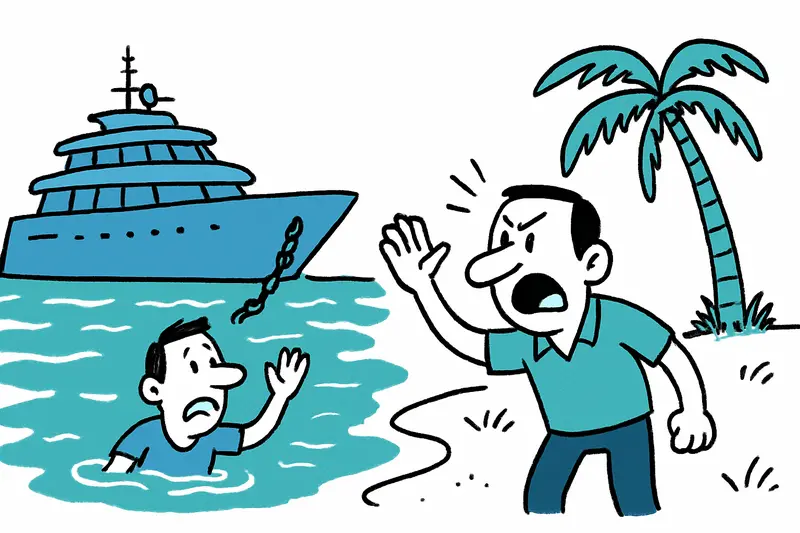
Anchored on Seagrass: When Megayachts Infuriate Beaches and Residents
During the solar eclipse there were clashes at several beaches and in the port of Valldemossa: tenders landed, a yacht l...
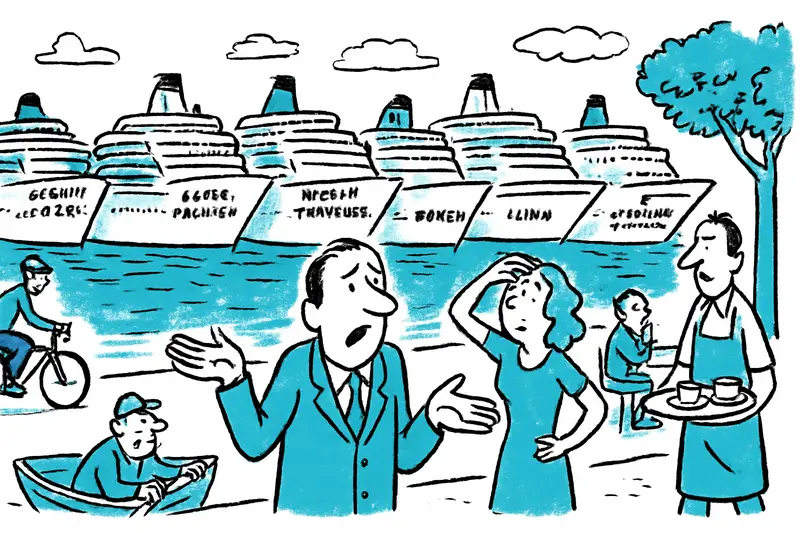
Six cruise ships in Palma — who still enforces the rules?
One morning six cruise ships were moored in Palma's harbour — more than the agreed limit. Who intervenes, where does enf...
More to explore
Discover more interesting content

Boat Tour with BBQ along Es Trenc Beach

Private transfer from Mallorca Airport (PMI) to Pollensa
