
Anchored on Seagrass: When Megayachts Infuriate Beaches and Residents
Anchored on Seagrass: When Megayachts Infuriate Beaches and Residents
During the solar eclipse there were clashes at several beaches and in the port of Valldemossa: tenders landed, a yacht lay over seagrass — residents protested and demanded rules of conduct. Time for clear rules and more enforcement.
Anchored on Seagrass: When Megayachts Infuriate Beaches and Residents
Key question: How much privilege is acceptable off Mallorca's coast when public beaches and sensitive seabeds are at stake?
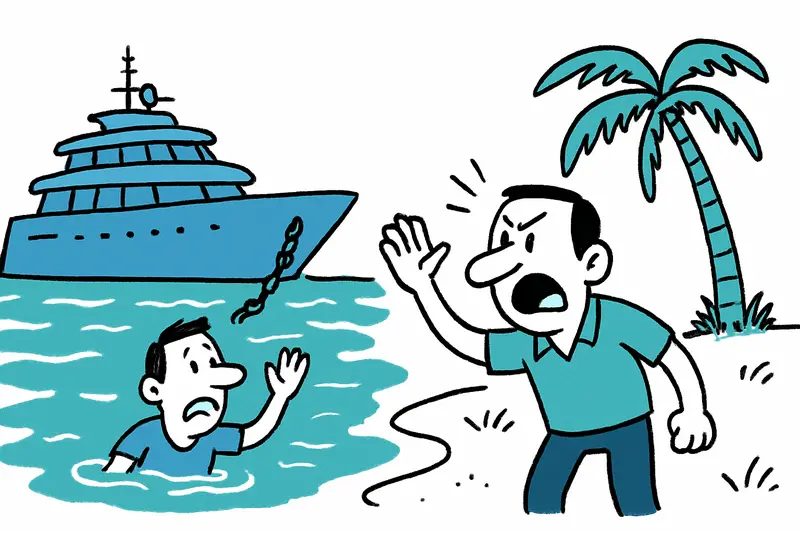
On the day of the solar eclipse it became clear how quickly tourist excess and everyday life can collide. Off Port de Valldemossa a very large yacht lay so that its anchor apparently rested over a seagrass meadow. Voices could be heard from the harbour, people entered the water and swam to the yacht to ask its crew to move on. Such scenes do not remain without consequences: Posidonia seagrass is a protected habitat that is already under pressure in many places around Mallorca. When heavy anchoring equipment rests on it, the damage is often irreversible.
At the same time there were problems at other popular spots: at the Es Carbó beach several people in a tender approached the shore and went ashore; other visitors asked them not to land directly. And at the protected beach Es Trenc areas were cordoned off with parasols, hammocks and loungers, creating the impression of a reserved section. Later, staff from the environmental authority removed the equipment placed there.
In short: for the brief moment of total darkness crowds, private boats and superyachts were all out at once. The result was conflicts over space, access and environmental protection — a conflict that is not new, but becomes particularly visible on days like this.
Critical analysis: The problem has several layers. First: control and enforcement. Anchoring over seagrass, landing directly on beaches not designated for it and "staking out" sections of beach are recurring violations of rules that exist on paper but are often hard to police in practice. Second: information asymmetry. Many visitors — and apparently some yacht crews — do not know where landings are permitted and where they are not. Third: symbolism and social tension. When wealthy guests try to reserve the best view, it creates frustration among residents and regular bathers; this is especially true in places that are environmentally sensitive.
What is often missing in the public debate are concrete everyday perspectives. The usefulness of protected zones is debated, sanctions are discussed — but one rarely hears how residents organize themselves or how port and coastal authorities could cooperate at short notice. It is also seldom visible how local traditions, such as leaving boats in winter moorings or decades of recreational use, collide with modern megaships.
One scene from the quay in Valldemossa lingers in the mind: a fisherman with a weathered face standing next to his small cutter, the seawater gurgling around the stones — and above the protected area a yacht whose anchor chain gently pulls in time with the small swell. No wagging finger, rather a resigned shake of the head. Such images explain why residents climb into the water and act themselves instead of waiting for the authorities.
Concrete solutions: 1) Immediate measures: visible markings for seagrass meadows and temporary exclusion zones on days with expected surges in visitors (solar eclipse, major events). 2) Preventive information: information sheets for yacht crews and charter companies, clear guidance on landing bans and sensitive zones. 3) Increased enforcement: more boat and beach patrols on sensitive days, use of drones for rapid situational overview and documentation. 4) Sanctions plus incentive systems: tougher fines for anchoring over Posidonia and swift revocation of permits; alongside this, incentives for environmentally friendly behavior (anchor buoys, certified moorings). 5) Local involvement: reporting chains for residents, clear contact points in the port, training for tourism providers and charter companies.
In practical terms this means: expanding anchor buoys in sensitive areas, installing clearly visible signs at popular beaches, and preparing coordinated operational plans between conservation authorities, the coast guard and municipalities on holidays or during special celestial events. Visitors should have clarity before departure about where tenders may land — and where they may not.
Conclusion: The solar eclipse was a one-off celestial event, but the conflicts over access and protection of the sea are not. They will recur as long as rules remain hard to enforce and user groups with very different levels of influence meet. Mallorca needs practical, well-communicated rules and the willingness to enforce them on high-pressure days. Otherwise residents and the environment will remain the losers — and the sea will gradually lose what makes it worth protecting.
Frequently asked questions
How does megayacht anchoring affect Mallorca’s coast and beaches?
What is Posidonia seagrass and why is anchoring over it a problem around Mallorca?
What concrete steps could help Mallorca prevent anchor damage and regulate landings on busy days?
How is enforcement currently dealing with anchoring and beach landings in Mallorca, and what improvements are suggested?
What happened at Es Trenc that shows tensions between public use and protection?
What scene near Port de Valldemossa highlights conflicts over seagrass protection?
What should visitors know about landing with tenders on Mallorca beaches?
What long-term changes could help Mallorca balance access and environmental protection on holidays?
Similar News
Six cruise ships in Palma — who still enforces the rules?
One morning six cruise ships were moored in Palma's harbour — more than the agreed limit. Who intervenes, where does enf...
Solar eclipse closures: Is Mallorca's traffic plan fit for the surge?
The Balearic Islands will close access to around 20 viewpoints and beaches between 3pm and 9pm. Key question: do the mea...

Photographing a Solar Eclipse Safely: How to Protect Your Eyes and Phone in Mallorca
In the evening the island briefly grows dim. With a few simple preparations you can capture the atmosphere without riski...
Hachiko dead: An accident, deep sorrow — and the question of what dog protection on Mallorca should improve
The dog of actor Martin Semmelrogge was found dead after a desperate search. A look at the events, what's missing from t...
Cristiano Ronaldo and Georgina Rodríguez: Wedding after Mallorca Stay — a Family Celebration
The couple shared a photo of their wedding rings on Instagram. After days on a luxury yacht off Mallorca, they reportedl...
More to explore
Discover more interesting content

Boat Tour with BBQ along Es Trenc Beach

Private transfer from Mallorca Airport (PMI) to Pollensa
