
Hachiko dead: An accident, deep sorrow — and the question of what dog protection on Mallorca should improve
Hachiko dead: An accident, deep sorrow — and the question of what dog protection on Mallorca should improve
The dog of actor Martin Semmelrogge was found dead after a desperate search. A look at the events, what's missing from the public debate and concrete protective measures for pets on the island.
Hachiko dead: An accident, deep sorrow — and the question of what dog protection on Mallorca should improve
Key question: How can a similar accident be prevented in the future?
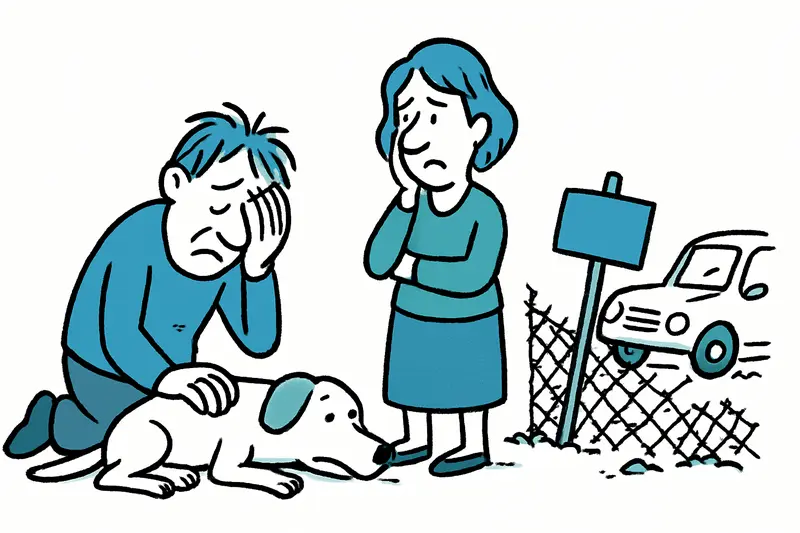
The news hit like a blow: the dog of actor Martin Semmelrogge, who lives on Mallorca, was found dead after an intensive search. The circumstances, as they are roughly known – a fall, panic, an escape from the property and the fatal accident on the road between Campos and Colònia de Sant Jordi – are distressing. Behind the personal grief, however, lie a number of practical questions that we need to address here.
Critical analysis: The sequence of events suggests that several small problems came together. An empty pool, a frightened dog, a fence that apparently did not eliminate all risks, and a road on which a panicked animal could not be protected in time. Such chains of events are not uncommon on the island: in summer it gets hot, people are outside, and properties with open or poorly secured pools are everywhere. When an animal then acts out of panic, there is little left to control.
What is missing in the public discourse: There is a lot of talk about tourism, traffic and beaches — but far too little about preventive protection for pets. Clear guidance for owners on safe pool covers, practical fence solutions for rural properties and information about rapid alert paths when an animal disappears are lacking. The role of GPS collars, microchip registration and local neighborhood coordination is also often only touched on briefly.
An everyday scene on Mallorca that illustrates the problem: It is midday, the cicadas sing loudly, the scent of lavender hangs in the air, a farmer drives his tractor along the dusty road. At a finca near Campos everything happens in seconds: a dog slips into an empty pool, is frightened, finds a way out of the property and disappears onto the country road toward the coast – only moments later disaster occurs. Such quick, silent tragedies suit our island: small-scale, heat-driven hectic, yet preventable.
Concrete solutions: Homeowners should always cover or secure empty pools, especially during holiday periods. A sturdy, certified pool lid or a fixed cover may cost something but protects lives. Fences should be built so that even panicked animals cannot easily escape over or under them; there are solutions with extra-high barriers or continuous bases to prevent digging. GPS collars and clearly visible ID tags help with rapid location; a microchip registry with up-to-date contact details speeds up official procedures. Municipalities should also provide information leaflets and private insurers should advise dog owners on preventive measures.
Role of rescue teams and volunteers: The search units — in this case a specialized team working with search dogs — show that fast help is possible. Such teams, however, need visibility, coordination with local veterinarians and clear reporting channels. Citizens can help by sharing loss notices in regional groups, alerting neighbors and keeping photos ready. Vets and animal clinics should publish emergency lists and contact persons so that immediate action can be taken when an animal is found.
What authorities could do: In the short term, information campaigns make sense — simple tips on pool and fence security, checklists for dog owners and central hotlines for missing animals. In the long term, standardized rules for private pools in densely populated areas, minimum requirements for safeguards and subsidy programs for older residents so they can implement these precautions are worthwhile.
Concise conclusion: Hachiko's death is an isolated incident with universal lessons. It was apparently a series of unfortunate coincidences that came together, yet the question remains how many of these coincidences we could prevent through better precautions. On Mallorca, where narrow roads, holiday fincas and summer heat are everyday reality, more practical knowledge for pet owners would not be a luxury but a realistic contribution to avoiding similar fates. And for all who are grieving now: such events remind us how vulnerable the bond between humans and animals is — and how important it is to take concrete action before the next catastrophe occurs.
Frequently asked questions
When is the best time to visit Mallorca for good weather and fewer crowds?
Is it safe to swim in Mallorca's sea and what should I know before going in?
What should I pack for a trip to Mallorca?
What are good family-friendly activities in Mallorca?
What are the best ways to get around Mallorca: car vs public transport?
What are must-see places for a first visit to Mallorca?
Are there good snorkeling spots in Mallorca?
How does Mallorca's weather change with the seasons, and how should that affect outdoor plans?
Similar News
Solar eclipse closures: Is Mallorca's traffic plan fit for the surge?
The Balearic Islands will close access to around 20 viewpoints and beaches between 3pm and 9pm. Key question: do the mea...
Photographing a Solar Eclipse Safely: How to Protect Your Eyes and Phone in Mallorca
In the evening the island briefly grows dim. With a few simple preparations you can capture the atmosphere without riski...
Cristiano Ronaldo and Georgina Rodríguez: Wedding after Mallorca Stay — a Family Celebration
The couple shared a photo of their wedding rings on Instagram. After days on a luxury yacht off Mallorca, they reportedl...
Is the traffic plan sufficient for the solar eclipse? A reality check for Mallorca
On August 12 authorities will close access roads to around 20 natural sites. We ask: Can the plan withstand the rush of ...
Rental car drivers in Mallorca: What you face — and why fines are only half the solution
Cigarette butts, cans, bags: Those who throw waste from their car in Mallorca risk up to €500 fine and six penalty point...
More to explore
Discover more interesting content

Boat Tour with BBQ along Es Trenc Beach
Private transfer from Mallorca Airport (PMI) to Pollensa
