
Quad Accident in Cala Pi: Who Bears the Responsibility?
In Cala Pi a rented quad tipped over in a tight bend — a holidaymaker was seriously injured. Our article asks: Who is to blame — the rider, the rental company or the infrastructure? Concrete proposals for improved safety.
Quad accident in Cala Pi: Who bears the responsibility?
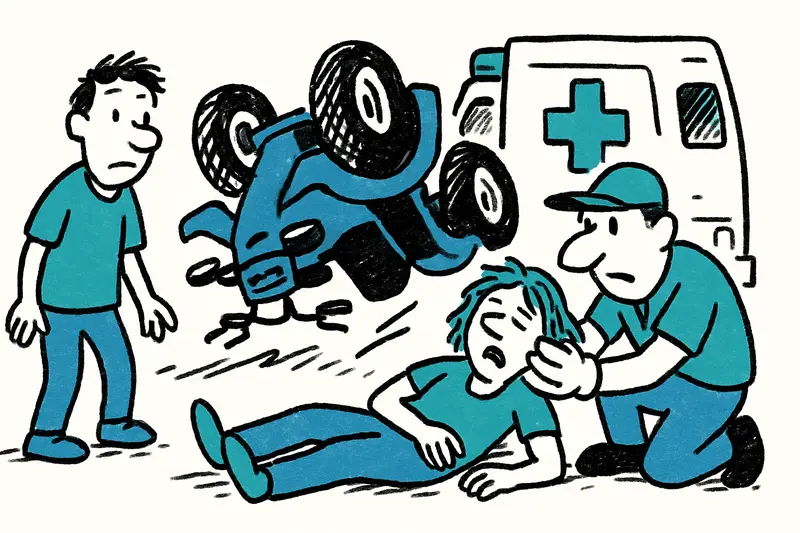
On Saturday midday a dull metallic noise cut through the otherwise quiet, narrow Betlem street in Cala Pi. A rented quad tipped over and flipped. A German holidaymaker had to be taken to the Clínica Rotger, her son remained with the family with minor abrasions. Witnesses say the mother lost control in a tight bend and slid over the roadside. Children cried, neighbors ran out of their houses. The hot Tramuntana wind smelled of pine and freshly burned rubber — a scene not easily forgotten.
The central question: Who is at fault?
The guiding question is simple and uncomfortable at the same time: Who is responsible when a recreational vehicle overturns on Mallorca? The possible answers are: the rider, the rental company, the vehicle itself, the local road layout — or a mixture of everything. In small coves like Cala Pi narrow village streets, visitors unfamiliar with the area and rented vehicles regularly collide; a similar case was reported in Andratx in Accidente de quad en Andratx: un conflicto entre turismo y la vida cotidiana. One tiny mistake, a loose layer of gravel at the edge — and harmony is gone.
What is often overlooked
In the debate some aspects get lost. First: the responsibility of the rental companies. Are customers really given practical instruction or just pushed toward signing a form? In which language? Small-print forms help little when the next tight bend is already ahead. Second: transparency in insurance. Many renters do not know what the policy covers, what deductibles apply and whether personal injury is included. Third: children as passengers. ATVs are typically designed for a single rider. Parents taking their children along without consideration is legally and morally problematic. Fourth: the infrastructure. Cala Pi has narrow lanes, abrupt roadside edges and little run-off — a bad mix for inexperienced drivers. If the road edge drops away suddenly, a small steering movement is enough to tip the vehicle.
Who investigates when something goes wrong?
The Guardia Civil recorded the accident and investigations are ongoing. As long as it is unclear whether speed, a technical defect or improper use were decisive, many questions remain open. But investigations alone are not enough. We need a preventive offensive so that such scenes become rarer — to protect locals and visitors alike.
Concrete opportunities and proposed solutions
It is not enough to pray after an accident. Here is a pragmatic plan that holds several actors accountable:
1. Mandatory practical instruction by rental companies: Short practical training in a closed area, supplemented by a multilingual video. Theory alone is not enough.
2. Helmet requirement and certified equipment: Helmets are not an accessory. Rental companies must provide certified protective gear and document its handover; see the DGT regulations on helmets.
3. Clear rules for children: No children on vehicles designed for a single rider. If a second seat is not provided, a child may not ride along.
4. Technical limitation: Geofencing and speed limits for quads in village centers could prevent accidents. The technology exists — often only the political will is missing.
5. Increased presence and better signage: Temporary controls in high season and clear signs at tight spots would calm driving behavior.
6. Transparent rental contracts: Insurance coverage and possible costs in case of damage must be explained clearly and in simple language.
What holidaymakers can do immediately
Anyone who rents a quad on Mallorca: put on a helmet, slow down, look twice before every bend. Do not take children unsecured. And if something feels unsafe: leave the vehicle where it is. The emergency number 061 applies on Mallorca — better to call once too often than too late.
The Accidente de cuatrimoto en Cala Pi: ¿Quién asume la responsabilidad? is not deliberate drama but a warning. Authorities, rental companies and drivers share the responsibility to make such scenes rarer. For Cala Pi, for the people who live here, and for the guests who want to enjoy the scent of the pines and the sound of the sea without fear of screeching metal.
We wish the injured woman a speedy and full recovery. And for the small village of Cala Pi: a few clearer signs, more checks — and fewer quads in the narrow lanes.
Frequently asked questions
Who is responsible if a rented quad crashes in Mallorca?
Are quads safe to drive on Mallorca’s narrow village streets?
What should I check before renting a quad in Mallorca?
Can children ride as passengers on a quad in Mallorca?
What should I do immediately after a quad accident in Mallorca?
Is Cala Pi a difficult place to drive a quad?
Do quad rental companies in Mallorca have to give safety instructions?
What is the emergency number for accidents in Mallorca?
Similar News
Illetas: Police Officer and Two Lifeguards Rescue Two Female Tourists from the Sea
Late on Friday afternoon emergency responders entered the water off the coast of Illetas: a local police officer and two...
Inca: Severely injured female dog found in garbage bags in a container – who has seen anything?
In Inca, a severely injured female dog was discovered wrapped in two garbage bags inside a container on Avenida Rei Jaum...

Pre-Nit de l’Art in Palma: Champagne, Spray Can and Studio Flash in the Old Town
Red carpets, a photographers' stand and live performance: the Pre‑Nit de l’Art filled Galerie Mensing with around 400 gu...
Failed before the first flight: How Fischer Air's plans for Palma were ground down
Announced routes, repeated postponements and now apparent insolvency: Why the Fischer Air project for Mallorca is not me...
Seconds in the Water: 19-year-old Fights Her Way Out of Flooded Car in Palma
A 19-year-old managed to rescue herself from her half-submerged car after sliding under the Verge de Lluc underpass. Res...
More to explore
Discover more interesting content

Can Cap de Bou

Townhouse Lleo 72
