
Quiet emergencies in Palma: A resident found dead in his apartment — what remains unresolved
Quiet emergencies in Palma: A resident found dead in his apartment — what remains unresolved
A 65-year-old German resident was found dead in an apartment in Palma. Police suspect natural causes. The circumstances raise questions about emergency responses, neighborhood networks and employer responsibilities.
Quiet emergencies in Palma: A resident found dead in his apartment — what remains unresolved
A death that highlights gaps in safeguards for people living alone
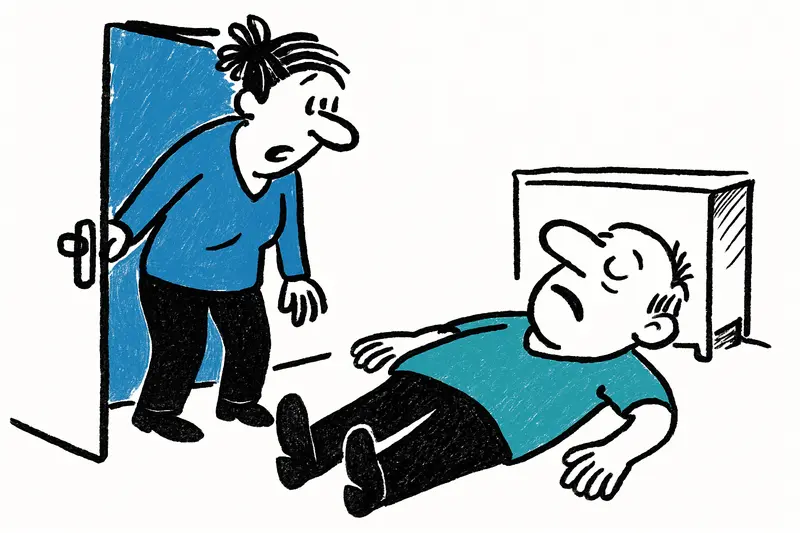
On Monday afternoon, emergency personnel found a 65-year-old German resident dead in an apartment in Palma. His supervisor had reported him missing a few days earlier after he failed to show up for work. According to initial investigations, much points to a heart attack as the cause of death; a forensic service was involved.
Key question: How many similar cases go unnoticed before the phone rings — and what mechanisms do we have to prevent that?
The sober facts are simple: a signal from a mobile phone, but no answer; a report from the employer; officers ultimately entering the apartment. The scenario did not take place in a suburb but in Palma — where garbage trucks roar in the morning, cafés on Passeig Mallorca slowly open and delivery vans hum along the narrow streets. That everyday backdrop makes the silence behind closed doors all the more striking, recalling other recent incidents such as Sudden drama on Paseo Mallorca: a death in the rain – and the questions that remain.
Critical analysis: The case reveals several weaknesses in how authorities and communities deal with residents who live alone, especially older ones. First: if someone does not show up for work, that often seems insufficient to trigger immediate, coordinated action. The employer alerted the police in this instance — which was appropriate — but there is no standardized "welfare check" that quickly brings together social services, family doctors and police. Second: language barriers and fragmented contact information complicate inquiries for foreign residents, as seen in Manacor: No murder — but many questions remain. Third: infrastructure for older people living alone — from emergency wrist buttons to regular home visits — is not available across the board.
What is often missing from public debate: attention is focused on the news itself on days like this, not on prevention. There is no concrete look at how companies, neighbors, property managers and authorities can work together to protect people in everyday life. Also the issue of social ties: many residents live here for years without naming local trusted contacts. Loneliness is treated quietly, but it has real consequences.
An everyday scene that illustrates this: in Santa Catalina, before nine o'clock, a neighbor places her coffee cup on the balcony, hears the garbage trucks and waves to the baker. She knows most shopkeepers but not all the building's residents. A postman rings a doorbell, gets no answer and moves on. This mirrors Body Found in Santa Catalina: When an Entire Neighborhood Didn't Notice. These small things add up — until there is no mechanical check that raises an alarm.
Concrete solutions Palma and other municipalities should consider:
1) Employer alert chain: Companies could introduce defined procedures: if an employee does not report to work, HR should first inform next of kin, then a municipal on-call service, before police are left to act alone.
2) Municipal neighborhood sponsorships: Step by step: local initiatives in which volunteers undertake regular rounds or digital visits to seniors — combined with a registry of vulnerable people who request safety checks.
3) Easy authority access for registered caregivers: A protected channel through which authorized persons can quickly make inquiries with resident services and health centers without formal hurdles when there is serious concern.
4) Promotion of technical assistance: Subsidized emergency buttons, simple smart-home solutions or automatic transmission of vital data for aging residents — with clear consent procedures and data protection standards.
5) Information and language services: Awareness campaigns in German, English and Spanish explaining how to register local contacts, who will be notified in an emergency and how care and social services can be reached.
All of this requires resources and political will. It also requires a different attitude: the awareness that a thriving city like Palma needs people who look out for each other — not as bureaucracy, but as neighborhood care.
Concluding point: The discovered death is not an isolated, one-off event but an indicator; other cases, including Fatal Discovery in Son Macià: A Case Raising Questions about Protecting Older People, point to the same gap. If a reliable employee can remain unnoticed for several days, a safety net is missing. Those who only read the headline and move on miss the chance to think about simple, practical steps that could prevent the next quiet emergency. The city, employers and neighborhoods can start today — a phone call, a list, a visit: small actions with big impact.
Frequently asked questions
What should you do in Mallorca if an older person living alone does not answer their phone?
How common is it for people living alone in Mallorca to go unnoticed for days?
What is a welfare check in Mallorca and when is it used?
Why do foreign residents in Mallorca sometimes remain harder to reach in an emergency?
What practical safety steps can help older people living alone in Mallorca?
Why are neighbour check-ins important in Palma?
What should employers in Mallorca do if an employee does not show up for work?
Which parts of Palma make it easier to notice when something seems wrong?
Similar News
Injured captain, big plans: Germania Mallorca before the away match in Consell
The newly founded FC Germania Mallorca travels to Consell on Saturday. Captain Bastian Müller is out injured, but coach ...
Palma, Palma de Mallorca, Palma‑Mallorca: What is it really about?
The debate over the city's name is more than grammar: it concerns identity, law and branding policy. A sober reality che...
Warning to Bathers: Nipping Fish in Cala Major and Other Coves — a Reality Check
In Cala Major and several beaches around Mallorca, bathers report painful “nips”. Who are the animals, why are they gett...
Rental Car Theft in El Arenal: What This Incident Reveals About Our Gaps
A teenager steals a running rental car in El Arenal, flees on foot, climbs over walls and is caught by the Guardia Civil...
Red Rope in Palma's Library: What Helps Against Selfie Tourism — and What's Missing
Palma's city library cordoned off an area with a red rope to keep selfie tourism away from reading and working activitie...
More to explore
Discover more interesting content

Can Cap de Bou

Townhouse Lleo 72
