
New 3D Radar System over Mallorca: More Safety from the Summit
New 3D Radar System over Mallorca: More Safety from the Summit
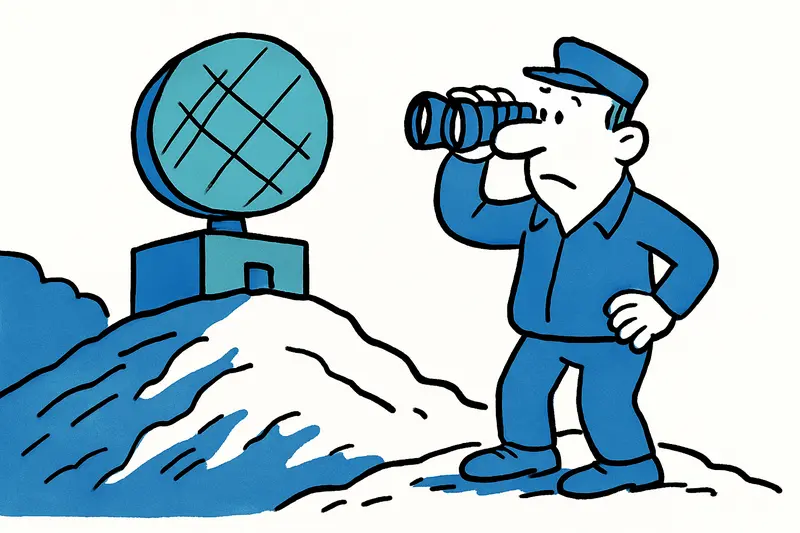
Enaire has put a 3D primary radar into operation on a table-like summit of Mallorca. Greater range, real-time data and improved suppression of interference enhance aviation safety around Son Sant Joan.
New 3D Radar System over Mallorca: More Safety from the Summit
A quiet watchpost for the Balearic airspace
At the edge of the island, where the hills flatten and the sea already glitters from a distance, an unusual neighbor has recently appeared: a large-scale radar installation that monitors the airspace over the Balearics with three-dimensional technology. The operator is the Spanish air navigation service provider Enaire; the system is the first of its kind on the islands and the third in all of Spain.
What the new device can do can be summed up briefly: three-dimensional scanning, real-time processing and a significantly greater range. The facility detects aircraft up to around 120 nautical miles — about 220 kilometers. For an island with dense air traffic like we see in summer around Son Sant Joan, this means more lead time and more precise positions for those who manage the traffic.
For many residents, technology that stands on a mountain is hardly visible in everyday life. On the Plaça Major, however, over morning coffee, you sometimes hear conversations about arrivals and departures: the new installation will rarely be a topic in these conversations — and that is a good sign. It works in the background, reduces interference and helps control centers receive clearer information, even when wind farms or other objects in the region produce echoes; similar debates have arisen around sensors and small cameras at beach access points.
A particular advantage lies in the improved suppression of unwanted signals. Modern signal processing ensures that reflections that formerly caused puzzles are now filtered out more cleanly. For air traffic controllers this means less uncertainty in identification and during complicated approach and avoidance maneuvers.
The project was financed with funds from the European Recovery, Transformation and Resilience Facility. In practice that means: technology aimed at sustainability and efficiency benefits not only big cities but also an island community that relies heavily on safe air traffic — hotels, taxi drivers, logisticians and families awaiting relatives.
If you watch the runways at Son Sant Joan in the evening, you notice the chains of lights that line up aircraft like pearls. That these operations run more calmly and reliably is so far unspectacular but noticeable: fewer flight-related delays, faster reactions in difficult situations and a more robust network of surveillance options over sea and land.
The installation is part of a broader modernization wave that Enaire is driving in the Balearics, including projects such as the New Radar Station on Puig de Randa.
If you drive along Avinguda de Jaume III to work in the morning, you see the island in its daily bustle: fishermen checking their nets, excavators working on the promenade, and aircraft coming and going. The new radar station fits into this picture like an invisible pilot, alongside other local measures affecting traffic and surveillance such as Más radares en la Kathedralen‑Straße de Palma: cuatro controles en 500 metros.
Outlook: For residents and visitors little will change about the familiar island feeling. Nevertheless it is reassuring to know that sophisticated technology ensures that the rises and falls in the sky are controlled with greater accuracy. The new system is an example of how modern infrastructure stabilizes everyday life behind the scenes — a reliable companion for Mallorca's growing traffic demand.
And the next time you watch departing aircraft during a walk along the Paseo: behind the scenes a large, somewhat inconspicuous helper now watches over the island from the summit.
Frequently asked questions
What is the weather usually like in Mallorca in late November?
Can you still swim in Mallorca in late November?
What should I pack for Mallorca in late November?
Is late November a good time to visit Mallorca?
What is Palma de Mallorca like in late November?
Is Sóller worth visiting in late November?
What is Port de Pollença like in late November?
Do restaurants and shops stay open in Mallorca in late November?
Similar News

Mueller continues expanding in Mallorca: Artà in 2026, Can Picafort in early summer 2027
The drugstore chain Mueller is opening two new stores in Mallorca: a 1,400 m² shop in Artà on 5 November 2026 and a bran...
The Painter Who Lived Mallorca: Franz Taussig and His Century-Old Secret
A hundred years ago a young Viennese arrived in El Terreno, sketched the island and called himself Francis Caron. Today ...

Airport dispute: Bridge, forecasts and the question of responsibility
A video by the Spanish transport minister has ignited the dispute over DORA figures, capacities and local governance pow...

The Painter Who Invented Himself: How a Young Viennese Drew Mallorca
A hundred years ago a 19-year-old draftsman arrived in El Terreno. His diary and sheets, long known under the pseudonym ...

Released with Conditions: The Plus Ultra Suspicion and a Mallorcan Finca as Residence
A Dutch entrepreneur, sought in connection with the Plus Ultra case, was extradited to Spain after his arrest in Germany...
More to explore
Discover more interesting content

Can Cap de Bou

Townhouse Lleo 72
