
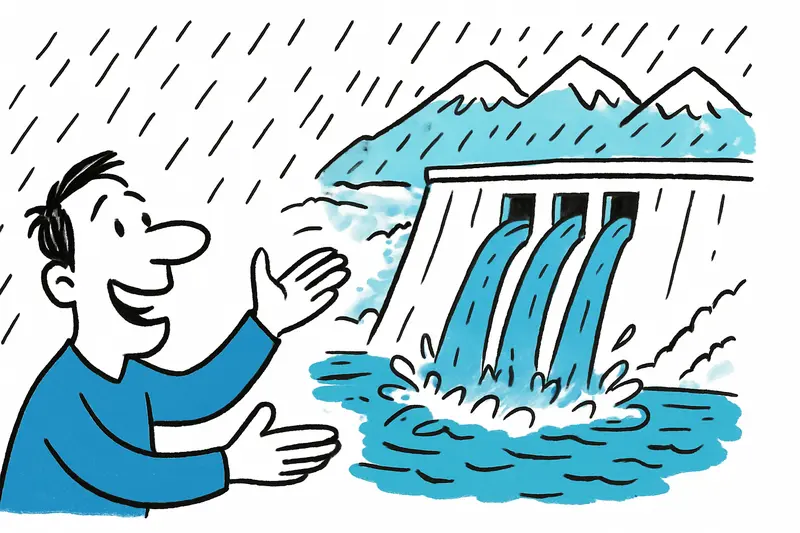
Rain and Tramuntana Snow Fill Mallorca's Reservoirs — Gorg Blau Stands Out
Recent rainfall and snow in the Tramuntana have significantly filled the reservoirs that supply Palma. The Gorg Blau reservoir has shown noticeable gains; Emaya continues to urge careful water use.
Rain and Tramuntana Snow Fill Mallorca's Reservoirs — Gorg Blau Stands Out
Relief for Palma's water supply, everyday perspectives and a gardening outlook
In the early morning the city still smells of wet asphalt and pine resin. On the Passeig Marítim a few last drops fall from the plane trees, taxis rush by, and the scent of coffee rises from small cafés. This is the quieter side of a week in which heavy rain — accompanied by snow at higher elevations of the Serra de Tramuntana — has helped the island store a bit more water again.
The municipal water supplier Emaya reports that the two reservoirs in the Tramuntana that supply Palma with drinking water are currently at around 59 percent of their capacity. Within a week the fill level has increased by more than 17 percentage points. Those are tangible numbers you can also see with your own eyes in the valleys and at the inflows to the reservoirs, as discussed in Small Rain, Big Impact? Why Mallorca's Water Balance Raises Doubts.
The rise is especially visible at Gorg Blau. If you drive up the switchbacks and stop briefly at the viewpoint, you can see the water level rising — the lake is now at about two thirds of its capacity. The white snow layer on the peaks has helped extend the small streams that are now slowly feeding into the basin, a situation also mentioned in Rain wasn't enough: Why Mallorca's reservoirs remain low.
Emaya president Llorenç Bauzá sees the development as positive but also points out that careful water use remains important. This double message comes at the right time for many: joy about fuller reservoirs, but not an invitation to waste.
In the countryside farmers and gardeners are noticing the change. In villages like Sóller or Esporles you can hear the rushing of the reactivated barrancos along the farm tracks; some residents said they checked their cisterns in recent days and cleared gutters to better capture rainwater.
For the city of Palma this means short-term greater security in drinking water supply, especially after summers in recent years often brought dry spells. More water in the reservoirs reduces the risk of drastic restrictions that would be felt strongly by households, restaurants and hotels.
That does not mean reserves are large. Fifty-nine percent is a relief, not an exuberance. Emaya urges continued responsibility: the motto is measured rather than excessive — for example by choosing plants deliberately for the garden, repairing leaky pipes and taking shorter showers.
A practical everyday tip heard at the Santa Catalina market: if it rains, put a barrel under the downspout. The water is enough for the balcony, the palm in front of the house or for cleaning. Such simple routines help overall more than big debates.
From an ecological perspective, the snowfall in the Tramuntana is a good sign: it acts as a natural long-term water store. Instead of letting everything run off in a single storm, the snow layers release water to the streams with a delay and thus help stretch the refilling of the reservoirs, although some coverage noted that reservoirs remained conspicuously empty despite recent rain and snow in Mallorca: Reservoirs remain conspicuously empty despite rain and snow.
Those who now hike through the Tramuntana, for example on the old road between Sóller and Fornalutx, do not see flooded places but replenished basins, rich colors and patches of snow still in the shade. That gives guides and restaurateurs in the mountain villages a bit of breathing room for the coming weeks.
The outlook remains practical: if the weather situation stays calm, the trend can stabilize. At the same time it is worth keeping the habits that reduce consumption. For everyone it starts at their own tap.
In closing, a small appeal with Mallorca charm: enjoy the fresher scent after the rain, but remember that you also protect the island by using its most important resource carefully. A filled Gorg Blau is cause for joy — and a reminder of how fragile our resources are.
What you can do in practice: install a rain barrel, check fittings for drips, water the garden in the early morning, take shorter showers, choose native, drought-resistant plants.
Frequently asked questions
How full are Mallorca's reservoirs after the recent rain and snow?
Why is Gorg Blau important for Mallorca's water supply?
Does rain in Mallorca mean the drought is over?
Is it safe to swim in Mallorca's reservoirs after heavy rain?
What does snow in the Serra de Tramuntana mean for Mallorca's water supply?
What should homeowners in Mallorca do to save water after rain?
How does recent rain affect Palma's drinking water supply?
What is the best time of year to see Mallorca's reservoirs fuller?
Similar News
More water than last year: Mallorca's reservoirs breathe easier
September rain refilled the Tramuntana's reserves: overall fill around 35 percent, Cúber at 40.42 percent, Gorg Blau at ...

Three Luxury Hotels in Banyalbufar: Lots of Money, Many Questions
A Danish investor plans three exclusive accommodations in Banyalbufar — including the historic Son Valentí. The announce...
2.1 tonnes of cocaine on sailing yacht off Spain's coast – a reality check for the coastguard
A 14-metre yacht was seized with 2.1 tonnes of cocaine. Who monitors the ports, how does the international hunt succeed ...

Heat Bonus in Mallorca: 100 Euros Extra for Outdoor Staff at MarSenses
MarSenses pays employees who worked outdoors in August an extra €100 as recognition. Lighter uniforms, reduced hours for...

Renovating in Mallorca: What You Really Can Do Without Neighbour Consent
Many think they can do whatever they want in their apartment. That's partly true — but only as long as structural elemen...
More to explore
Discover more interesting content

Can Cap de Bou

Townhouse Lleo 72
