
Reality Check: Fast Food in Majorca — Why the Fryer Wins and What We Could Do
A health survey shows: fast food is eaten more often in the Balearic Islands. Key question: Why do pizza and burgers replace fresh food — and which solutions actually help?
Reality Check: Fast Food in Majorca — Why the Fryer Wins and What We Could Do
Almost one in two people eats pizza, burgers or similar at least once a week — the figures from the 2025 health survey are clear.
Key question: Why is diet in Majorca shifting toward quick, often high-fat and high-salt dishes — and what levers do we have locally to counteract this? The data from the 2025 health survey by the Spanish Ministry of Health are unequivocal: almost half of the people in the Balearic Islands consume fast food at least once a week; around one third reach for it one to two times a week, 12.2 percent even three or more times. Almost 1.5 percent report daily consumption. Fast food includes, among others, fried chicken, sandwiches, pizza and hamburgers.
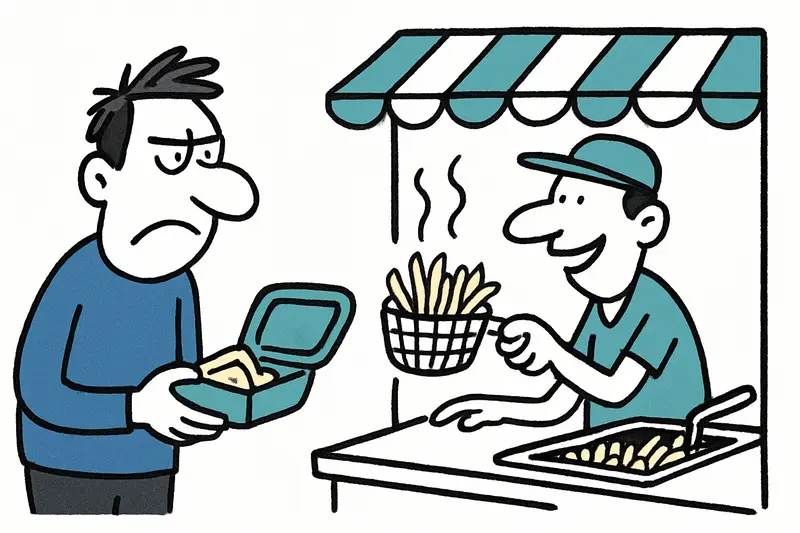
Critical analysis: The raw numbers say a lot, but not everything. They show a behavior, not the why. In Palma, for example, you can see on a normal weekday in front of the Mercat de l'Olivar how employees queue at snack stands, replacing packed lunches with paper cartons of fries. On the Plaça Major tourists and locals pass mobile stalls, the smell of frying oil mixing with the scent of coffee. Missing from the debate is the view on working hours, the accessibility of markets, price structures and advertising: if fresh products are more expensive or only available in small quantities in the morning, the quick alternative wins.
Another blind spot is the role of tourism as a demand generator. Restaurants and snack bars cater to visitors with little time and small budgets; that also changes local offerings. Equally overlooked is how food chains offer their products uniformly and cheaply — an economic incentive for people with limited time or money.
What often gets lost: nutrition is a question of daily rhythms. Parents who leave the house at 7 a.m. and return late, students with tightly packed schedules or seasonal workers without regular breaks turn to the quick solution. In neighborhoods like Son Gotleu or La Soledat, where supermarkets and weekly markets are not open around the clock, the fryer remains a practical option.
Practical approaches: Simple polishing of advice is not enough. We need measures that connect to everyday life and infrastructure. Concrete proposals for Majorca:
1. Adjust opening hours of weekly markets and municipal market stalls: If Mercat de l'Olivar and smaller markets offer fresh produce more often in the evenings, the barrier to choosing fresh food decreases.
2. Subsidies and voucher systems for fresh, local products for low-income households: Targeted subsidized fruit and vegetable packages can quickly create demand.
3. Cooperation between schools, the TIB (public transport) and employers: healthy catering in canteens, short snack breaks instead of mobile processed meals, and education in vocational schools.
4. Support for small kitchens and family-run businesses: permits for micro-kitchens in residential areas that offer simple, fresh meals at moderate prices could strengthen local variety.
5. Transparency requirements and labeling: when calorie, salt and fat information is clearly visible at snack outlets, customers make more informed choices — combined with attractive, cheaper fresh alternatives.
6. Municipal advertising campaigns and workshops: short cooking courses in neighborhood centers, simple 15-minute recipes using local products — this doesn't need a gourmet image, but pragmatism.
What is missing in the public discourse: debates about fast food are often moralizing or medical. More important would be a concrete everyday perspective: how is work, school and shopping organized? Which spaces are missing where fresh food is affordable and quickly available? And who bears responsibility — politicians, the gastronomy sector, employers?
Everyday scene: a Monday noon on Avinguda Jaume III. Office workers grab a takeaway sandwich, a mother with a stroller desperately looks for an open market stall with affordable vegetables. A student coming from university orders a pizza because kitchen facilities in the dormitory are limited. Such scenes repeat in Palma's streets, in Cala Ratjada and in tourist hotspots — they are not a moral failing but indicators of structural gaps.
Pointed conclusion: It is not enough to brand fast food as individual failure. The figures from the health survey are a wake-up call: we must change everyday conditions, not just eating habits. Practical, locally anchored solutions — reliable markets, affordable fresh offers, labor and school policy measures — are what will matter in Majorca in the long term. Otherwise the fryer remains a convenient substitute for what should actually be on our plates.
Frequently asked questions
What do recent health statistics say about fast-food use in Mallorca?
Why is fast food so common in Palma and Mallorca?
What practical steps could Mallorca take to promote fresh, local food?
What role does tourism play in Mallorca's fast-food landscape?
How can families in Mallorca access affordable, fresh produce despite limited market hours?
What should I look for when choosing healthier options at snack stands in Mallorca?
How can schools and employers in Mallorca contribute to healthier meals?
What gaps exist in the public conversation about fast food in Mallorca, and what should change?
Similar News

Who counts us? Mobile phone data, cruise tourists and the question of transparency
The tourism agency wants to use anonymized mobile phone data to find out where cruise passengers flow on Mallorca. A sob...
How serious are the threats from "Blocus Mallorca"? A reality check from Palma
A call, a provocative poster, the mention of "terror" — and a city securing its shop windows. What is behind the escalat...
Ceiling collapses in tapas bar in Palma - three guests slightly injured, establishment temporarily closed
In the Mavi tapas bar on Carrer 31 de Desembre, an approximately 16-square-meter section of a suspended ceiling collapse...
How clean is our La Seu? – Giant rats in front of the cathedral force Palma to a reality check
Large rats were sighted at the base of the cathedral in Dalt Murada. A local review: who is responsible, what is missing...

Cool Donkey Work in Sóller: Twelve Gray Donkeys Keep the Streambeds Short
Twelve Mallorcan donkeys are grazing this autumn in Sóller's seasonal streams. Quiet, emission-free and effective, they ...
More to explore
Discover more interesting content

Can Cap de Bou

Townhouse Lleo 72
