
Reality Check after 'Harry': What Mallorca's Coasts Really Need
Reality Check after 'Harry': What Mallorca's Coasts Really Need
Storm 'Harry' left clear marks on east Mallorca: a collapsed seawall in Cala Bona, a 25-meter yacht at Playa de Sa Marjal, and flooded streets. An analysis of what is often missing and how we should respond.
Reality Check after 'Harry': What Mallorca's Coasts Really Need
Why the damage in Cala Bona and Son Servera is more than just a weather event
Key question: Are our coastal infrastructure and emergency plans still fit for events like this? That question has been at the top of the agenda since the recent storms in the east of the island. Reality Check: Why Mallorca Can Hardly Escape Massification AEMET has extended storm warnings for the coming days; high waves and strong gusts are still to be expected.
Critical analysis: The visible damage is the result of three converging factors. First: the intensity and character of the storm — unusually high waves and wind gusts on an exposed east coast. Second: structures that were designed for different conditions; seawalls and promenades are often not built to withstand this kind of repeated stress. Third: development pressure along the coast — harbors, berths, promenades and holiday facilities are close together, leaving no room for natural buffers.
What is often missing from public debate is the question of regular maintenance and prioritization of protective measures. It is not enough to document damage and hope for improvement. Nor is it often discussed loudly how anchoring and mooring obligations are regulated in storm situations — the yacht washed up on Playa de Sa Marjal is a visible example of how maritime traffic and extreme weather can collide. After Eleven Years at the Top: What Mallorca's Tourism Radar Really Needs to See
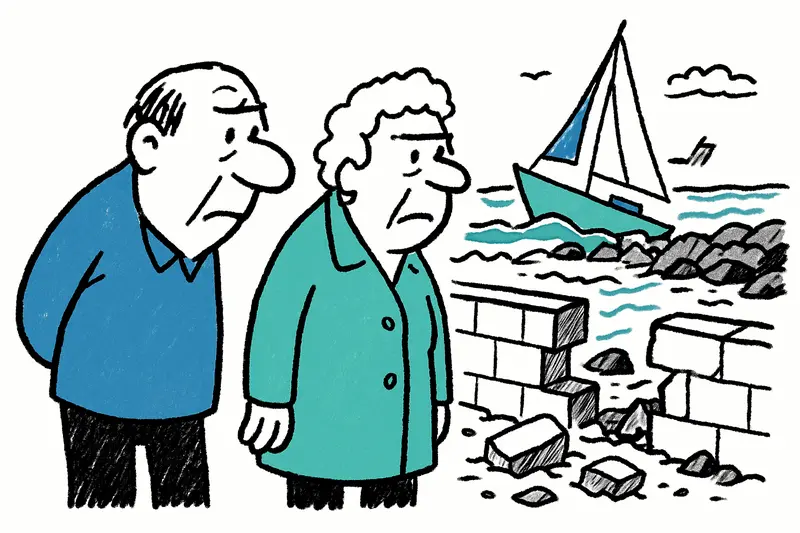
A scene from everyday life: late morning in Cala Bona, the promenade still damp from salt spray, the crunch of gravel under boots, fishermen checking their nets, and an elderly couple looking skeptically at the broken wall. In a café awnings are being retracted, the smell of espresso mixes with seaweed; children splash through puddles in rubber boots while volunteers deliver sandbags. These small, concrete images show: for local people the effects are immediately tangible — not just statistics.
Concrete approaches that make sense now: short-term — rapidly securing damaged sections, visible warning signs, temporary closures of vulnerable promenades and coordinated cleanup teams to quickly make roads passable again. Medium-term — regular inspections of coastal defenses, a binding maintenance schedule for seawalls and access routes, and clear rules for anchoring large yachts during storm warnings. Long-term — integrated coastal planning that strengthens natural protective areas (dunes, Posidonia meadows), adapts building regulations and allows space for retreat zones.
Practical measures that could be implemented quickly: a digital reporting and warning system for residents and businesses, coordination between the municipality, the harbor master and the coastal protection authority about safe alternative harbors, targeted funding for coastal protection and an inspection register that publicly documents when work was last carried out. Involving local clubs and neighborhood groups in emergency exercises also reduces chaos in a real emergency. In the Rhythm of the Night: Who Really Benefits from Mallorca's Tourism?
What political debates often overlook: it is not only about technology but about priorities. Repairs after a storm are expensive — but planned investments reduce follow-up costs and protect the livelihoods of locals and businesses. A transparent cost-benefit assessment, discussed publicly, would help build acceptance for necessary measures.
Punchy conclusion: The recent images from Cala Bona and Son Servera are warning signs, not isolated incidents. If the island continues to build on its coast without flexible protection concepts and clear operating rules for shipping in extreme weather, we will see scenes like these more often. Immediate measures can reduce acute dangers; sustainable planning will decide whether Mallorca is less vulnerable in the future. It is time for administration, port operators and residents to turn cleanup into a plan — not just for the next weekend, but for the coming decades.
Frequently asked questions
How dangerous are storms on Mallorca's east coast?
What should I do if Mallorca issues a storm warning during my trip?
Can I swim safely in Mallorca after rough seas?
What kind of coastal damage do storms cause in Mallorca?
Why is Cala Bona often mentioned after major storms in Mallorca?
Is Son Servera at risk from coastal storms in Mallorca?
What long-term coastal protection does Mallorca need?
How should residents and businesses in Mallorca prepare for coastal storms?
Similar News
Magaluf: Watchtower Alarm – Lifeguards Pull Unconscious Beachgoer from the Water
After a drama in the late afternoon, two lifeguards at Magaluf beach rescued an unconscious 44-year-old man. He was stab...
Turquoise in the City: How dangerous is the color play of the Sa Riera?
The Sa Riera in Palma suddenly turned turquoise — a pretty motif, but behind the effect lies a discharge of saline waste...

Jeckliner at Sunnesching: Cologne spirit sets sail from Palma
In September 2027 the Mein Schiff 2 briefly becomes a floating carnival stage: four days with Cologne bands, comedy and ...
Finally Home: Mike and Leyla Heiter Buy Villa with Sea View in Mallorca
The reality TV couple Mike and Leyla Heiter have bought a house in Mallorca with a roof terrace and sea view. An Instagr...
Arrest after series in Palma: Who protects apartments from repeat offenders?
The National Police arrested a man in Palma who investigators say may have broken into several apartments. In one incide...
More to explore
Discover more interesting content

Can Cap de Bou

Townhouse Lleo 72
