
Another major operation in Son Banya: demolition alone solves nothing
Temporary housing on Camí de Son Banya was cleared again. But excavators and barriers only treat symptoms. Palma needs social work, material control and clear ownership rules, otherwise huts and problems will return.
Another major operation in Son Banya: demolition alone solves nothing
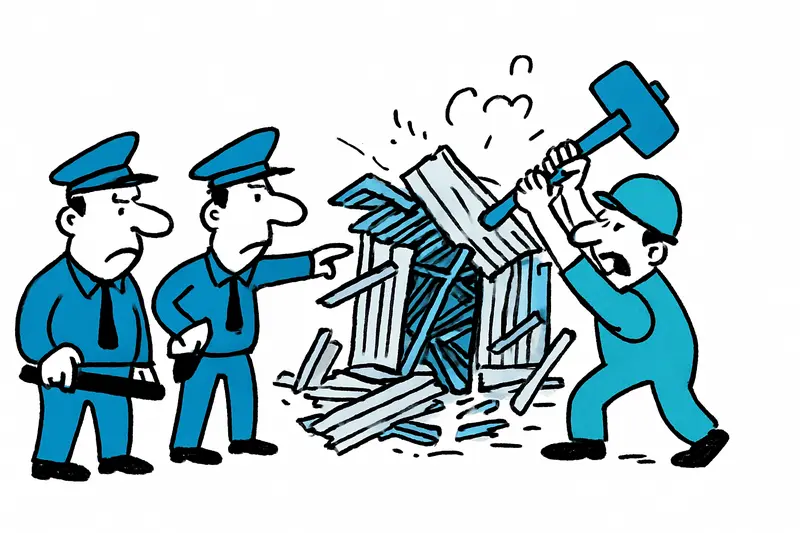
Shortly after seven in the morning the National Police and Guardia Urbana closed off the Camí de Son Banya. Barricade tape whipped in the cold wind, excavators clattered, and the smell of wet cement mixed with petrol. Residents shut their windows; some stood curiously on balconies, others shook their heads in resignation. The picture is familiar: an operation, a lot of noise — and in the end often only a brief pause.
Not a pile of junk, but complex structures
What is being torn down here is more than corrugated iron and reeds. Improvised power lines run between the shacks, provisional water supplies, open fire pits and heaps of rubbish. These are not loose parts but a functioning, if fragile, system. That is why the forces had to proceed carefully so that nobody would be harmed during the demolitions. The reality on site is loud: the crunch of rubble under boots, the clatter of metal, a distant church bell lost in the cold wind.
The key question: demolition — and then?
Huts were already cleared in spring; weeks later new structures stood in the same place, a pattern reported when police stopped construction of drug shacks in Son Banya. The simple but essential question is therefore: can Palma solve the problem permanently if the answer is always just demolition? The sober answer on site is: no. Demolitions treat symptoms, not causes. And the surprising thing is: some logistical questions are hardly discussed publicly — for example, what happens to the removed material.
If boards and corrugated sheets are not safely disposed of or secured, they often soon end up back as building material on site. As long as rebuilding remains profitable or cheap, reconstruction pays off. Added to this is the unclear ownership status of many plots; for background see coverage of the court confirmation of Palma's ownership. Without clear ownership rights, legal measures are slow and decisions can drag on for months.
Why social work is not a luxury but an obligation
A demolition without accompanying social measures is doomed to fail. Many of the people in Son Banya are socially vulnerable: without work, without secure residency status, and in part dependent on illegal income. Without street workers, mobile health services, access to shelters or placement in employment programs, their only option is to return to the provisional settlement.
It is not a matter of goodwill alone. It is about pragmatism: those who provide preventive social services reduce, in the long run, security problems, health risks and the burden on neighbors. And: without accompanying offers, every clearance remains a mere shifting of the problem — often only for a few days.
Less noticed: material management and presence
Handling demolition material is an unspectacular but decisive field. Are the building materials secured, destroyed or resold? As long as screws, boards and corrugated sheets circulate, there is an incentive to rebuild. That means costs: storage areas, personnel, disposal — everything costs money. But it is an investment if it prevents reoccupation.
Equally important is aftercare. A one-off clearance without subsequent presence — whether through regular checks, community policing or targeted patrol units — offers no long-term protection. It is not about constant surveillance, but about reliable, visible measures that make new construction more difficult.
Seven concrete steps for a more sustainable strategy
1. Ownership and usage check: Clear mapping of who owns which plot to create legal foundations.
2. Material management: Secure or sustainably dispose of removed building materials so they cannot be reused.
3. Social support: Mobile teams, street workers and quick placement offers into emergency shelters and job programs.
4. Presence after clearance: Regular checks and local community policing instead of one-off actions.
5. Accelerated legal procedures: Clear, fast administrative decisions so spaces can be secured long term.
6. Land development: Renaturation or legal usage concepts that make the area permanently unattractive for illegal settlements.
7. Involvement of the neighborhood: Information offers and participation rights for residents — their observations are often more precise than any map.
One step — not a conclusion
Today's operation, it is said, will last several days. Excavators and lorries create visible results; for the neighborhood this is a short-term relief. But anyone who hears the engine on the Camí de Son Banya, the clatter of the machines and the smell of fresh cement will notice: the person at the center is often missing in such operations. Palma needs a coordinated package of law, social work and planning. Only then will a recurring large-scale operation become a sustainable solution — and the city will gain more than just a few days of calm.
I left the site shortly after eight, with the crunch of rubble under my boots and the faint sound of the church bell in my ear. Such small sounds are a reminder: cities are not just blueprints. They are people, stories — and those must be taken into account.
Frequently asked questions
Why do demolition operations in Son Banya not solve the problem permanently?
What happens after a demolition in Son Banya, Mallorca?
What should local authorities do to prevent illegal rebuilding in Mallorca?
Why is social work important in places like Son Banya?
Is Son Banya still a problem area in Palma?
What makes Camí de Son Banya important in this operation?
How can Mallorca deal with illegal settlements more effectively?
What do residents in Palma want from repeated actions in Son Banya?
Similar News

After Being Admitted to Hospital Again: Heinz Hoenig and the Questions We Should Ask in Mallorca
Long-time Mallorca resident Heinz Hoenig was admitted to hospital again. A clear “what next?” is missing from the covera...
Yellow Alert: Is Mallorca Prepared for the Next Rain Band?
Aemet has issued a yellow alert for the south, southwest and the island's interior. Thunderstorms and heavy rain are for...
Kegel brothers trial postponed: Why Mallorca must wait for a verdict
The trial of 13 German holidaymakers will not begin until May 2028. The long wait raises questions — for victims, defend...
Chaos on Palma's Runway: Why the Summer at the Airport Was So Disrupted
This summer laid bare where Palma airport is faltering: only just over half of departures were on time and seven percent...
Cocaine Offer on Ham Street: Why the Open Trade Should Ring Alarm Bells
In the middle of Pare Bartomeu Salvà a tourist was offered a packet of cocaine as part of a sunglasses deal. A short int...
More to explore
Discover more interesting content

Can Cap de Bou

Townhouse Lleo 72
