
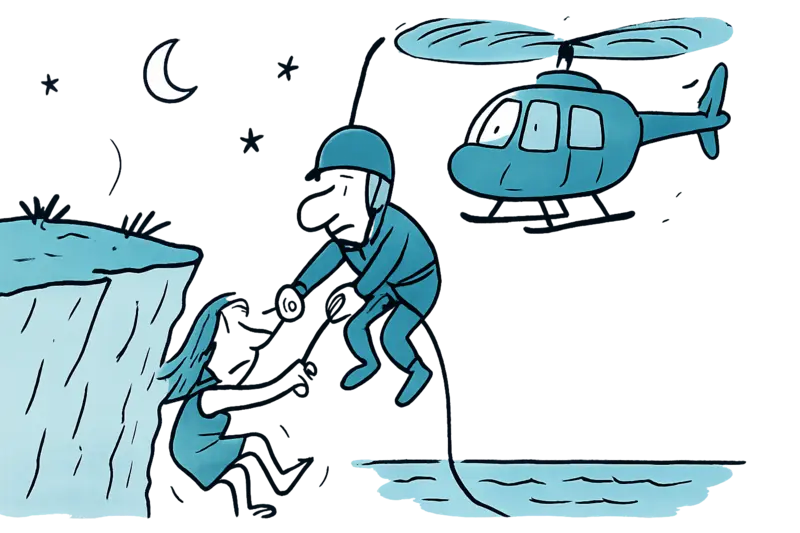
Rescue operation at Tolleric: Why nighttime cliff parties become dangerous
Rescue operation at Tolleric: Why nighttime cliff parties become dangerous
A British holidaymaker fell about ten meters at the cliffs of Tolleric during the night, later climbed back up and was rescued by helicopter. Central question: How can we prevent such rescues?
Rescue operation at Tolleric: Why nighttime cliff parties become dangerous
Central question: How can party mood and darkness on Mallorca's coasts be prevented from turning into life-threatening situations?
In the night to Sunday, a British holidaymaker was recovered from a precarious situation on the coast at Tolleric, in the municipality of Llucmajor. Around 3 a.m. the woman got into trouble after falling from a rock cliff. Rescue services – including SAMU 061, the Guardia Civil and a rescue helicopter – were on site and eventually brought the woman out of the danger zone by rope.
The facts are brief: The woman was in a group and had consumed alcohol. She jumped over a low wall near the shore, approached the rocks and lost her footing in the dark. After an approximately ten-meter fall she continued along the rocks toward the sea and later managed to climb back up several tens of meters, until the rescuers finally lifted her by helicopter.
It sounds like a dramatic movie scene – but it happened on our cliffs, in reality. In Tolleric the gravel crunches at night, the last bus line occasionally passes along the promenade and music still drifts from some bars across the bay. This mixture of darkness, alcohol and jagged coastline is a dangerous cocktail for accidents.
Critical analysis: The operation reveals several problems. First: Many visitors underestimate the nature of the coastline. Rock falls, narrow paths and slippery spots are already dangerous by day; at night they become traps. Second: Alcohol massively reduces risk perception. Those who celebrate in groups rely on their surroundings – but that does not protect against slippery edges. Third: infrastructure and information on site are limited. Missing, clearly visible warning and prohibition signs or poorly placed lighting contribute to people getting too close to the cliff edges.
Two perspectives are often missing in the public discourse: the local responsibility of nightlife businesses and the role of digital platforms. There is a lot of talk about reckless tourists, but rarely about how bars, hostels and booking platforms could contribute information on safe behavior. Simple, practical night-time instructions are often lacking as well: marked safe routes back to hotels, information on the last bus connection or phone numbers for local emergency services in guests' native languages.
An everyday scene in Llucmajor illustrates the picture: Shortly after midnight young people in small groups head to the coast. A motorcycle is parked at the roundabout, a taxi driver picks up passengers on Avenida de la Paz, and a bar hums on the corner – nobody thinks about wet algae on a rock ten meters below.
Concrete solutions we can propose here are pragmatic and feasible: better, clearly understandable pictograms at critical cliff spots; clearly visible signs indicating the nearest safe return routes; cooperation between the municipality, rescue services and the night-time economy for preventive education in multiple languages; targeted controls in the early morning hours at known meeting points; digital warnings on tourist maps and booking platforms that are automatically displayed at night; and training for bar staff so they can sensitively warn guests about potential dangers.
Technical measures such as illuminated orientation posts at access points or marked emergency points (with GPS coordinates) would help with operations, while the landscape should not be disfigured by widespread lighting. More publicly accessible information stations at parking lots with site maps and emergency numbers would also be useful.
We also need to make the debate more factual: rescue operations like the one in Tolleric are expensive and dangerous for emergency personnel. They are also symptomatic of a larger problem – the lack of respect for maritime hazards combined with nighttime alcohol consumption. Prevention saves lives and conserves resources.
Conclusion: The incident in Tolleric ended well, but luck is not a reliable strategy. If we want to prevent such scenes from becoming the rule, sober measures instead of blanket condemnation are needed: clear on-site notices, cooperation between municipalities and hospitality businesses, digital warnings and targeted prevention work. Then the coast remains a place for walks and views – not a backdrop for nighttime rescue operations.
Frequently asked questions
What are the main dangers of nighttime cliff areas around Mallorca and how can I stay safe?
What happened in Tolleric and what lessons can visitors take away?
What practical safety measures could reduce cliff-related accidents in Mallorca towns like Llucmajor?
What role do nightlife businesses and platforms play in preventing cliff accidents on Mallorca?
Is it safe to swim or be near beaches in Mallorca at night?
What’s the best way to plan Mallorca coast visits to stay safe, especially in the evenings?
How can information be made accessible for visitors in multiple languages on Mallorca?
Why are cliff rescues costly and risky, and how can Mallorca prevent them?
Similar News
Car accident on the MA-1: Mother and daughter on a bicycle struck by a fellow countryman – Who protects cyclists here?
On the MA-1 between Portopí and the Cala Major exit, a mother and her daughter on a bicycle were struck by a car. A para...
Smoke over the UIB: Who is responsible for the fire on the roof?
On Saturday afternoon a fire broke out on the roof of the Arxiduc Lluís Salvador building at the University of the Balea...
Short Getaway with Sea View: Inmood Aucanada among Spain's Top Hotels for Dinner Breaks
A small hotel on the coast of Alcúdia was highlighted by a Spanish experience platform as particularly suitable for shor...
Cala Pi crowned Mallorca's most beautiful beach: A morning at the rocky cove
The travel portal Holidaycheck praises Cala Pi as Mallorca's most beautiful beach: a narrow, romantic cove, clear water,...
Injured captain, big plans: Germania Mallorca before the away match in Consell
The newly founded FC Germania Mallorca travels to Consell on Saturday. Captain Bastian Müller is out injured, but coach ...
More to explore
Discover more interesting content

Can Cap de Bou

Townhouse Lleo 72
