
Car accident on the MA-1: Mother and daughter on a bicycle struck by a fellow countryman – Who protects cyclists here?
Car accident on the MA-1: Mother and daughter on a bicycle struck by a fellow countryman – Who protects cyclists here?
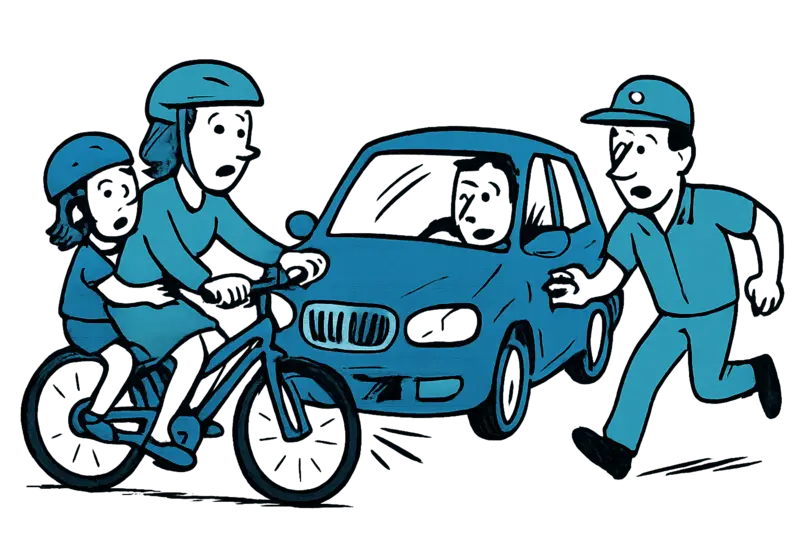
On the MA-1 between Portopí and the Cala Major exit, a mother and her daughter on a bicycle were struck by a car. A paramedic who happened to be nearby provided first aid. Why do such accidents repeatedly occur at this location?
Car accident on the MA-1: Mother and daughter on a bicycle struck by a fellow countryman
An on-duty paramedic helped immediately - the question remains: How safe is this stretch for cyclists?
Leading question: Who protects cyclists on the short section of the MA-1 between the Portopí roundabout and the Cala Major exit?
On the morning of a late September day two English women, mother and daughter, were hit from behind by a BMW while on a bicycle. According to available accounts, the mother apparently began to change into the lane heading for Cala Major when the car from behind struck the pair. A paramedic on duty, who happened to be nearby in his car, stopped and began first aid; later both women were taken to Son Espases hospital. The driver's wife, who is close to giving birth, waited for them at the hospital.
Critical analysis: Such accidents do not happen in a vacuum; as reporting such as Series of Accidents on the MA-1 near Palmanova: Hit-and-Run, Alcohol and Unanswered Questions shows.
The MA-1 is in many places a main traffic artery where commuters in a hurry, tourists in rental cars, buses and - for various reasons - cyclists meet. The stretch between Portopí and Cala Major is a short piece many use to get to the sea faster. It is exactly there that differing expectations collide: drivers expect flowing traffic, cyclists seek a direct connection to the coast. When neither lane markings nor physical separation clearly indicate who may use which space, the risk increases, and earlier incidents like Serious Head-On Crash in Paguera: Why Does the MA-1 Remain So Dangerous? raise similar concerns.
What is often missing in public discourse: the sober debate about responsibility is quickly reduced to blaming individual parties. Less discussed is how infrastructure, signage and communication with seasonal drivers (rental cars, tourists) contribute to making such encounters possible in the first place, as illustrated by Severe rear-end collision on the Ma-13: Why the stretch between Inca and Palma often becomes a bottleneck. Nor is there enough open discussion about the role of speed at exits, sightlines and the information available at parking and cycle paths in Palma.
An everyday scene here: In the mornings you see commuters on racing bikes on the Paseo Marítimo, older residents on e-bikes and families with child seats. Cars jostle, delivery vans stop briefly, two buses swerve, and somewhere a driver honks impatiently. On sunny days the smell of the sea mixes with hot brakes - and everyone is trying to get through the same gaps at the same time.
Concrete solutions that could act quickly: better and more visible signage that explicitly warns cyclists and regulates allowed behavior; temporarily reduced speed at the exits; mobile controls during peak times; and information leaflets at rental car agencies warning of dangerous sections. In the medium term the stretch needs a structural solution: a protected cycle path or a clear diversion for bicycles heading to the coast, instead of forcing them onto the MA-1.
Practical measures for everyday life: Drivers should be especially anticipatory at exits, signal early and clearly and pay attention to pedestrian and bicycle traffic. Cyclists are advised to wear visible clothing, use single-rider setups rather than tandem where possible at narrow spots and announce turns clearly. Local initiatives could also organize free reflectors or first aid courses for passersby - the quick help from the paramedic who happened to be there shows how important immediate measures are.
What politicians and administrators should now examine: Is the MA-1 legally and clearly designated for bicycle traffic at this spot? Can temporary markings or barriers be set quickly? And how can information and enforcement be combined so that not only fines but targeted prevention and multilingual education take place?
Concise conclusion: Behind every accident report are people - the injured women, the driver, the waiting wife in the hospital. Highway sections are not cycle paths; but if cyclists are traveling there, a conflict arises that the city and island authorities must not ignore. The combination of clear infrastructure, targeted communication and increased presence could save lives. It's time to stop treating the short stretch between Portopí and Cala Major as a gap in traffic planning.
Frequently asked questions
How dangerous is the MA-1 stretch between Portopí and Cala Major for cyclists in Mallorca?
What practical improvements could make the MA-1 safer for cyclists in Mallorca?
What should drivers do to protect cyclists as they exit towards the coast on Mallorca’s MA-1?
What should cyclists do to stay visible and safe on busy Mallorca roads?
Is there discussion about designating the MA-1 section near Portopí and Cala Major for bicycle traffic?
What quick measures could authorities implement to reduce risk at MA-1 exits?
What role can rental car agencies and bystanders play in raising awareness of dangerous sections in Mallorca?
Why is proper cycling infrastructure essential for Mallorca's main roads?
Similar News
Smoke over the UIB: Who is responsible for the fire on the roof?
On Saturday afternoon a fire broke out on the roof of the Arxiduc Lluís Salvador building at the University of the Balea...
Short Getaway with Sea View: Inmood Aucanada among Spain's Top Hotels for Dinner Breaks
A small hotel on the coast of Alcúdia was highlighted by a Spanish experience platform as particularly suitable for shor...
Cala Pi crowned Mallorca's most beautiful beach: A morning at the rocky cove
The travel portal Holidaycheck praises Cala Pi as Mallorca's most beautiful beach: a narrow, romantic cove, clear water,...
Injured captain, big plans: Germania Mallorca before the away match in Consell
The newly founded FC Germania Mallorca travels to Consell on Saturday. Captain Bastian Müller is out injured, but coach ...
Palma, Palma de Mallorca, Palma‑Mallorca: What is it really about?
The debate over the city's name is more than grammar: it concerns identity, law and branding policy. A sober reality che...
More to explore
Discover more interesting content

Can Cap de Bou

Townhouse Lleo 72
