
Series of Accidents on the MA-1 near Palmanova: Hit-and-Run, Alcohol and Unanswered Questions
Two accidents in the early morning hours on the MA-1 near Palmanova: a rear-end collision followed by a hit-and-run, and shortly after an intoxicated driver who crashed into a patrol car. The Guardia Civil is investigating — and the island asks: are these incidents random or signs of a structural problem?
Series of Accidents on the MA-1 near Palmanova: Hit-and-Run, Alcohol and Unanswered Questions
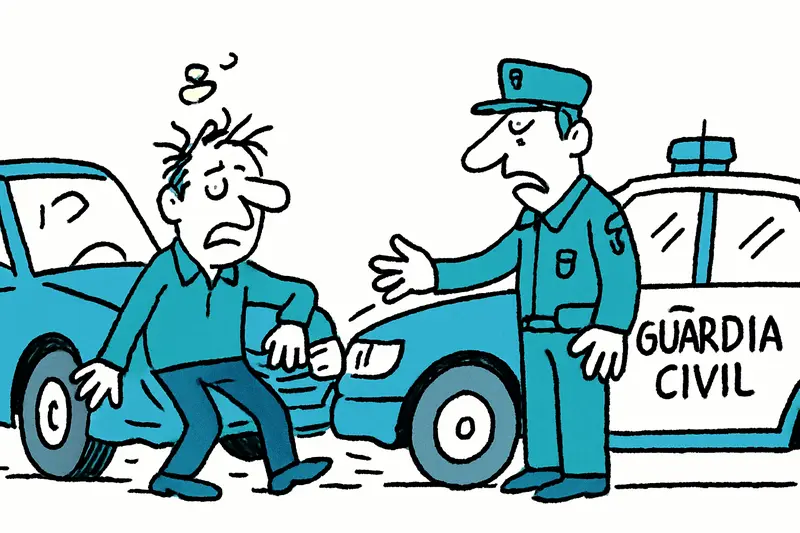
It was still dim, the streetlights gave off a faint glow: around 4:20 a.m. a sequence of events occurred on the MA-1 towards Andratx, just before the Palmanova exit, that made residents and early risers sit up — reported in Serie de accidentes en la MA-1 en Palmanova: Audi se da a la fuga, conductor ebrio choca contra patrulla. First, a Fiat Panda was rear-ended; the car remained on the hard shoulder with heavy rear-end damage. Then the unpleasant part: those responsible apparently got out — reportedly an Audi — and disappeared on foot towards the fields behind the exit.
The key question: coincidence or systemic failure?
The central question that remains after such mornings is: are these isolated incidents or indications of a larger problem at this section of the MA-1? It is easy to call it "bad timing" — but when hit-and-run and alcohol intoxication occur together, we have to ask further: is it due to road design, insufficient controls during the early hours, or a more casual attitude toward rules during night and early-morning traffic?
What is often overlooked in public discussion
At first glance damaged vehicles and the search for those who fled are the focus. Less noticed are the practical consequences: glass shards on the roadway, bent guardrails and leaked vehicle fluids are a hazard especially for motorcyclists traveling at that time. The psychological stress for those involved — the startled driver of the small car, residents who were briefly woken up — is also usually invisible.
Another often-overlooked issue is the manner of flight: walking paths into the fields suggest a lack of lighting and inadequate surveillance along the ramp. Those who walk into the fields exploit weak points in the infrastructure on purpose — no lamps, no cameras, no quickly reachable checkpoints.
The second incident: an intoxicated driver hits a patrol car
While the Guardia Civil secured and illuminated the scene, a second accident occurred: an apparently intoxicated driver lost control and collided with a patrol car. Fortunately the officers were standing outside the service vehicle — no one was seriously injured. Such scenes show how quickly emergency personnel themselves can be put at risk when the situation around an accident remains unsettled, as happened in Head-on crash near Andratx: Three injured on the MA-1 — alcohol test positive.
Analysis: why this time is particularly risky
The early morning hours are an odd mix of traffic: night owls, delivery vehicles, early-shift workers and occasional commuters share the same lane. Fatigue, alcohol and sometimes inappropriate speed form a dangerous combination. Despite controlled queues and a visible Guardia Civil presence, a critical moment remains when those involved flee or secondary accidents occur; similar dynamics were noted after the Serious Head-On Crash in Paguera: Why Does the MA-1 Remain So Dangerous?.
Concrete opportunities and solutions
What can be done against such series of incidents — in the short and long term? Some practical proposals: targeted control phases in the early morning hours at critical points along the MA-1, accompanied by alcohol and speed checks, supported by DGT guidance on alcohol and drugs. Better lighting of the exits and emergency call posts could make fleeing more difficult and increase safety for deployed personnel. Temporary traffic-calming measures or rumble strips before critical exits can signal drivers to slow down. Finally: an awareness campaign for night-time drivers and early workers, including advice on how to react properly in accidents and which information is particularly helpful to the Guardia Civil (time, direction, license plate, phone recordings).
What residents and witnesses can do
The police ask for information — and that is not just a formality. Even the color of clothing, the direction of flight or a phone video can decisively advance investigations. So if you hear the typical stop-and-go murmur of the seafront road in the early hours or see rustling in the fields: note details, record, report. Stay calm, keep your distance and let rescue personnel do their work — that is how you help most.
A personal view in conclusion
When I drove past the exit around 6 a.m., I still saw the traces: glass shards, a bent guardrail, a faint smell of diesel in the air. No big spectacle anymore, but lasting traces — exactly those small things that affect everyday life on the island. Perhaps that is the greatest challenge: to draw lessons from individual morning incidents before the next one happens.
Short-term consequences: Temporary closures of the MA-1, minor traffic disruptions towards Andratx. No serious injuries reported. The Guardia Civil's investigations are ongoing — information is requested.
Frequently asked questions
What happened on the MA-1 near Palmanova early in the morning?
Is the MA-1 near Palmanova dangerous at night or in the early morning?
What should you do if you witness a hit-and-run on a road in Mallorca?
Why are early-morning accidents on Mallorca roads often more serious?
What kind of road safety improvements are suggested for the MA-1 near Palmanova?
Was anyone seriously injured in the MA-1 accidents near Palmanova?
Why do some drivers flee on foot after a crash near Palmanova?
What traffic problems can a crash on the MA-1 near Andratx cause?
Similar News
Release after bloody attack in Palma: Why the court's decision raises questions
An 18-year-old who allegedly inflicted a serious neck injury on a man at Plaza Gomila using a wristwatch wrapped around ...
Kidnappings in Inca: Three young men forced into car trunks and abused in the forest – a reality check
In Inca, three 18-year-old men were forced into car trunks by masked assailants at the Plaça des Bestiar, taken to a for...
Spreading Massification: The Brake That Still Has Much Work to Do
Marga Prohens announces limits on volume tourism. The measures sound harsh — but are they enough to save everyday life, ...

Through the Keyhole onto the Party Yacht: How Daniela Katzenberger Is Planning Her 40th on Mallorca
Daniela Katzenberger turns 40 and wants to celebrate it on the island — likely with a boat, cake and her mother. A relax...
By Boat Instead of the Road: Palma's Water Bus — a Reality Check
The 'Bus Nàutic' launches in two stages — but questions remain over interim operations, fares and environmental requirem...
More to explore
Discover more interesting content

Can Cap de Bou

Townhouse Lleo 72
