
Rising fuel and housing costs: Why Mallorca's overland buses are suddenly overcrowded
Rising fuel and housing costs: Why Mallorca's overland buses are suddenly overcrowded
More and more people are leaving Palma — and boarding TIB buses: Between January and August 2026, the network recorded over 30 million trips, two million more than the previous year. A reality with opportunities but also problems.
Rising fuel and housing costs: Why Mallorca's overland buses are suddenly overcrowded
Key question: Are frequency, capacity and planning sufficient to cope with the wave of new passengers in the long term — or will the network become a bottleneck for mobility on the island?
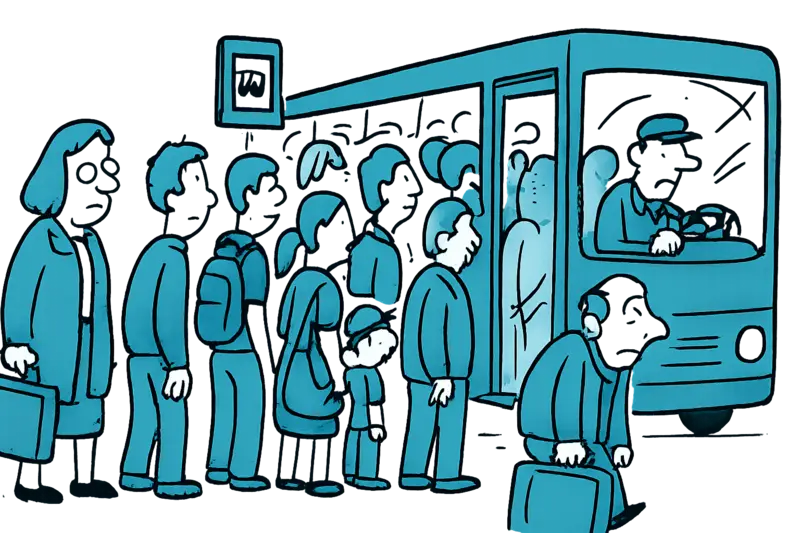
On a stiflingly warm morning at Palma's Estació Intermodal, when taxis honk, wheeled suitcases clatter across the concrete and the electronic departure board pulses with upcoming trips, it is visible to the naked eye: the bus bays are filling up. Young people with workdays in the city, families who have moved to the countryside, and seasonal workers with weatherproof bags wait patiently — sometimes in longer lines than two years ago.
The figures TIB gives for the months January to August 2026 paint a clear picture: more than 30 million trips in total, about 90 percent on the overland lines. Compared with the previous year, there were over two million additional rides — an increase of more than eight percent. At the same time, the use of time-limited season tickets has changed noticeably since 2021: the number of users of these tickets has doubled. This year TIB issued more than 200,000 season tickets, about 138,000 of which went to previous non-users.
Critical analysis
What is missing is an honest view of the consequences: higher fuel prices and the fact that more and more families are leaving Palma drive demand. The population outside the capital is growing significantly faster; in more than 40 municipalities of the so-called Part Forana there are now more people living there than in Palma. Since 2000 the population in rural areas has increased by more than 46 percent. Inca and Manacor remain places with comparatively affordable rents and purchase prices — there the numbers of seasonal workers, who rely on regular connections, are also rising.
The immediate consequence: fewer seats during peak times, longer journey times because of frequent stops and the risk that passengers miss reliable connections in Palma or at train stations. For commuters this is more than annoying — it has economic impact. Companies notice when employees spend more time traveling every day. For TIB, more passengers do not automatically mean more revenue, because the share of discounted or free ticket models remains high.
What is often missing from the public discourse
First: the discussion often stops at pure user numbers. We too rarely talk about peak-load pressures, vehicle age, accessibility at rural stops or the staffing problems among drivers and workshops. Second: the connection between the housing market and mobility is usually treated as a footnote. When rents in Palma rise, mobility needs shift to villages — this is not a temporary effect, it is a structural change. Third: climate issues do appear, but a concrete strategy for replacing fossil-fuel intercity buses with electric or hydrogen alternatives is missing from many conversations.
A picture from everyday life: In a small bar at the Plaça de Inca a saleswoman told me how several customers now come every day by bus to the weekly market whereas before they used to stop by car. A blessing for her, a new midday bottleneck for the bus line.
Concrete solutions
Instead of vague alarmism, pragmatic action helps. Proposals that could have a quick effect in Mallorca:
1. Increased frequency during peak times: More buses on the main corridors in the mornings and evenings, including temporary reinforcement trips on weekdays.
2. Park-and-ride and bicycle parking facilities: Small P+R sites at village entrances and secure bicycle parking at larger stops so commuters can cover the last mile without a car.
3. Flexible minibuses in rural areas: Demand-responsive shuttles for remote villages that complement, but do not replace, scheduled buses.
4. Targeted funding: Link revenues from fuel taxes or EU funds to the conversion to electric bus fleets while simultaneously reviewing fare models for heavy users.
5. Integrate housing and transport planning: Approve housing programs and new settlement areas only in connection with proven transport links.
These proposals do not require years of lead time; many measures can be tested in seasonal steps. It is important to remember: more buses are not the best answer everywhere — where villages lie far apart, other mobility forms make more sense.
Conclusion
The rising passenger numbers are no accident; they are the result of two forces: expensive car commuting and changed housing decisions. TIB is not alone in facing the task of coping with this increase; the island administration, municipalities, employers and the housing sector are called upon. Those who now only applaud when more people take the bus overlook the creaking joints in the system. Those who act can turn the pressure into an opportunity: better public transport, fewer traffic jams, lower household costs — and an island that remains livable for people beyond Palma.
Frequently asked questions
What is the best time of year to visit Mallorca if I want warm weather and to swim?
What should I pack for a spring trip to Mallorca?
Is it safe to swim in Mallorca's sea during vacation?
What are some family-friendly activities to do in Mallorca?
Do I need a car to explore Mallorca, or are trains and buses enough?
What is a good one-day itinerary in Palma de Mallorca?
Is a day trip to Sóller worth it from Palma?
What should I know about Valldemossa when visiting Mallorca?
Similar News
When Ryanair's fleet grows: What Mallorca's travelers should know
Ryanair will soon receive 737 Max 10 jets. The larger aircraft offer potential savings — but also new risks for flight o...
Carriages Without Horses: Palma Plans E-Carriages – a Reality Check
Palma plans to switch to electric carriages in 2027. The prototype was shown near the cathedral. What is the technology ...

Record season, empty coffers: Who really benefits from the tourism boom?
Full hotels and more flights: the numbers sound impressive — yet many locals feel no benefit. A reality check with an ev...

Pool ordered for €46,000 – €23,000 paid, no work carried out: A fraud case in Palma
A homeowner in Palma transferred €23,000 for the construction of a pool. Weeks later it emerged that no building applica...

Summer greetings from the Pitiusas island: Gottschalk and Krüger enjoy the sun on Ibiza
A friendly photo of Thomas Gottschalk and Mike Krüger on Ibiza evokes memories of their shared film years and shows that...
More to explore
Discover more interesting content

Can Cap de Bou

Townhouse Lleo 72
