
Robber Falls While Fleeing in Sant Agustí: Who Takes Responsibility?
During a purse-snatching in Sant Agustí, a non-commissioned officer chased the suspect; the man jumped from a bridge and was seriously injured. A reality check on interventions and prevention in Mallorca.
Robber Falls While Fleeing in Sant Agustí: Who Takes Responsibility?
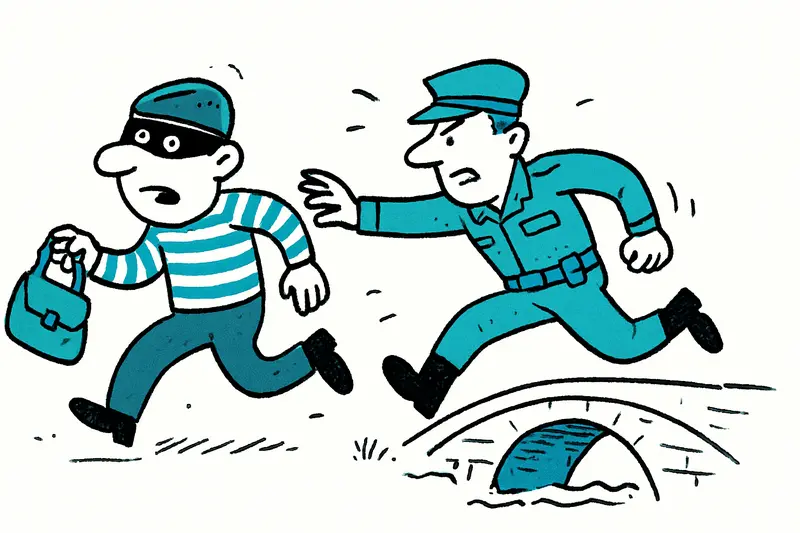
On the early evening of last Sunday, around 7:20 p.m., a young woman's handbag was snatched in Sant Agustí (Palma). A non-commissioned officer of the Spanish army who was nearby began pursuit. After a brief scuffle he managed to retrieve the bag – the fleeing man then jumped from a bridge into the streambed below, fell about ten meters and suffered fractures to both legs. Witnesses alerted rescue services; paramedics secured the injured man on a stretcher and he was taken to Son Espases University Hospital. The local police took over the investigation, and two patrol cars were on site.
Key question
Who is allowed to intervene – and at what cost? That is the real question that remains after such scenes on the street. Hero stories are quickly told: someone sees an offense and acts. The reality on Mallorca's streets is more complicated: the risk for victims, helpers and bystanders increases when there are no clear rules and no rapid police support.
Critical analysis
The incident in Sant Agustí shows two sides of the same coin. On the one hand there is the immediately visible success: the handbag was recovered and an alleged crime stopped immediately. On the other hand is the fact that a flight escalated into a life-threatening decision – with serious injuries to the suspect and strain on emergency services already under pressure.
It is unclear what training people in uniform have for civilian interventions and what protocols apply when members of the armed forces become involved in civilian incidents. Such actions raise questions: Who bears legal responsibility if something goes wrong? What communication exists between military personnel, Policía Local and emergency services in a city like Palma? Answers to these questions are often missing from public debate.
What is missing in the public discourse
The debate usually focuses on individual cases and moral recognition for helpers. Rarely does it address systemic gaps: hotspots with poor lighting, missing or poorly positioned surveillance cameras, scarce police foot patrols in sensitive neighbourhoods, and insufficient information for residents and tourists on how to behave in such situations. The perspective of victims – psychological support, steps to file a report, returning stolen documents – is also neglected.
Everyday scene from Sant Agustí
An evening in Sant Agustí: gas lamps cast warm light on narrow sidewalks, tables of small bars are full, scooters click by, and somewhere a dog barks. In this everyday soundscape most assaults happen, quickly and unexpectedly. Those who move around here regularly know the bottlenecks at bridges and underpasses where escape routes are short and falls can occur.
Concrete solutions
More presence on site: Foot patrols of the Policía Local during peak going-out times, targeted patrols at known bottlenecks and bridges.
Better infrastructure: Brighter lighting at bridges and streambeds, robustly installed emergency call points, targeted review of camera positions that can help victims and investigators.
Clear protocols: Coordination between municipalities, police and the military on roles and responsibilities, as well as regular public information about what civilians can safely do – and what they should not.
Prevention and education: Campaigns for locals and tourists: carry bags securely, keep digital copies of important documents, have emergency numbers at hand. Schools and neighbourhood associations could teach simple behavioural tips.
Support for victims: Easily accessible contact points for filing reports, initial psychological support and help blocking cards or documents.
Conclusion
The incident in Sant Agustí is not an isolated spectacle but a sign of gaps in the interplay of prevention, presence and protocols. Wanting to help is laudable; society owes helpers clear rules and conditions so that assistance does not unnecessarily turn into danger. Mallorca's streets need fewer hero narratives and more reliable structures – for victims, helpers and everyone who strolls past the terraces in the evening.
Frequently asked questions
What is the best time of year to visit Mallorca for warm weather and sunshine?
Are there beaches in Mallorca suitable for swimming most of the year?
What should I pack for a trip to Mallorca?
How can I get around Mallorca without renting a car?
What are some family-friendly activities to enjoy in Mallorca?
What should I know about Mallorca’s weather for swimming and watersports?
When is the best season for hiking in Mallorca?
Are there markets or food experiences worth seeking in Mallorca?
Similar News
Bomb threat before Jet2 flight in Tenerife: A reality check for security protocols
A passenger reported a bomb in luggage shortly before departure in Tenerife. Evacuation, baggage checks, delays — and ma...
Who is stripping Mallorca's coast bare? Why entire slopes are being removed for villas
On Mallorca steep slopes are again being removed to make way for luxury construction sites. Who bears the responsibility...
Bomb threat on board? Why the Tenerife incident concerns us in Mallorca
A passenger on a Jet2 flight from Tenerife to London triggered an evacuation and intensive security checks. The result: ...

More Electric Cars in the Balearic Islands: Sales Rise Sharply
Between January and August, 14,185 vehicles without petrol or diesel propulsion were sold — an increase of more than 40 ...
Autumn in Mallorca: What Truly Remains of Summer
The days grow shorter, the evenings cool — and yet more of summer lingers than you might think: sounds, recipes, people,...
More to explore
Discover more interesting content

Can Cap de Bou

Townhouse Lleo 72
