
Ryanair Flight Diverted to Barcelona: An In-Flight Emergency and the Questions That Follow
Ryanair Flight Diverted to Barcelona: An In-Flight Emergency and the Questions That Follow
A Ryanair jet from Pisa to Málaga landed in Barcelona after a passenger became acutely ill. Why these cases need more attention — and which measures could help.
Ryanair Flight Diverted to Barcelona: An In-Flight Emergency and the Questions That Follow
Priority requested, El Prat as alternate — routine procedure or a wake-up call?
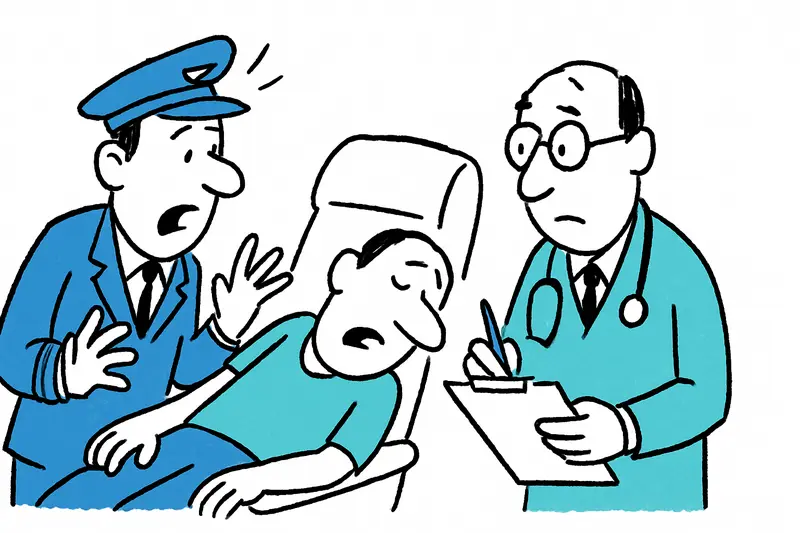
On Friday evening a Ryanair Boeing 737 Max en route from Pisa to Málaga suddenly changed course and landed in Barcelona. Reason: a passenger on board suffered serious health problems. Spanish air traffic controllers reported on their X account that the flight had requested priority; air traffic control and the airport then coordinated medical care. The aircraft landed on El Prat without further incidents and emergency services took over care of the affected person. Similar incidents have occurred elsewhere, for example Sanitary problem forces Ryanair plane into emergency landing — a question mark for flight safety.
Key question: How well are airlines, airports and air traffic control prepared for such acute cases, and are existing procedures sufficient to reliably protect lives? This question may sound theoretical, but it is not: each of us has watched departure boards at airports, sat in a café opposite the arrivals hall in Palma and noticed the nervous looks when an aircraft lands that was not scheduled (or been reminded by local reports such as Frightening Seconds over Palma: Two Flight Attendants Injured).
On Majorca these moments are felt in small everyday scenes: in the late afternoon, when the heat on Avenida Gabriel Roca eases, travelers sit in the café on Passeig Mallorca, look at their phones and compare departure times. A diversion affects not only the aircraft in question — connections, baggage logistics and relatives are suddenly pulled into a chain reaction.
Critical analysis: formally many things run correctly. A crew member reports an emergency, air traffic control assesses options, priority is granted, an alternate airport is selected and rescue teams are alerted. But "many things run" does not mean "optimal." It often remains unclear what medical data are available on board, whether queries about preexisting conditions are possible and how quickly specialized care is actually ready.
What is missing from public discussion: transparency and concrete information without sensationalism. People want to know whether defibrillators were available on board, whether the crew has additional medical training and how long decision-making paths between crew, air traffic control and ground staff take. Such details usually disappear into police or company reports and are invisible to travelers (see reporting on precautionary returns such as Back after takeoff: What a 'toilet problem' reveals about flight safety).
Another blind spot is the question of standards: which medical equipment is mandatory and is it the same across all airlines? Do airports have set procedures for where a medical emergency on a remote stand is reported so that ambulances can reach the ramp without detours? During the landing at El Prat there was talk of a direct approach to runway 06L — practical because the aircraft could clear quickly and ground staff had rapid access. But that is the exception when infrastructure or weather do not cooperate.
Concrete solutions to be better prepared for what nobody plans: first: uniform minimum equipment on short- and medium-haul flights — automated external defibrillators (AEDs), clearer first-aid kits and digital protocols that crew members can access on a tablet. Second: mandatory refresher courses for crews in emergency medicine, combined with telemedicine access to specialists who can provide rapid diagnoses by video if necessary.
Third: standardized communication channels between airline, air traffic control and airport rescue services. When a flight requests priority, a short structured package with relevant information should automatically be sent to ground operations: suspected severity, required specialists, planned arrival terminal. Fourth: airports could designate fixed "emergency ramps" so that emergency vehicles can reach the aircraft without obstruction — especially during peak times when the apron is congested.
Fifth: better passenger information before departure. A short information sheet explaining how to report existing conditions anonymously and securely, without causing panic. If medical pre-information is available, the crew can act faster and make more informed decisions in an emergency.
Why these proposals are practical: they address situations that are rare but where every minute counts. In such a chain it is fatal if procedures are based only on "feeling." Concrete standards create predictability — for crew, ground staff and also for relatives who often wait many kilometers away.
Conclusion: The Ryanair flight that landed in Barcelona instead of Málaga ended well — the passenger was cared for and the aircraft apparently continued operations after the stopover. Nevertheless, the episode should serve as a reminder: a medical emergency in a cabin exposes the vulnerability of everyone involved. More transparency, uniform equipment, mandatory training and faster communication routes would not only make these situations manageable but more effective.
If you sit on the promenade in Palma and watch the planes glide over the bay, you rarely have the chance to think about these details. Yet the next bad news can affect anyone. Better we are prepared.
Frequently asked questions
What triggers an in-flight medical diversion, and who decides to divert a flight?
What medical equipment and training should be present on board to handle emergencies?
How do airlines, air traffic control, and airports coordinate during a medical diversion?
How could a diversion affect Mallorca-bound flights and travelers on the island?
What information is typically shared with passengers and relatives after an on-board medical emergency?
Are there proposals for faster emergency access at airports to reach aircraft quickly?
How can passengers prepare to support crew during a medical emergency on board?
Could telemedicine and digital tools improve in-flight medical responses?
Similar News

When the Water Taps Run Dry: Why Tankers Are Not the Solution
In villages like Deià, Valldemossa or on Menorca, municipalities are limiting water use because of drought. Who decides,...

Alarm in Port de Pollença: What now for the polluted bay?
Hundreds of people protested on the beach of Port de Pollença. The environmental organization Arrels Marines demands a p...

Micaela Schäfer: Between Playa de Palma and a Berlin Law Firm — New Calm, an Old Tomcat and Solid Finances
The party artist from the Ballermann scene appears surprisingly down-to-earth: a new relationship with a Berlin lawyer, ...
At Playa de Palma: Fire in Residential Building – six people rescued on the roof, what is missing in prevention?
In the evening a fire broke out on the first floor of a five‑storey building on Calle Trasimé. Six residents fled to the...
New License Requirement for Mini-Boats in Mallorca: Protection Measure or Tourism Brake?
From October 1 renters of small recreational boats in the Balearics must present a boating license. Critical questions r...
More to explore
Discover more interesting content

Boat Tour with BBQ along Es Trenc Beach

Private transfer from Mallorca Airport (PMI) to Pollensa
