
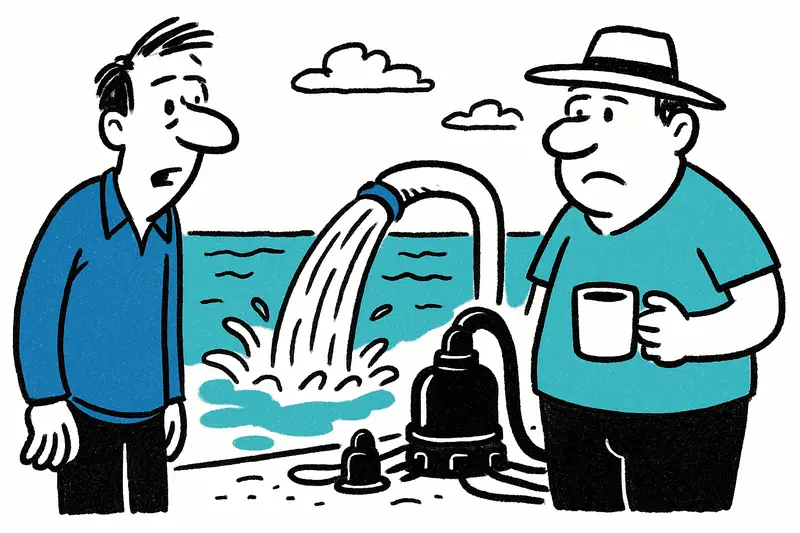
An End to the Green Water? Sant Elm Tests Seawater Circulation
Andratx is installing pumps along the Sant Elm coast to reduce the summer green tint in the water. A technical experiment for clearer coves — but the big question remains: does movement solve the problem or only its symptoms?
Can technology really tame the green sea?
Early in the morning, when the Plaça of Sant Elm still smells of warm bread and coffee and the seagulls are cawing, you can see the same thought on the locals' faces: the water sometimes looks as if someone had thrown green blotches into it. The municipality of Andratx has now sent a clear signal — instead of beach bans or prohibition signs, it has brought three powerful pumps to the shore, as reported in Pumps Against the Algae Plague: A Test, Many Questions in Sant Elm. The aim: to make the green water less visible. The bill: around €350,000, according to Sant Elm's recirculation investment report; the devices will be removed at the end of the season.
What is behind the experiment?
The idea is simple and technically plausible: if you mix nearshore water more strongly, nutrients distribute differently and algal blooms should be less likely to form. On site this means: pumps, pipes, diffusers that move water continuously. Officials say marine biologists and authorities were involved. Still, the central question remains: is mechanical stirring enough to solve an ecologically complex problem?
Risks that are little discussed on the Plaça
The debate at the beach bar often revolves around visibility and bathing comfort. Less often heard are the possible consequences that circulation can have for the delicate balance beneath the surface. Increased mixing changes temperature and oxygen layers — and that can affect Posidonia meadows or the larval development of some fish species. It is also conceivable that sediments are stirred up, temporarily releasing nutrients that were previously bound and even worsening the problem.
Another point: the pumps are only supposed to run during the season. That means the measure is applied sporadically, when many people are swimming. Ecologically, however, it acts in a system that functions year-round. If the source of nutrient input — leaking sewer lines, agricultural runoff, boat waste — is not reduced, the circulation may remain mere patchwork.
What speaks in favor of the trial?
Of course there are opportunities. Clearer coves matter economically to landlords, restaurants and the small kiosk on the corner where you buy your morning café con leche. Less "green soup" would be an asset for tourism and the town's quality of life. And: a technically controlled system can be measured and adjusted. If monitoring data show that chlorophyll levels, visibility and oxygen improve, Sant Elm will have concrete indicators rather than mere aesthetics.
Moreover, a controlled test is valuable: it forces data collection, creates transparency and offers the chance to optimize measures together with marine biologists, as described in Agua limpia en Sant Elm: tres bombas para acabar con la plaga de algas. In the best case, it will become clear which combination of technology, wastewater treatment and landscape management is effective.
What should Andratx do next?
A few suggestions are obvious and quite concrete: install more monitoring stations to track temperature, oxygen, chlorophyll and currents; vary and document pump operation phases; commission regular environmental assessments — not only in the first year but over several seasons. Crucial: intensify source investigations outside the bay. Without investments in the sewage network, proper treatment of boat waste and buffer zones to reduce agricultural runoff, the whole effort remains symptomatic.
Involving local people also helps. Citizen participation, workshops with fishermen and landlords, and a local monitoring program with voluntary measurements — this builds trust and provides additional observations. And: small, cost-effective measures such as rain retention basins, shoreline planting or information campaigns for boaters are effective complements.
A view from the coast — and a measure of patience
Standing on the promenade with a coffee in hand, you look across to the rugged silhouette of Sa Dragonera and wonder whether the pump can do a better job than the wind. Technical experiments are rarely a miracle cure. But they can be a sensible component of a larger plan. If Andratx accompanies the project seriously with scientific monitoring, adjusts measures and works on nutrient sources at the same time, Sant Elm could indeed become bluer — though not overnight.
Will the experiment succeed? The sea itself will give the answer, measured and observed: through numbers, but also through the judgement of the people who bathe, fish or simply sit on the Plaça every day. I will be back next summer to hear the spray, feel the wind on my skin and see whether the water is less green. And the neighbors at the bakery will surely keep debating — with a pinch of skepticism and a healthy dose of hope.
Frequently asked questions
Why does the sea sometimes turn green in Sant Elm, Mallorca?
Can pumps help reduce algae in Mallorca’s coastal waters?
Is it safe to swim in Sant Elm when the water looks green?
What is the best time of year to visit Sant Elm for clearer sea conditions?
What does seawater circulation actually do in a bay like Sant Elm?
Could seawater pumps affect Posidonia meadows near Sant Elm?
Why is Andratx testing seawater pumps in Sant Elm instead of banning bathing?
What else does Mallorca need to do if green water problems keep coming back?
Similar News

When Palma Becomes a Zombie Zone: 'Mallorca Z', AI and the Thought Experiment with Side Effects
A Mallorcan lawyer built a strategy game over a weekend using AI that treats the island as the scene of a zombie crisis....

Learning to Wait: How Leisure Is Making Space Again on Mallorca
Waiting doesn't have to be lost time. A mild October day in Palma shows how small pauses slow down our lives — and what ...

Cala en Brut: Body in the Sea — a Fatal Autumn Day and What’s Missing
In Cala en Brut (Ciutadella) a man's body was recovered during storm Dana "Adam". Why do autumn storms in the Balearics ...

When the road is gone: Port de Valldemossa cut off after storm 'Adam'
After heavy rains a retaining wall gave way and two sections of mountain road MA-1131 became impassable. Why are rural p...

Crypto Promises, Ferry, Arrest: How Investors in Mallorca and the Neighboring Islands Fall into the Trap
A Swiss man wanted under a German arrest warrant was captured in Ciutadella. The case raises questions about cross-borde...
More to explore
Discover more interesting content

Can Cap de Bou

Townhouse Lleo 72
