
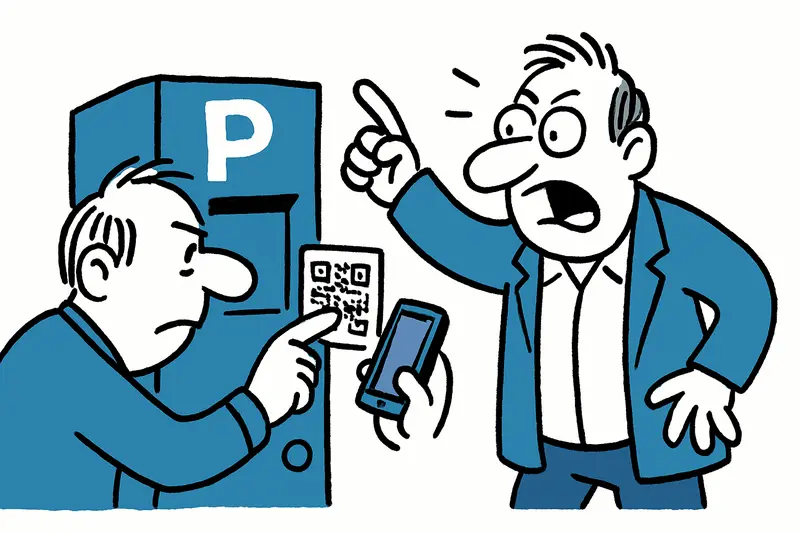
Fake QR Codes at Palma Harbor: How Secure Are Our Parking Payments?
Fake QR code stickers are being attached to parking meters in Moll Vell — tourists and locals are being targeted. We explain how the scam works, what the authorities are doing and which concrete steps can provide protection.
Fake QR Codes at Palma Harbor: How Secure Are Our Parking Payments?
In the early morning hours, when the seagulls are still cawing and the coffee vendors at Moll Vell open their first cups, a harbor worker discovered the first foreign stickers on the parking meters, as documented by Beware at the parking meter: Fake QR stickers in Palma's port deceive drivers. The stickers often say "Escanea y Paga" — scan and pay. But the QR code does not lead to the official payment page; it directs users to fake sites that ask for bank details. The harbor police have begun removing the stickers. The key question remains: How vulnerable are our digital parking solutions — and what can be done about it?
How the scam works and why it is so effective
QR code phishing relies on routine. People are used to paying quickly: one scan, one click, then on to the boat or work. Scammers exploit this automatic behavior. The fake stickers often appear harmless at first glance; they are applied crookedly at the edge, made of cheap paper, and sometimes the colors are slightly off. A closer look reveals them. But most people only glance at the display, hear the horns of the boats, and want to move on. The fraudsters place the stickers in high-traffic areas — at the Muelle Comercial, along the Passeig Marítim — and likely work at times when few people are around: early mornings or late evenings, as covered in Estafa en Palma: códigos QR falsos en parquímetros del puerto.
How to recognize fake QR codes — a simple security check
A short, conscious look can prevent a lot. When scanning, always check the URL preview on your phone. If the domain differs from the official address, close the page immediately. If possible, use the official parking app or pay directly at the meter with your card. Stickers that look freshly applied or like they were printed with a thermal printer are a warning sign. If you are unsure: don't book — pay cash if necessary or ask someone. And take a photo of the sticker — that helps when reporting it later.
What authorities are already doing — and which measures are still missing
The harbor authority and harbor police are responding: stickers are being removed, meters inspected, and reports are being taken (report to 971 228 487). But removal is only a short-term answer. A sustainable strategy is often missing: systematic checks in the early morning hours, tamper-resistant protective films, clearer official notices on the machines showing official QR codes with brand elements or holograms — all of this would make repetition of such cases more difficult. The idea of installing surveillance cameras or at least better lighting at critical points to make attaching stickers harder is also hardly discussed.
Technical and organizational solutions — concrete proposals
In the short term, harbor operators and the city administration should develop joint standards: official QR codes with hard-to-copy features, regular inspections and quick response paths for tips from the public. In the medium term, payment links could be cryptographically signed so the official app can detect manipulation. Parking meters could also be fitted with small tamper-evident labels that show visible damage when someone tries to attach foreign material. In addition, harbor staff and municipal inspection services should be specifically trained to recognize such stickers and not only remove them but also systematically document evidence photos and locations.
What to do if you are affected
If you entered payment details on a fake page, act quickly: block your card immediately and inform your bank. Check your account transactions and report any suspicious charges. The sooner the bank responds, the greater the chances of limiting damage. At the same time, filing a police report is advisable — the more information available, the better the chances of identifying perpetrators. And be sure to report the location to the harbor police at 971 228 487 or file a report on site, and see Precaución en los parquímetros: pegatinas QR falsas estafan a los conductores en Palma.
A call to the neighborhood
The darker side of this story is: these scams thrive on the inattention of many. We as neighbors, restaurants, ferry users and commuters can help by being alert and reporting actively. Take a minute to check the URL. Take a photo, note the exact location — Moll Vell, next to the ferry terminal or another landmark — and call. If enough people stay aware, these stickers will disappear faster than they appear.
The harbor atmosphere remains part of everyday life: the sound of the sea, the smell of salt in the air and the clatter of sails. But a watchful eye now apparently belongs there too. Not everything that looks like convenient technology is safe. And that is the question we must pose to the city and operators: Do we want to make QR payments easier — or simultaneously close the security gaps that make this convenience exploitable?
Frequently asked questions
How can I tell if a QR code at a Palma parking meter is fake?
What should I do if I already entered my card details on a fake parking QR page in Mallorca?
Are parking QR codes in Palma safe to use?
Where have fake QR stickers been found in Palma harbour?
Who should I contact about a fake QR code on a parking meter in Palma?
Why are fake QR code scams so effective at Mallorca parking meters?
What is the safest way to pay for parking in Palma if I am unsure about the QR code?
What can Palma authorities do to stop fake QR stickers on parking meters?
Similar News

Release after bloody attack in Palma: Why the court's decision raises questions
An 18-year-old who allegedly inflicted a serious neck injury on a man at Plaza Gomila using a wristwatch wrapped around ...
Kidnappings in Inca: Three young men forced into car trunks and abused in the forest – a reality check
In Inca, three 18-year-old men were forced into car trunks by masked assailants at the Plaça des Bestiar, taken to a for...
Spreading Massification: The Brake That Still Has Much Work to Do
Marga Prohens announces limits on volume tourism. The measures sound harsh — but are they enough to save everyday life, ...

Through the Keyhole onto the Party Yacht: How Daniela Katzenberger Is Planning Her 40th on Mallorca
Daniela Katzenberger turns 40 and wants to celebrate it on the island — likely with a boat, cake and her mother. A relax...
By Boat Instead of the Road: Palma's Water Bus — a Reality Check
The 'Bus Nàutic' launches in two stages — but questions remain over interim operations, fares and environmental requirem...
More to explore
Discover more interesting content

Can Cap de Bou

Townhouse Lleo 72
