
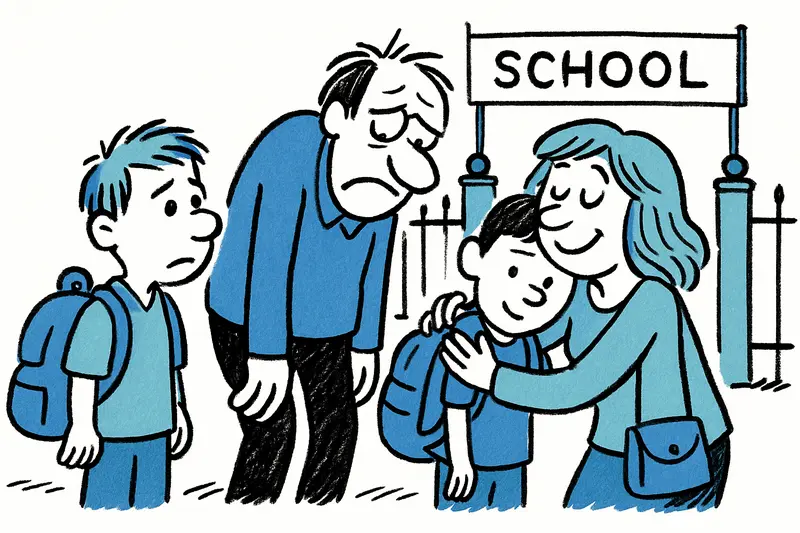
School start in the Balearic Islands: device bans, new curricula — who pays the price?
With 161,000 pupils the school year begins in the Balearic Islands — this time with phone bans, more maths lessons and logistical stumbling blocks. Who bears the burden of the changes: families, teachers or the schools themselves?
First day of school, mixed feelings — and many questions
At 08:15 this morning the familiar bustle sounded again in Palma's side streets: the squeak of scooters, the ringing of school gates on the Paseo Marítimo, a babble of voices, the smell of coffee and the typical parental reminders: “Did you bring your snack?” More than 161,000 pupils are returning to classes in the Balearic Islands — accompanied by almost 19,000 teachers. A joyful reunion, but also a logistical balancing act that puts new rules to the test, as local coverage such as Back to School in the Balearic Islands: Families Suddenly Face a €850 Bill underscores.
Guiding question
Who pays the price for the new school year? Is it the teaching that suffers from the changes, are parents forced to organise more, or are schools picking up responsibilities delegated by politicians?
What is changing concretely this year
The main topic in many schoolyards was the new ban on digital devices in preschool and strict restrictions in the early primary school years. Mobile phones are now forbidden during lessons and at breaks. In practice this means: entrance areas full of backpacks, small notes with phone numbers sewn into jackets and the question of how emergencies should be handled. In Palma there are additional bus services — lines 5 and 7 are noticeably fuller, but waiting times are shorter; similar transport issues are explored in Free School Bus for Apprentices: First Ride, Many Questions. In rural areas around places like Inca or Sóller the situation is more mixed: there parents still have to organise car pools because some village buses remain unchanged.
At the same time a revised curriculum comes into force: more hours for mathematics and foreign languages, less room for spontaneous project work. Regional politicians promise better test results; teachers report extra work: new timetables, revised materials and a phase of trial and error.
The uncomfortable questions that hardly anyone asks out loud
The debate does not end with technical bans. It is the practical, less media-attractive aspects that matter in the long run. How do schools reach parents in emergencies if phones are not with the children? Who monitors that devices are really switched off and stored in lockers and not hidden in a backpack? What consequences does the restriction have for children with special educational needs who require digitally supported aids? And: who bears the additional workload of teachers who now act not only as educators but also as logisticians and communication hubs?
In many villages internet access and digital equipment vary. A tablet ban does not affect all families equally — some already have very few devices, others had relied on remote learning and now see pedagogical setbacks; this inequality is reflected in reporting like Back to School in the Balearic Islands: Around €850 per Primary School Child — What Families Can Do Now. At the same time the increase in hours for mathematics and foreign languages creates a need for teacher training: not every school immediately has the resources to implement the new content methodically.
Concrete opportunities and approaches
The current situation also offers starting points that would be easy to implement: schools could install central, secure lockers at the entrance where devices are stored during the school day. For emergencies, fixed school phones or an SMS alert chain could be provided — not all communication has to run through personal smartphones. Pilot projects for a phased device integration could test where tablets are pedagogically useful instead of imposing a blanket ban.
For bus logistics, a better-coordinated timetable together with temporary school bus lines at problem times helps in the short term; in the long term subsidies for rural transport routes and coordinated carpooling platforms via school communities would be conceivable. Teachers need targeted training on the new curriculum structure and on didactic tools — for this regional administrations and schools would have to provide budget and time, and official guidance from the Ministry of Education can help clarify curricular responsibilities.
Looking ahead
The start of the school year is as always noisy, warm and full of small mishaps — a forgotten gym bag, a child who leaves their jacket at the gate, a headteacher distributing tea and smiling. Whether the new rules hold in the long term depends less on bans than on pragmatic solutions: reliable communication, fair support for rural families and clear procedures for teachers. If politicians, school leaders and parents work together here, the first chaotic morning can become a stable school routine — and children will once again have space to learn, laugh and play without anyone missing the sea breeze on the way to school.
Frequently asked questions
What new school rules have been introduced in Mallorca this year?
Are mobile phones banned in Mallorca schools during the school day?
How are Mallorca schools handling emergencies if children do not have phones?
What does the new curriculum mean for teachers in Mallorca?
How are children getting to school in Palma after the new term started?
Do families in rural Mallorca still need to organise school car pools?
How will the device ban affect children with special educational needs in Mallorca?
What can Mallorca schools and parents do to make the start of term run more smoothly?
Similar News
Near-miss on Lanzarote: Landing Ryanair Jet and Iberia Takeoff — what really went wrong
On Lanzarote there was a dangerous incident: A Ryanair flight (FR5910) from Dublin landed on runway 03 while an Iberia E...

Eurowings introduces new Premium Business seats on Mallorca routes
From December 1, selected Eurowings flights to Palma and other destinations will feature eight particularly generous sea...
Car on MA-13 near Inca in flames – a safety check for the island
A vehicle caught fire on the MA-13 towards Alcúdia on Tuesday afternoon. The driver was uninjured, the car was destroyed...
Real Estate in Mallorca: Fewer Buyers, Higher Prices — What's Behind It?
Sales on Mallorca are falling, yet prices continue to climb. Why fewer transactions do not equal relief — and what shoul...
Just Bought — Already Trouble: Water Damage in the Heiters' Villa and What Owners in Mallorca Should Know Now
A newly purchased sea-view property — and within days a water damage. What risks lurk in new properties in Mallorca, and...
More to explore
Discover more interesting content

Can Cap de Bou

Townhouse Lleo 72
