
Sea off Majorca: brief cooling, lingering questions
After a short calming of the sea surface, Majorca is facing another temperature rise. What does this mean for marine life, tourism and our everyday life on the coast?
The calm before the next rise
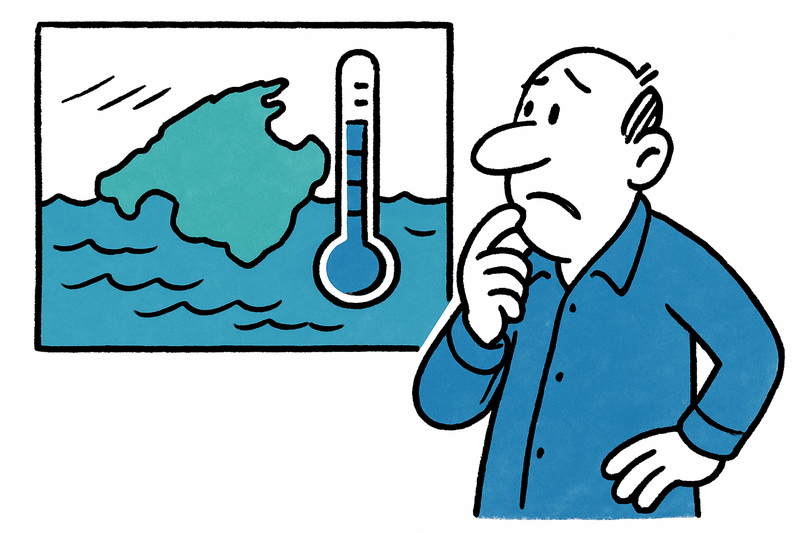
On a windless morning along the Passeig Marítim you can hear the clattering of ferries, a fisherman’s binoculars against a boat hull and occasionally the beeps of weather stations. According to the latest measurements from the Copernicus Marine Service sea surface temperature data, the sea surface temperature off the Balearics currently stands at just under 26.4 °C. After hot July days with averages around 28 °C, this is a welcome, if only relative, relief — Sea temperatures off Mallorca drop temporarily — temporary reprieve or false alarm?.
Will the cooling last?
The relief is cautious: models already expect temperatures above 27 °C again by mid-August. Such fluctuations are not unfamiliar — yet the succession of extreme warm phases leaves traces. Warmer water is pleasant for bathers, often less so for marine biologists and users of the sea. The question increasingly asked on café terraces in Palma and on the beaches is: how sustainable are these fluctuations and what do they mean in the long term?
More than just a temperature value
Sea temperature acts like an invisible director: it affects the distribution of fish, the growth of Posidonia meadows (Posidonia oceanica) and the frequency of algal blooms. As the water warms, heat-loving species can spread while cold-dependent species decline. Divers from Cala Rajada report changed visibility, local fishers complain about fluctuating catches — and beach bars talk more about jellyfish at the waterline than about record-breaking cocktails.
Often overlooked are consequences such as the increase of certain bacteria (for example Vibrio species (ECDC)), which find better conditions in warmer waters. This has direct impacts on bathing health and seafood safety — topics that reach far beyond scientific tables and touch our everyday coastal life.
What is missing in the public debate
There are aspects that rarely come to the center of conversations about temperature values: the importance of nightly cooling phases, the cumulative effect of several heat events within a season, and the interaction between local stressors — like pollution, boat traffic and nutrient overload — and temperature development. Another little-noticed point is the role of protected areas: can sufficiently intact Posidonia meadows and protected coastal stretches act as buffers to make ecosystems more resilient?
Economic consequences are also often discussed only sporadically. In the short term, beach businesses benefit from warm days. In the medium to long term, more frequent algal blooms, poorer fish stocks or warnings for bathers could damage the island’s image — and that in a region that depends heavily on the sea.
Concrete: What can Majorca do now?
A few concrete steps would strengthen both ecology and the local economy. These include:
Expanded monitoring networks and early warning systems: More sensors along the coast, combined with publicly accessible information for bathers and fishers, as discussed after recent local storms in Finally cooler – Thunderstorms bring relief, but also questions for Mallorca's infrastructure.
Protection and restoration of Posidonia meadows: Stricter rules against anchoring in sensitive zones, targeted replanting and monitoring projects with local diving clubs.
Better wastewater and nutrient control: Fewer inputs into the sea reduce the likelihood of algal blooms, even if temperatures rise.
Rules for boat traffic and tourism: Seasonal adjustments, increased awareness-raising for visitors and restrictions in particularly sensitive areas.
Promotion of local research and citizen participation: Citizen science projects (water temperature measurements, visibility logs) connect science and everyday life — and create awareness along the promenades from Palma to Port de Sóller, as seen after local showers in Short showers, great relief: Mallorca breathes easy.
A look ahead
The current 26.4 °C is not a reason to sound the all-clear, but it is also not a final verdict. It shows that short-term recovery is possible — yet without structural measures the risk of relapses remains high. On Majorca's beaches the discussions continue: about the heat, about reservations at beach restaurants, about the noise of boats at sunrise. At the same time, researchers and environmental organizations are watching more closely.
The central question remains open and becomes ever more pressing: Do we want to stick to piecemeal measures — or dare the larger steps needed to keep our coasts vibrant and livable in the future? As long as the answer is not clear, Majorca remains a place of beautiful holiday images and at the same time a focal point for the challenges climate change brings us.
Frequently asked questions
Is the sea temperature in Mallorca still warm enough for swimming in August?
Will the sea off Mallorca warm up again soon?
Why does warmer sea water matter for Mallorca’s coast?
Are there health concerns linked to warmer sea water in Mallorca?
What does sea warming mean for Posidonia meadows in Mallorca?
What can Mallorca do to deal with warmer sea temperatures?
Where in Mallorca are sea temperature changes being watched more closely?
Why do people in Palma talk about the sea temperature so much in summer?
Similar News

When Palma Becomes a Zombie Zone: 'Mallorca Z', AI and the Thought Experiment with Side Effects
A Mallorcan lawyer built a strategy game over a weekend using AI that treats the island as the scene of a zombie crisis....

Learning to Wait: How Leisure Is Making Space Again on Mallorca
Waiting doesn't have to be lost time. A mild October day in Palma shows how small pauses slow down our lives — and what ...
Cala en Brut: Body in the Sea — a Fatal Autumn Day and What’s Missing
In Cala en Brut (Ciutadella) a man's body was recovered during storm Dana "Adam". Why do autumn storms in the Balearics ...

When the road is gone: Port de Valldemossa cut off after storm 'Adam'
After heavy rains a retaining wall gave way and two sections of mountain road MA-1131 became impassable. Why are rural p...

Crypto Promises, Ferry, Arrest: How Investors in Mallorca and the Neighboring Islands Fall into the Trap
A Swiss man wanted under a German arrest warrant was captured in Ciutadella. The case raises questions about cross-borde...
More to explore
Discover more interesting content

Can Cap de Bou

Townhouse Lleo 72
