
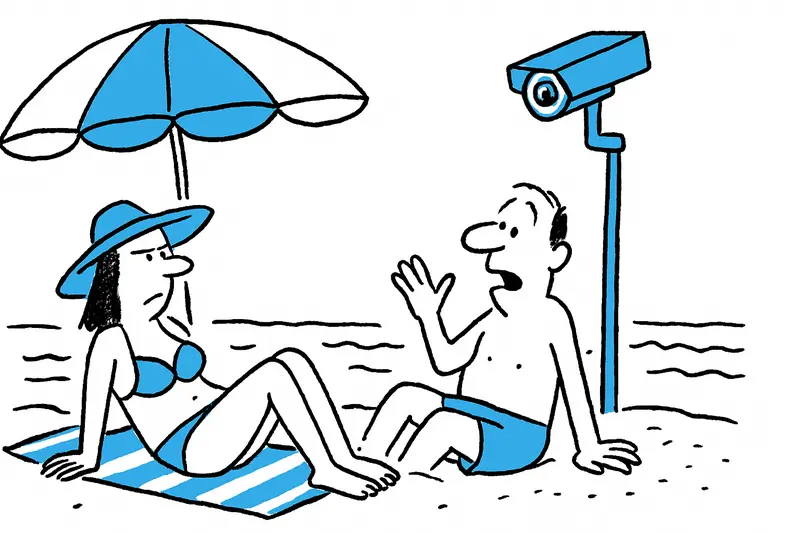
Sensors on Mallorca's Beaches: Help for Self-Regulation or Creeping Surveillance?
The Balearic Islands plan to install sensors on around 150 beaches from summer 2026. A good idea — but what's missing in the debate about data protection, transparency and practical issues? A reality check from Es Trenc and other sites.
Sensors on Mallorca's Beaches: Help for Self-Regulation or Creeping Surveillance?
Key question: Can measuring devices really ensure relaxed beach behaviour without sacrificing our privacy?
The Balearic government wants to install sensors at about 150 beaches and coves from summer 2026 that will show in real time how crowded a beach is. Infrared sensors and cameras are planned at access points; the data should be visible in an app and on a website, including a forecast for the following day. Initial tests have already taken place at Es Trenc, at Cala Turqueta on Menorca and in Ses Salines on Ibiza.
That sounds practical: many people are waiting for the ability to stand at Playa Llucmajor on a Monday morning and see whether it's worth driving there. But technology has pitfalls. Infrared sensors count heat points, cameras provide image data. A large dog, a group of several people or delivery staff with a cart can already distort counts. Likewise, a simple counter does not indicate whether sunbeds with parasols are free or only the sandy areas are occupied.
Will the sensors be robust enough for the elements? Salt, wind, sand and the hot summers wear down any hardware. A device that fails for two days at Playa Es Trenc in July already gives false reassurance at a heavily frequented spot. Maintenance costs money — who will pay for it? The Balearic government, the island council, municipalities, private contractors? There is still no clarity here; a local analysis asks who benefits from digital beach counts.
Another issue is data protection (EU General Data Protection Regulation (GDPR)). Cameras sound alarming, anyone strolling along the Passeig des Born can feel that. The announcement mentions cameras, but not whether image data will be anonymised immediately, how long recordings will be stored and who will have access. This often gets lost in public debate: if an app later says "80% occupied", that's practical; but what was the path to that number?
In everyday life the question feels more concrete. Early in the morning at Es Trenc: delivery vans manoeuvre on the access road, two surf instructors gather equipment, an older couple looks for shade. No one wants to be watched, but everyone wants reliable information so their day runs stress-free. The balance between usefulness and intrusion into privacy must be found exactly here.
What is missing in the public discourse? Transparency about the technology is only one point. Hardly discussed are operating plans (who operates the sensors 24/7?), data ownership (who owns the raw data?) and emergency protocols (how does the administration react to false reports or mass crowds?). Statements on accessibility are also missing: people with reduced mobility need secured information about parking, wheelchair-accessible paths and shaded spots — not just a percentage figure for beach occupancy.
Concrete approaches can be formulated without rejecting the idea outright. First: data minimisation. Raw images should be anonymised on the device immediately after capture, counting algorithms should run locally and only aggregated figures be transmitted. Second: open standards. If the Balearic authorities offer public APIs, independent developers and local associations can build apps — that creates control and trust. Third: clear responsibilities and maintenance contracts visible to citizens; it must not take years to replace broken sensors.
Citizen workshops and information booths during the summer would also make sense. Coming to the beach four times a year to explain how the sensors calculate, how long data is kept and what rights beachgoers have costs little but builds legitimacy. Another measure: independent audits that disclose algorithmic error rates. If a camera at Cala Turqueta counts 3,000 people in August, it should be traceable how that figure was produced.
Practical additions to the technology are important: integration with parking management, clear footpaths and shuttle services reduces congestion and illegal parking. And: better on-site signage — large enough so tourists and tradespeople can immediately see what data is being collected and how to lodge a complaint.
Conclusion: Sensors can improve tourism management and the visitor experience — if authorities do not make the mistake of deploying technology without accompanying policies. Someone seeking peace at Es Trenc in summer does not want to be categorised by a camera. Someone opening an information app early wants reliable numbers, not a calming placebo. The solution lies in more openness, clear rules and maintenance that is as solid as the beach bar beds: reliable and frequently checked. Only then will a technical gimmick become a practical tool for the islands and their residents.
Frequently asked questions
Will Mallorca beaches have crowd sensors from summer 2026?
How accurate are beach occupancy sensors likely to be in Mallorca?
Are cameras on Mallorca beaches a privacy risk?
What are the main problems with using sensors on Mallorca’s beaches?
Why is Es Trenc often mentioned in Mallorca beach sensor plans?
What is special about Cala Turqueta in the discussion about beach sensors?
What should beachgoers in Mallorca look for if occupancy data is introduced?
Who would operate and maintain the beach sensors in Mallorca?
Similar News

After Being Admitted to Hospital Again: Heinz Hoenig and the Questions We Should Ask in Mallorca
Long-time Mallorca resident Heinz Hoenig was admitted to hospital again. A clear “what next?” is missing from the covera...
Yellow Alert: Is Mallorca Prepared for the Next Rain Band?
Aemet has issued a yellow alert for the south, southwest and the island's interior. Thunderstorms and heavy rain are for...
Kegel brothers trial postponed: Why Mallorca must wait for a verdict
The trial of 13 German holidaymakers will not begin until May 2028. The long wait raises questions — for victims, defend...

Chaos on Palma's Runway: Why the Summer at the Airport Was So Disrupted
This summer laid bare where Palma airport is faltering: only just over half of departures were on time and seven percent...

Cocaine Offer on Ham Street: Why the Open Trade Should Ring Alarm Bells
In the middle of Pare Bartomeu Salvà a tourist was offered a packet of cocaine as part of a sunglasses deal. A short int...
More to explore
Discover more interesting content

Can Cap de Bou

Townhouse Lleo 72
