
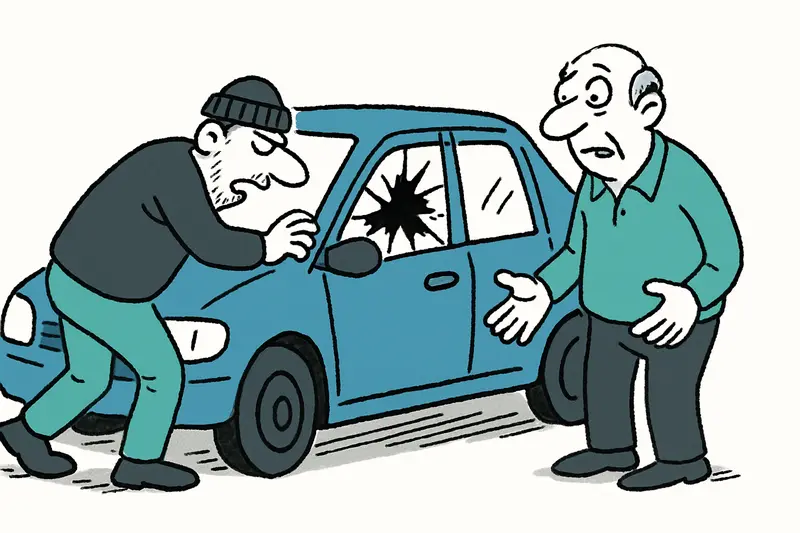
Series of car break-ins in Palma: Over 30 vehicles damaged in residential complex
Series of car break-ins in Palma: Over 30 vehicles damaged in residential complex
In the residential complex near Magdalena Bonet i Fàbregues Street in the S'Olivera district, more than 30 cars were damaged in one night. The National Police are investigating. What do those affected say — and what needs to happen now?
Series of car break-ins in Palma: Over 30 vehicles damaged in residential complex
National Police investigate after attacks in S'Olivera – Residents demand protection and answers
In a quiet residential area of Palma, near Magdalena Bonet i Fàbregues Street and the small Parc de la Femu, unknown perpetrators damaged more than 30 vehicles in a single night. The police have opened an investigation; forensic teams were on site. Similar regional coverage can be found in Juveniles arrested: Palma car-theft series raises questions about prevention.
Key question: How can a neighborhood that wakes up to the smell of coffee and the sound of buses be protected from these attacks becoming the new normal?
From the perspective of those affected, the experience feels like a rupture in everyday routine. A resident who noticed the damage early in the morning described finding first his neighbors' cars and then his own severely damaged on his way to work. Other residents only discovered the damage when they woke up; some were unable to drive to work that day. The scene: broken glass on the parking deck, a taxi meter that no longer works, and the subdued unrest in stairwells as neighbors exchange their suspicions.
Critical analysis: The incidents do not appear to be limited to a single parking lot but affect several parking decks and possibly additional facilities around Parc de la Femu. Such patterns suggest that perpetrators target parking areas with low surveillance and poor lighting. Often these are places where visual barriers, lack of barriers and missing cameras allow for quick access. In addition, damage to work vehicles such as taxis has extra economic consequences for individuals – not only material loss but also lost workdays and complicated insurance procedures.
What is missing in the public discourse: concrete figures on the development of similar offenses in Palma, information on police response times in residential areas, and clear communication from the responsible authorities about preventive measures. Also rarely discussed is the role of insurance: many affected people are unsure whether their policies cover broken glass or unauthorized access, and what deductibles apply. Another blind spot is prevention at the housing complex level – owners' associations and property managers often do not know what sensible immediate measures are possible; for context see After nine burglaries in Palma: Arrest brings relief — but questions remain.
Concrete solutions: In the short term, residents can organize groups – a simple neighborhood chat, stricter checks on access points and reporting suspicious vehicles to the police help. Visible measures have an effect: improved outdoor lighting for parking decks, motion detectors, signs indicating police checks, and stickers suggesting vehicles may be under video surveillance (even if temporarily only dummy cameras are installed). For longer-term protection, gated barriers, controlled access to underground garages and real video surveillance with clearly regulated storage are necessary. The municipal administration should also map hotspots and plan increased patrols in cooperation with police and neighborhoods, as discussed after Palma on edge: Seven arrests after daytime burglary spree – what now?.
Practical tips for those affected: never leave valuables visible in the car, keep digital records and photos ready for insurance claims, report damage to the police immediately and keep copies of reports for the insurer. Professional drivers should contact their trade association or union quickly to cushion temporary income losses. If possible, park temporarily in well-lit areas or use garages with access control.
Everyday scene from Palma: On the morning after the incident, delivery vans drove along the Passeig streets, a municipal worker pushed a wheelbarrow by, and in the corner café residents spoke with serious faces about adding more lighting to the parking decks. Sunday's quiet had been broken; conversations were not only about damaged cars but about feeling vulnerable in one's own neighborhood.
Concise conclusion: A single night with 30 damaged cars is more than property damage – it is a wake-up call. Policing alone is not enough. Visible, coordinated steps by municipalities, property managers and neighbors are needed to make parking areas safe again. People living on Mallorca want to find their car in the same street where they parked it that morning. This is not a small matter but a foundation for everyday trust in our city.
Frequently asked questions
What should I do if my car is damaged in a break-in in Palma?
Is my car insurance likely to cover a break-in or smashed window in Mallorca?
Why are parking areas in Palma often targeted by car thieves and vandals?
How can residents in Mallorca make shared parking areas safer?
What can Palma neighborhoods do after a series of car break-ins?
Are work vehicles like taxis especially affected by car break-ins in Palma?
Is it safe to park in a residential complex in Palma at night?
What kind of security measures work best for parking garages in Mallorca?
Similar News
High heel slips, car accelerates: accident on Camí de Son Hugo
A woman lost a high-heeled shoe on the forecourt of the sports facility at Camí de Son Hugo. The car accelerated, mounte...

Phone Scam: How Two Hotel Employees at Playa de Palma Lost Thousands of Euros
One morning in September, two reception employees at Playa de Palma were pressured by alleged alarm-company staff — in t...

When the Wallet Becomes a Danger: Attack in Peguera and Lessons for Mallorca
In Peguera, two women are said to have stolen the wallet from a 75-year-old German couple. When the victim intervened, t...
Plata stays Plata: Young people take over, Llonguets remain
A small bar on Carrer de l'Argenteria will continue: Tolo Serra hands the place over to young Mallorcans at the end of t...
Unnoticed in the Luggage Compartment: How a Boy Traveled More Than 100 Kilometers in a Team Bus
A minor traveled in the undercarriage of a team bus for more than 100 kilometers until his cries for help were heard. A ...
More to explore
Discover more interesting content

Can Cap de Bou

Townhouse Lleo 72
